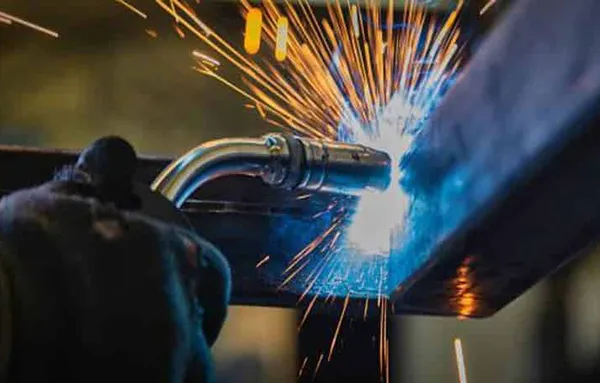

ENiMo‑8 is a nickel‑molybdenum covered electrode with a low‑hydrogen coating, designed for two demanding applications: welding 9% nickel steel for cryogenic LNG storage and joining Hastelloy® B‑2 / B‑3 alloys in hydrochloric acid service. The weld metal withstands hydrochloric acid (HCl) at all concentrations and temperatures, while maintaining excellent toughness at temperatures as low as ‑196°C. It also performs well in sulfuric, acetic, formic, and phosphoric acid environments.
This electrode runs smoothly on both AC and DC+ polarity, offering a stable arc, minimal spatter, and easy slag lift‑off. It is available in sizes up to 4.0 mm, suitable for all welding positions—flat, vertical, overhead, or horizontal.
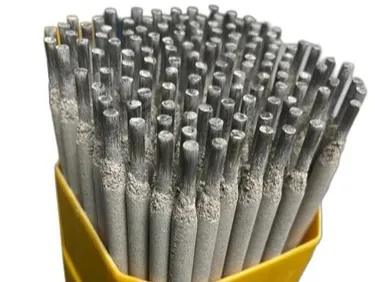
ENiMo‑8
| Standard | Classification |
|---|---|
| AWS A5.11 | ENiMo‑8 |
| ASME II, Part C, SFA‑5.11 | ENiMo‑8 |
| UNS | W80008 |
| EN ISO 14172 | E Ni 1008 |
Custom specs available on request. For certificates and approvals, contact our Technical Department.
| Element | C | Mn | Fe | P | S | Si | Cu | Ni | Cr | Mo | W | Others |
|---|---|---|---|---|---|---|---|---|---|---|---|---|
| wt% | ≤0.10 | ≤1.5 | ≤10.0 | ≤0.02 | ≤0.015 | ≤0.75 | ≤0.50 | ≥60.0 | 0.5‑3.5 | 17.0‑20.0 | 2.0‑4.0 | ≤0.50 |
A typical deposit example: Ni ~68.7, Mo ~18.4, W ~2.9, Cr ~1.8, Fe ~7.0, C 0.02.
| Property | AWS Min. | Typical |
|---|---|---|
| Tensile Strength, MPa (ksi) | 655 (95) | 750 (109) |
| Yield Strength (0.2%), MPa | Not specified | ~470 |
| Elongation (4d), % | 25 | 46 |
| Charpy V‑notch @ ‑196°C, J | Not specified | 92–160 |
Values are typical; actual results may vary depending on welding conditions.
Ø Hydrochloric acid resistance: Excellent performance from dilute to concentrated HCl at both room temperature and elevated conditions.
Ø Deep‑cold toughness: Impact energy remains high at liquid nitrogen temperatures, essential for LNG tanks.
Ø Low carbon content: Reduces the risk of grain boundary attack.
Ø Mo + W combination: Ensures stable passivation in reducing acids.
Ø Low‑hydrogen basic coating: Minimizes the risk of hydrogen cracking, especially in thick or restrained joints.
Ø All‑position capability: Works up to 4.0 mm diameter; larger sizes are for flat/horizontal welding only.
| Category | Examples |
|---|---|
| 9% Nickel steel | ASTM A333, A334, A353, A522, A553 (UNS K81340) – LNG storage, cryogenic piping |
| Nickel‑molybdenum alloys | Hastelloy® B‑2 (N10665), B‑3 (N10675) |
| Clad steel | Weld overlay or joining the nickel‑alloy clad side |
| Dissimilar joints | Ni‑Mo alloys to carbon steel, low‑alloy steel, or stainless |
| Chemical environments | Hydrochloric acid vessels, reactors, heat exchangers; also sulfuric, acetic, formic, phosphoric acid service |
Polarity: AC or DC+ (DC Electrode Positive) – DC+ gives better arc control.
Redrying (if damp): 200–250°C for 0.5–1 hour; do not rebake more than twice.
Current ranges (DC+):
| Diameter (mm) | Flat / Horizontal (A) | Vertical / Overhead (A) | Length (mm) |
|---|---|---|---|
| 3.2 | 70‑115 | 65‑110 | 300 |
| 4.0 | 100‑145 | 85‑135 | 350 |
| 5.0 | 130‑200 | — (flat only) | 350 |
Techniques:
Ø Keep a short arc to avoid porosity.
Ø For dissimilar welds, direct heat toward the nickel side to reduce dilution from steel.
Ø Remove slag completely between passes.
Ø Preheating is rarely needed; if using on thick or highly restrained sections, keep interpass below 150°C.
Diameter options: 2.4 mm, 3.2 mm, 4.0 mm, 5.0 mm.
Standard packaging:
OEM / ODM options:
Ø Consistent compliance with AWS A5.11 / ASME SFA‑5.11
Ø Tight control on nickel‑molybdenum wire quality
Ø Low‑hydrogen coating for smooth arc and easy slag removal
Ø On‑time global delivery
Ø Welding procedure support from our technical team
1. What’s the main use of ENiMo‑8?
Primarily used for welding 9% nickel steel for LNG cryogenic tanks and for joining Hastelloy B‑2 / B‑3 alloys in hydrochloric acid equipment.
2. How does it differ from ENiCrMo types?
ENiMo‑8 contains almost no chromium. It’s optimized for reducing acids (especially HCl) and low‑temperature toughness. ENiCrMo grades add chromium to handle oxidizing acids and pitting but are less effective in pure HCl service.
3. Can it weld Hastelloy C‑276?
No, C‑276 requires a higher‑Cr‑Mo filler like ENiCrMo‑4. ENiMo‑8 is specifically for B‑2 / B‑3 alloys and 9% Ni steel.
4. What impact toughness at ‑196°C can I expect?
Typically, 92 J or higher, with some lots exceeding 160 J. Always qualify your procedure for actual service conditions.
5. How to store and redry?
Keep electrodes dry. If damp, redry at 200–250°C for 30–60 minutes. Avoid repeated baking to preserve performance.


 English
 Español
 русский язык
 اللغة العربية