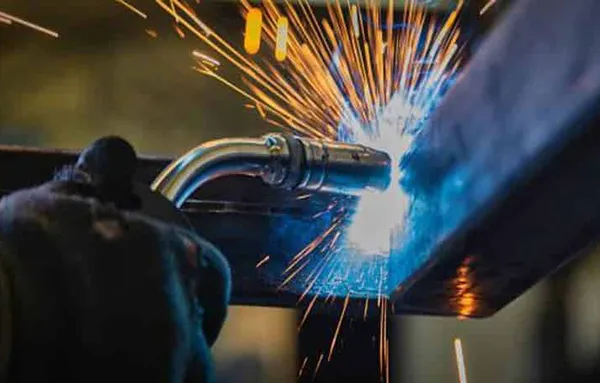

We manufacture premium nickel alloy and stainless steel submerged arc welding wires for demanding industrial applications, including pressure vessels, pipelines, offshore structures, power generation equipment, and heavy fabrication.
Our SAW welding wires are designed for high deposition rates, stable arc performance, and reliable weld integrity in thick-section welding applications. Custom grade matching, technical support, and export supply solutions are available for industrial welding requirements.
Standards: AWS A5.14 / AWS A5.9 / EN ISO 18274 / EN ISO 14343
Supply Type: OEM / Bulk Orders / Export Packaging Available
Customization: Grade, diameter, spool type, and packaging can be customized according to customer requirements.
📧Send inquiry to: support@ronsteel.com
Submerged Arc welding wire is a continuously fed bare electrode used together with granular flux during the submerged arc welding process. The welding arc is covered beneath the flux layer, reducing spatter and providing deep penetration, high deposition efficiency, and consistent weld quality.
SAW welding wire is widely used for heavy plate fabrication, pressure vessels, pipelines, structural steel manufacturing, and other applications where productivity and weld performance are critical.
Unlike conventional welding processes, SAW allows high welding speeds and excellent penetration, making it suitable for large-scale industrial fabrication.
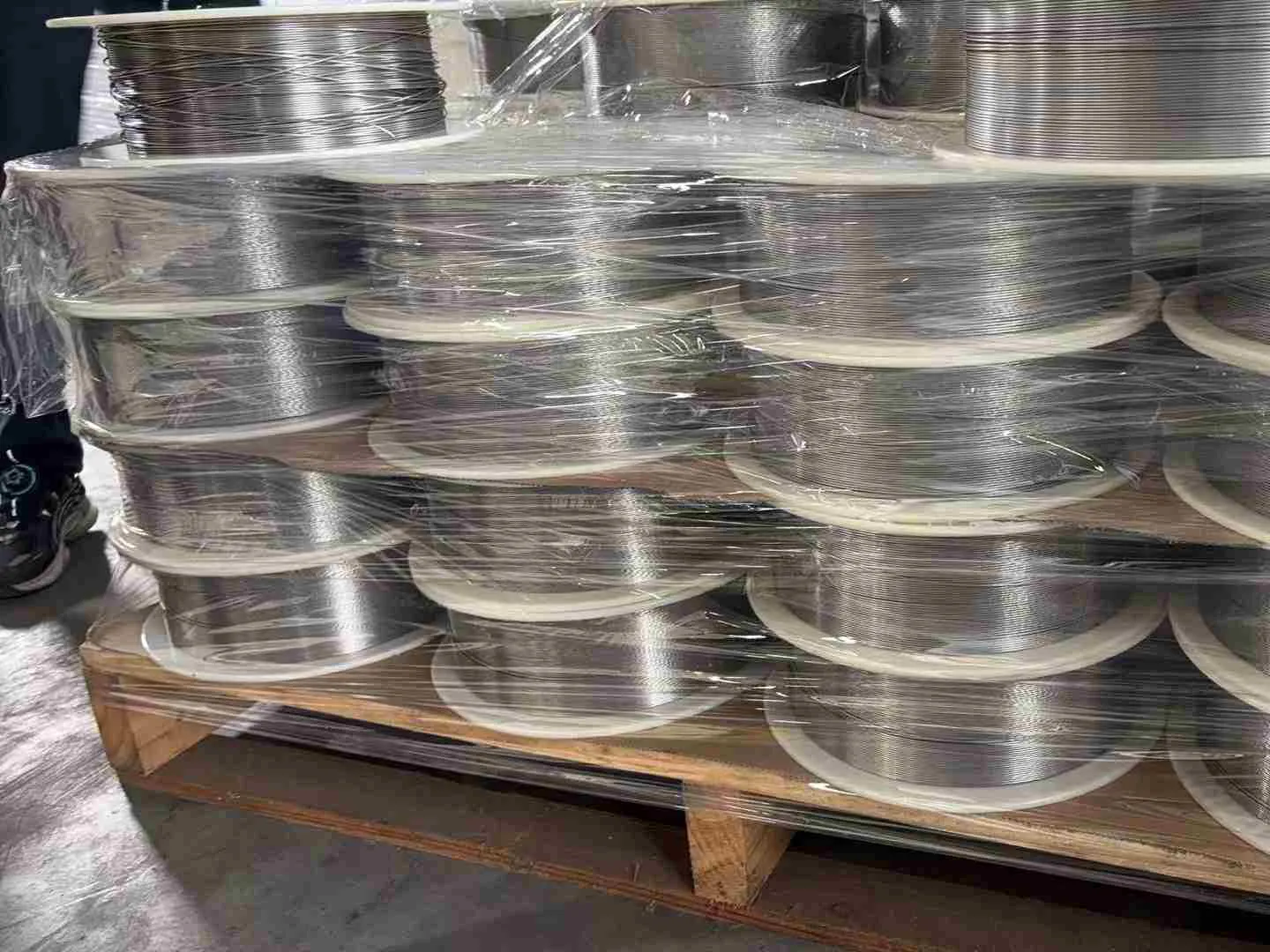
SAW Welding Wire
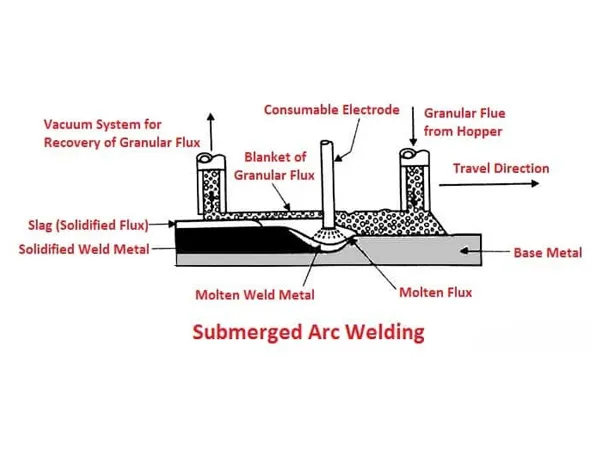
SAW Welding
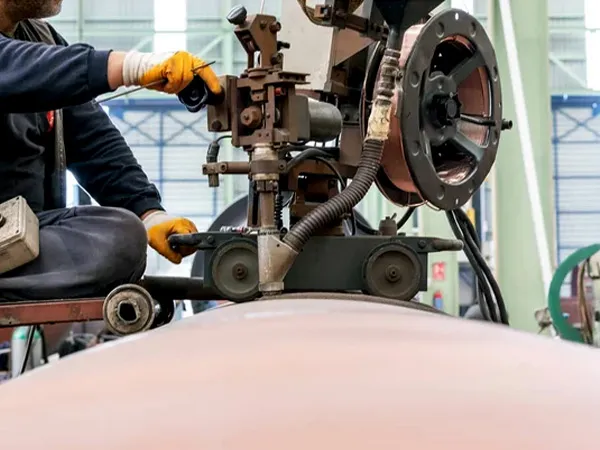
SAW Welding Application
Optimized for high-temperature service, corrosion-resistant environments, and demanding applications requiring excellent mechanical properties.
Suitable for thick-section stainless fabrication requiring corrosion resistance, reliable mechanical performance, and stable multi-pass welding.
| Parameter | Specification |
|---|---|
| Welding Process | Submerged Arc Welding (SAW) |
| Wire Diameter Range | 2.0 mm – 5.0 mm |
| Current Type | AC or DC+ |
| Deposition Efficiency | High |
| Shielding Method | Granular flux coverage |
| Welding Position | Flat position (commonly used) |
| Delivery Form | Coil / spool / drum |
| Surface Condition | Clean and smooth wire surface |
| Applicable Standards | AWS A5.14 / AWS A5.9 / EN ISO 14343 / EN ISO 18274 |
| Certification | Mill test certificates available upon request |
| Application Type | Thick plate and multi-pass welding |
SAW welding wire is widely used in large-scale fabrication where high deposition rates, deep penetration, and consistent weld quality are required.
Pressure Vessels
For pressure vessels, tanks, heat exchangers, and other thick-section components.
Pipelines
Used for large-diameter pipelines and other heavy-duty pipeline fabrication.
Offshore & Marine
Suitable for offshore structures, marine components, and corrosion-resistant fabrication.
Heavy Fabrication
Applied to wind towers, structural steel, storage tanks, and other large welded structures.
Power Generation
Used in boilers, high-temperature equipment, and other power-generation components.
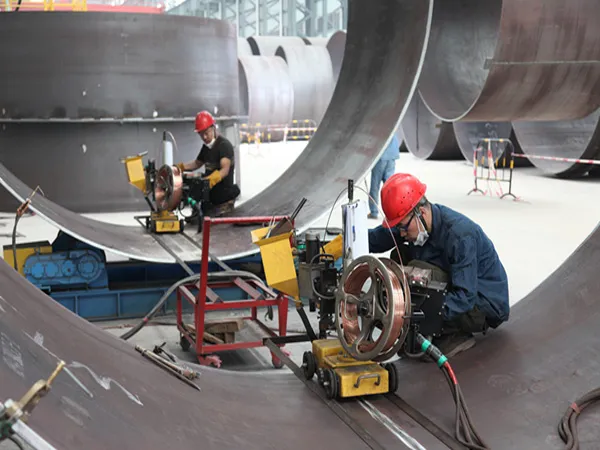
Pipeline Fabrication
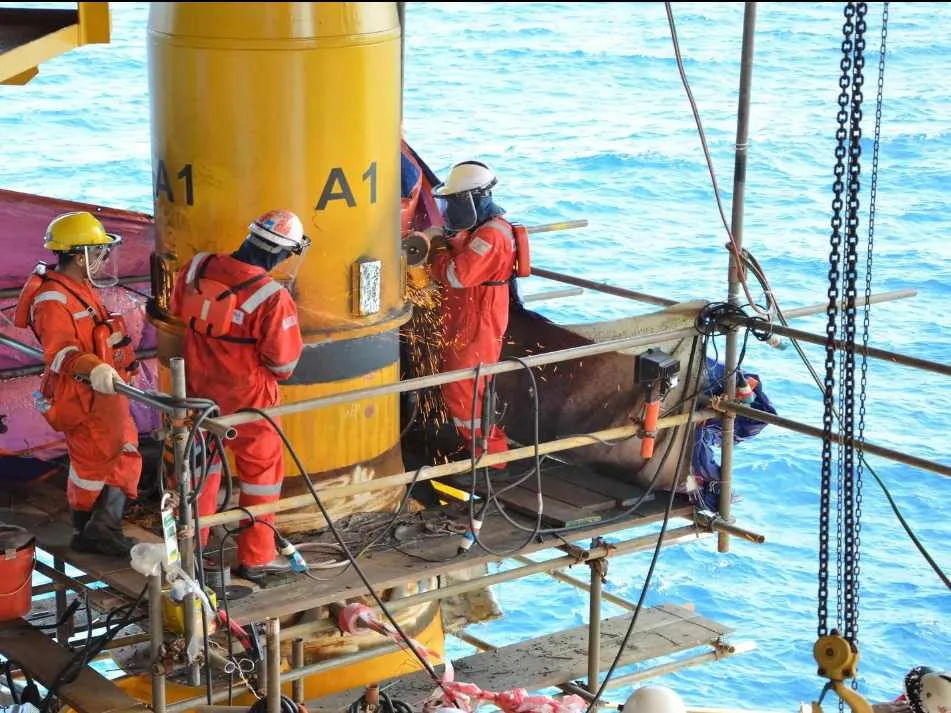
Offshore Steel Fabrication
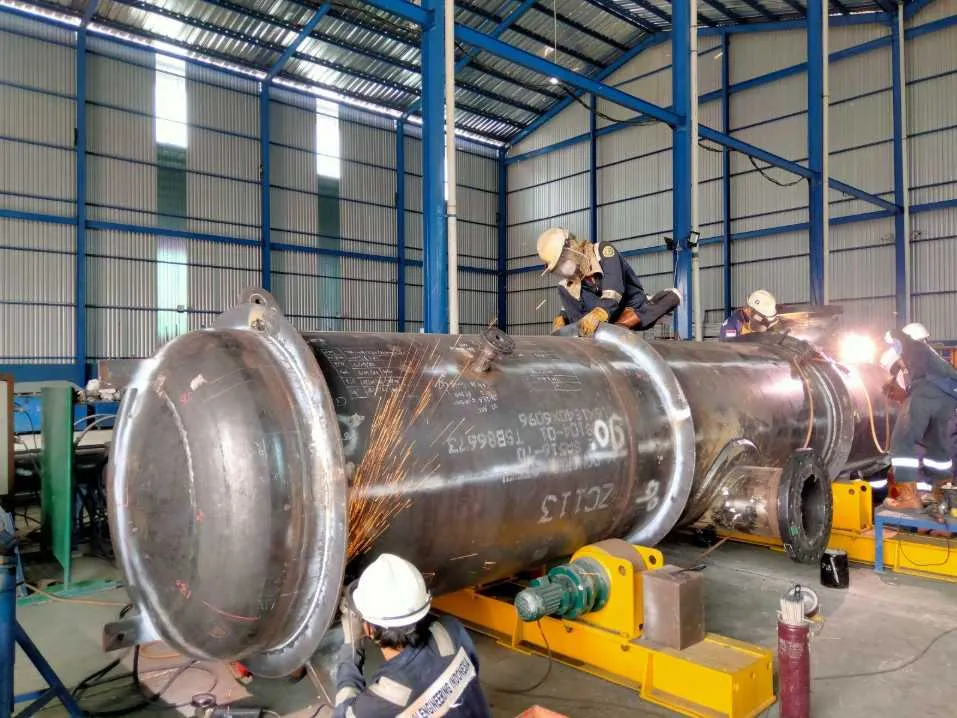
Pressure Vessel Fabrication
Ø Ensure proper flux selection for base material compatibility
Ø Maintain correct flux coverage to fully submerge the arc
Ø Select appropriate current based on wire diameter
Ø Monitor heat input for thick-section welding
Ø Store wire and flux in dry conditions to prevent moisture absorption
1. What is submerged arc welding wire used for?
Submerged arc welding wire is mainly used for thick plate fabrication, pipelines, pressure vessels, offshore structures, and heavy industrial welding applications where high deposition rates and reliable weld quality are required.
2. What is the difference between SAW wire and MIG welding wire?
SAW wire is used with granular flux and is designed for high-productivity welding, while MIG welding wire uses shielding gas and is commonly used for more flexible welding operations.
3. What grades of nickel alloy SAW welding wire are available?
Common nickel alloy SAW welding wire grades include ERNiCr-3, ENiCrFe-3, ERNiCrMo-3, and ERNiCrMo-4, which are used for high-temperature and corrosion-resistant applications.
4. Can SAW welding wire be supplied with technical documents?
Yes. Technical documents such as material certificates and product specifications can be provided according to customer requirements.
5. Can you match SAW wire with suitable flux systems?
Yes. Wire and flux combinations can be recommended based on base material, welding process, and application requirements.
Tell us the grade, diameter, quantity, and packaging requirements you need. We supply nickel alloy and stainless steel SAW welding wires for industrial applications, with OEM and bulk order options available.
Request a quotation today: support@ronsteel.com


 English
 Español
 русский язык
 اللغة العربية