

The Business Research Company recently released the “Welding Products Market Report 2026.”
Based on extensive research covering thousands of welding product manufacturers worldwide, the report combines macroeconomic modeling with industry trend analysis to provide a comprehensive assessment of the current status and future outlook of the global welding market.
Drawing on the report’s key data, this article summarizes the major trends shaping the global welding products market in 2026.
The report shows that the global welding products market continues to expand steadily.
|
Indicator |
Data |
Growth Rate |
|
Market size (2025) |
USD 17.26 billion |
— |
|
Market size (2026) |
USD 18.46 billion |
+6.9% YoY |
|
Forecast (2030) |
USD 23.88 billion |
CAGR 6.7% (2026–2030) |
The Asia-Pacific region was the largest welding products market in 2025.
Several factors contribute to this dominance:
Continued investment in high-end equipment manufacturing and renewable energy infrastructure in China.
Rapid expansion of the manufacturing sector in India.
Growing industrial supply chains in Southeast Asia driven by global manufacturing relocation.
Together, these factors support the region’s leading position in global welding consumables demand.
The North American market is characterized by its technology-intensive structure. Automated welding adoption is among the highest globally.Infrastructure upgrades driven by the Infrastructure Investment and Jobs Act in the United States, covering bridges, highways, and energy facilities, are generating stable demand for welding products.
In Europe, demand for high-end welding consumables remains steady.Environmental regulations introduced by the European Union such as REACH Regulation and carbon-emission policiesare pushing welding products toward low-fume and environmentally friendly formulations.
1. Infrastructure
Construction Continues to Drive Demand
According to
forecasts by ICE, the global construction industry is expected to reach USD 8
trillion by 2030.Large-scale infrastructure projectsincludingsteel-structure
buildings, bridges and energy infrastructureare directly increasing demand for
welding consumables.
These projects
also require higher mechanical performance, driving demand forhigh-strength
steel welding wires and low-temperature welding consumables.
2. Increasing Adoption of
Automated Welding
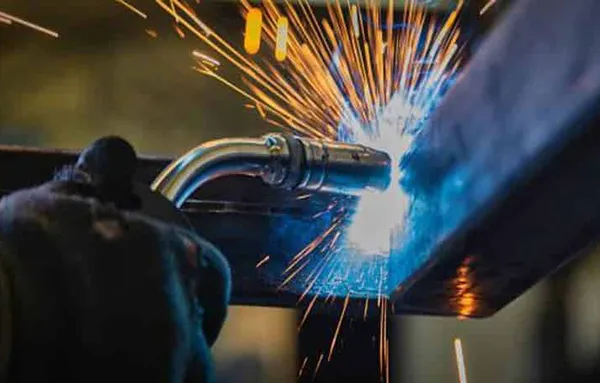
The expansion of robotic
welding in industries such as automotive manufacturing and heavy machinery is
raising technical requirements for welding wire.Key performance indicators now
includestable wire feeding, consistent diameter tolerances, and low spatter
performance.
In April 2023,
the Finnish welding equipment manufacturer Kemppi introduced the AX MIG welding
system, designed specifically for high-duty automated welding environments.
3. Rising Demand for
Specialty Alloys
Demand for
high-performance welding wires continues to grow in sectors such as aerospace,
energy, and oil & gas.
Aerospace: Nickel-based alloy welding wires such asInconel
718 and Inconel 625are widely used in engine hot-section components and
aircraft structural parts.
Oil & Gas: Corrosion-resistant alloys includingHastelloy
C-276 and Monel 400are applied in sour service environments containing H₂S and CO₂.
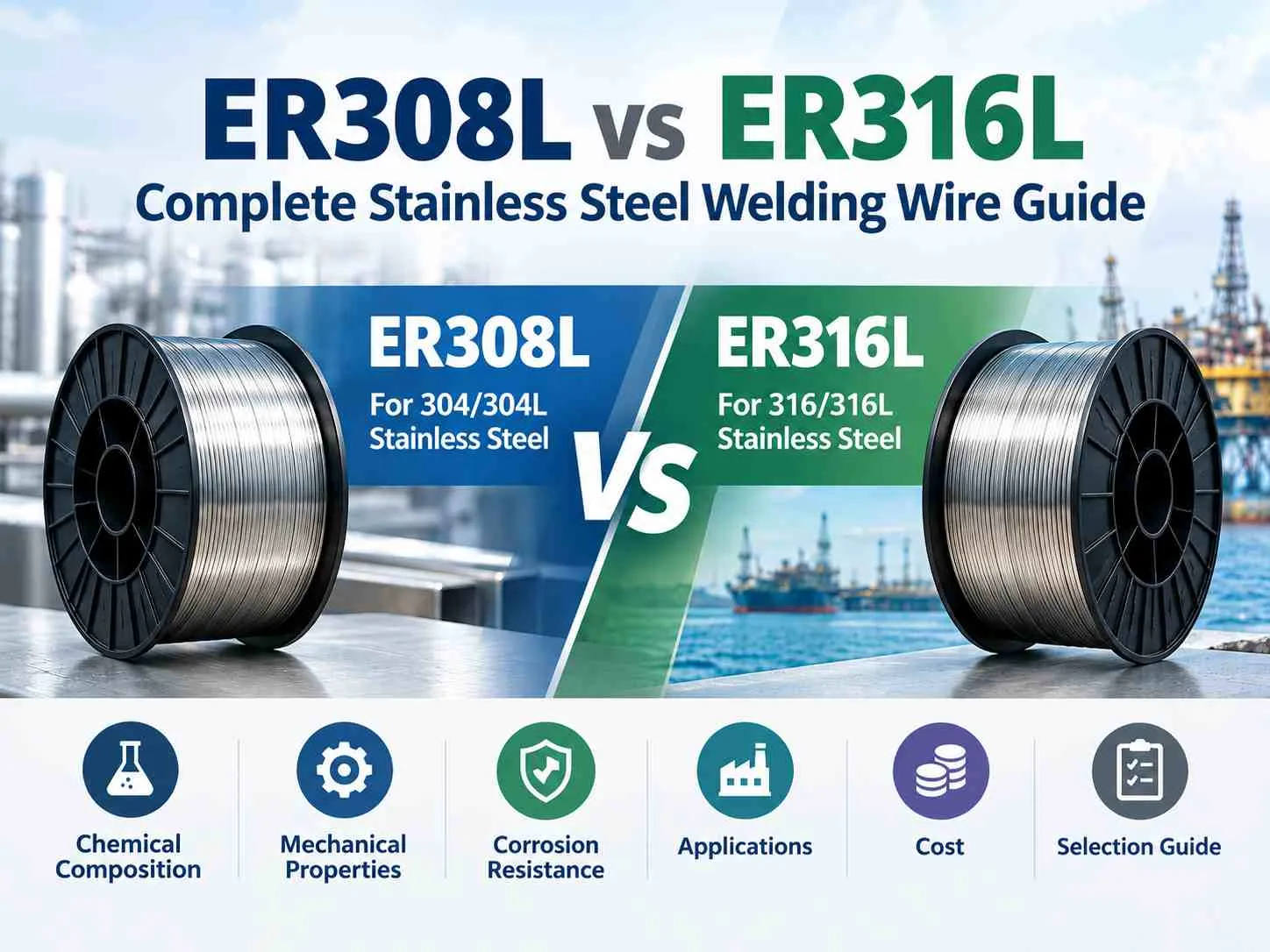
Energy sector: 9% nickel steel welding wire for LNG storage
tanks, stainless steel welding consumables for corrosion-resistant components
in nuclear and thermal power plants.
4. Major Industry
Development: ESAB Acquisition of EWM
In June 2025,
ESAB announced an agreement to acquire the German welding technology company
EWM GmbH.The transaction value is reported to be approximately €275 million
(about USD 317 million).EWM is recognized as a leading European manufacturer of
arc welding technology and high-end welding systems.
The acquisition will
strengthen ESAB’s strategic position in these areas and reflects a broader
industry shift toward integrated solutions that combine welding consumables,
equipment, and automation systems.
5. Trade Environment
The report notes
that the global welding products market is increasingly influenced by trade
policies and tariff adjustments.Changes in welding consumables tariffs may have
ripple effects across downstream industries such asautomotive manufacturing, construction
and shipbuilding.
At the same time,
these developments are accelerating regionalization of supply chains,
encouraging localized manufacturing in certain markets.This trend presents new
challenges for exporters of welding materials in terms of market strategy and
trade compliance.
6. Implications for Welding
Wire Exporters
Based on the
trends outlined above, welding wire exporters may consider the following
strategic adjustments.
1. Product
Portfolio Optimization
Competition in
the carbon steel welding wire market continues to intensify.Specialty products
such asnickel-based alloy welding wire and stainless steel welding wireare
becoming key areas for differentiation and higher value-added markets.Companies
capable of producing specialty alloy welding wires are likely to gain an
advantage in high-end segments.
2. Rising
Certification Requirements
In high-end
markets, certification requirements like EN 10204 3.1are becoming increasingly
stringent.Comprehensive traceability documentation and quality certification
systems are evolving from value-added features to essential market entry
requirements.
3. Automation
Compatibility
Developing
welding wires specifically designed for robotic welding applications,
characterized by stable wire feeding, low spatter, and high consistency, is
essential to match technological upgrades in downstream industries.
1. The Business Research Company. (2026). Welding Products Global Market Report 2026
2. Intercontinental Exchange (ICE). (2025). Global Construction Sector Outlook to 2030
3. ESAB Corporation. (2025, June). ESAB Agrees to Acquire EWM GmbH
4. Kemppi Oy. (2023, April). Kemppi launches AX MIG welder for high-duty cycle applications
Ronsco is a trusted global supplier of nickel alloy and stainless steel welding wires, including Inconel, Hastelloy, and Monel series. Our products are manufactured to meet industry standards and are widely used in demanding applications such as aerospace, oil & gas, chemical processing, and power generation. Explore our resource center for the latest industry insights, product knowledge, and technical references.
Contact us for a quote or technical assistance.


 English
 Español
 русский язык
 اللغة العربية