

Understanding the different MIG welding wire types is the first step toward making cost‑effective and reliable purchasing decisions. Whether you are sourcing for general fabrication or specialized corrosion‑resistant projects, the right choice directly impacts project approval rates and material costs.
This guide breaks down the common types of wire for MIG welding, with a special emphasis on stainless steel and nickel alloy wires — the high‑value categories that procurement professionals handle most carefully.
Before diving into specialty materials, let us briefly review the four main MIG welding wire types available on the market:
For procurement, knowing the strengths and limitations of each type of wire for MIG welding helps you anticipate workshop needs and avoid complaints. Here is a clear breakdown:
| Wire Type | Advantages | Disadvantages |
|---|---|---|
| Solid Wire | Cleaner, smoother welds; very low spatter; almost zero post‑weld cleanup; excellent for indoor repetitive production. | Unsuitable for outdoor use (needs shielding gas); shallower penetration at low voltages; requires clean base metal. |
| Flux‑Cored Wire | High deposition rates; deeper penetration; better tolerance to rust and mill scale; self‑shielded types work in windy conditions. | More smoke and spatter; longer cleanup time; lower actual metal deposition efficiency (because the flux core occupies volume); generally higher consumable cost per kilogram of deposited metal. |
| Metal‑Cored Wire | Very high deposition efficiency; minimal spatter; excellent for robotic and high‑speed welding; good mechanical properties. | Requires shielding gas; more expensive than solid wire; not ideal for very thin sheet due to high heat input. |
| Specialty Alloy Wires | Designed for corrosion resistance, high temperature, or high strength; essential for critical applications (stainless, nickel alloys). | Significantly higher cost; requires strict traceability and material certification; longer lead times. |
This comparison shows that no single MIG welding wire type fits all jobs. Procurement should stock a mix — solid wire for routine shop work, flux‑cored for outdoor/field jobs, and specialty wires for high‑value projects.
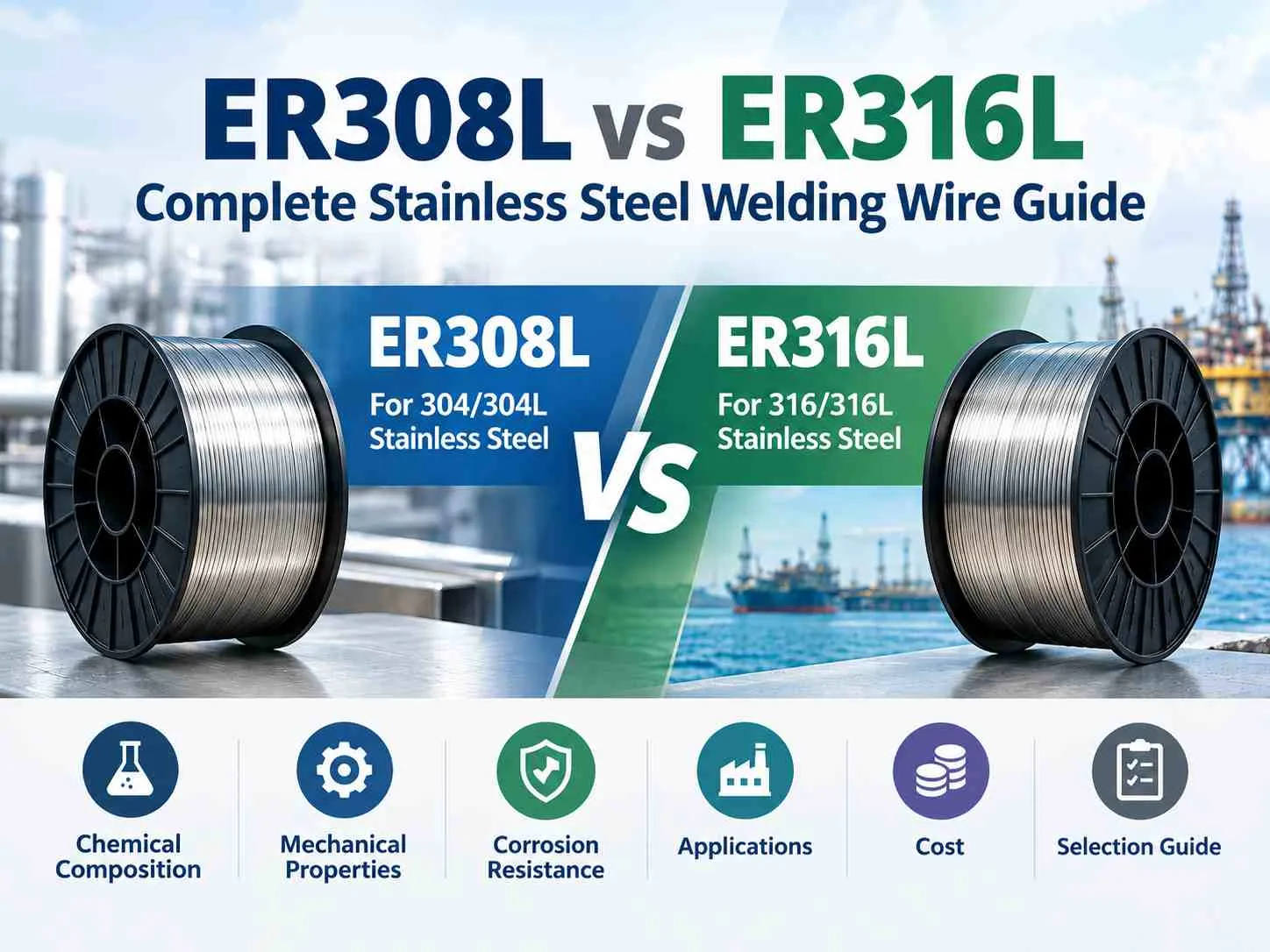
For procurement teams handling food equipment, pharmaceutical plants, or marine components, stainless steel wires are a daily necessity. Here are the critical grades you need to know:
When evaluating these MIG welding wire types, pay close attention to the surface finish. High‑quality stainless wires have a bright, smooth draw finish. Dark or flaky surfaces often indicate poor manufacturing or oxidation, which leads to feeding issues and rejected batches.
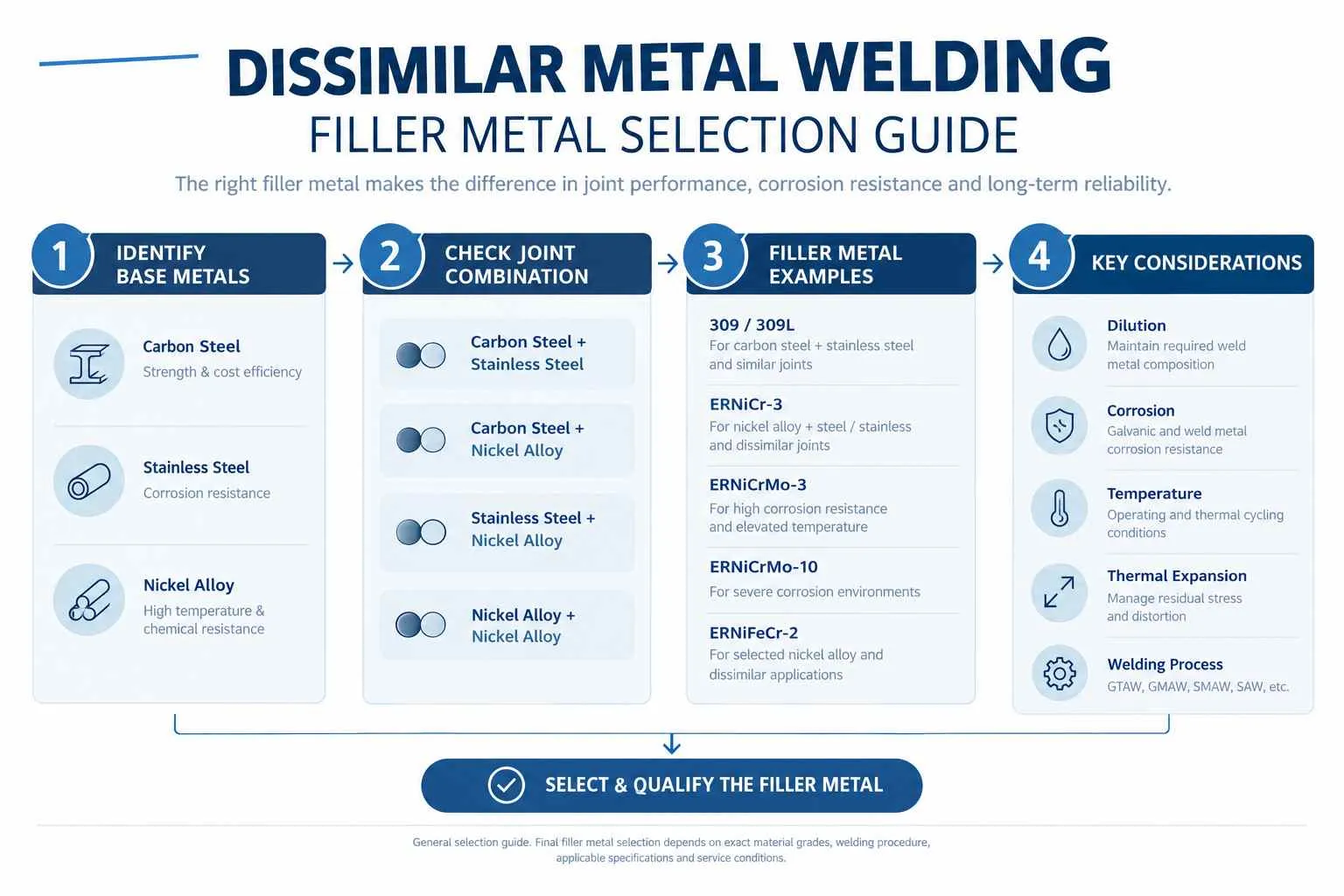
If your organization handles extreme environments, such as offshore platforms, heat exchangers, chemical reactors, or aerospace components, nickel alloy wires are your core procurement focus. These types of wire for MIG welding are expensive, so accuracy in ordering is critical.
Below are the most common nickel alloy MIG welding wire types you will encounter, with their key characteristics and procurement checkpoints:
| AWS Classification | Common Trade Name | Key Properties | Typical Applications | Procurement Checklist |
|---|---|---|---|---|
| ERNiFeCr-2 | Inconel® 718 | Precipitation-hardenable; excellent high-temperature strength up to 1300°F; age-hardening effects produce mechanical properties similar to base metal | Aerospace components, gas turbines, rocket motors, spacecraft, nuclear reactors, cryogenic applications | Verify Nb+Ta content; confirm heat treatment requirements; demand full traceability |
| ERNiCrMo-3 | Inconel® 625 | Exceptional resistance to seawater, acids, and high-temperature oxidation; versatile for dissimilar metal welding | Marine platforms, chemical reactors, cladding, welding 6% molybdenum super austenitic steels | Mandatory: Heat Number and PMI test; verify Mo content (8-10%) |
| ERNiCr-3 | Inconel® 600 / Alloy 82 | High-temperature oxidation resistance; good for dissimilar metal joining | Furnace components, heat-treating equipment, overlaying on steel | Check Cr content (18-22%); suitable for stainless to nickel joints |
| ERNiCu-7 | Monel® 400 | Excellent resistance to seawater, salts, and reducing acids; good strength properties | Marine engineering, petrochemical, hydrofluoric acid service, pump and valve components | Verify Ni content (62-68%) and Cu balance; confirm suitability for K500 if applicable |
| ERNiCrMo-4 | Hastelloy® C-276 | Superior resistance to pitting, stress corrosion cracking, and reducing media; excellent high-temperature performance | Chemical processing, pollution control, waste treatment, flue gas desulfurization | Match to C-276 base metal; verify Mo (15-17%) and Cr (14-17%) content |
| ERNiFeCr-1 | Incoloy® 825 | Good resistance to sulfuric and phosphoric acids; excellent weldability | Chemical equipment, oil and gas piping, overlay cladding where similar chemistry is required | Verify Mo and Cu content for corrosion resistance; suitable for 825 base metal |
Ronsco is a trustworthy supplier of nickel alloy and stainless steel mig wires. You can get a fast quotation by sending us your required product grades, diameters, and quantities.
👉 Email: support@ronsteel.com
Wire diameter is a critical factor that directly affects welding current, deposition rate, material thickness compatibility, and overall welding efficiency. For industrial procurement, selecting the correct diameter helps ensure stable wire feeding, reduce consumable waste, and improve welding performance.
The following table provides a practical reference for commonly used MIG welding wire diameters in global industrial applications:
| Wire Diameter | Typical Current Range | Recommended Material Thickness | Typical Applications |
|---|---|---|---|
| 0.8 mm | 40 – 160 A | 1.0 – 3.0 mm | Thin stainless steel fabrication, sheet metal, light structural components, general workshop welding |
| 1.0 mm | 60 – 220 A | 2.0 – 6.0 mm | General fabrication, stainless steel equipment, machinery parts, medium-duty welding |
| 1.2 mm | 100 – 300 A | 5.0 – 12 mm | Most common industrial size; pressure vessels, pipelines, structural fabrication, heavy machinery |
| 1.6 mm | 180 – 400 A | 10 mm and above | Heavy fabrication, offshore structures, large components, high deposition applications |
For international procurement, aligning wire diameter with the end user's welding equipment and application requirements can reduce inventory complexity and improve production efficiency.
Beyond wire diameter, packaging selection also influences handling efficiency, transportation cost, and production continuity.
Choose packaging based on your end‑user's consumption rate, and always ensure the drum or spool label matches the Heat Number on the certificate.
Here are 3 common pitfalls related to selecting MIG welding wires:
At Ronsco, we specialize in supplying high‑performance stainless steel and nickel alloy MIG wires that meet strict international standards. Our product range includes ER308L, ER316L, ER309L, and nickel‑base grades such as ERNiCrMo‑3, ERNiCr‑3, and ERNiCu‑7. All backed by full traceability, Mill Test Certificates, and competitive lead times.
Whether you need a trial spool or a bulk drum order, our procurement‑friendly team provides fast quotations, technical datasheets, and logistical support. Contact us with your specific requirements for a quote, we are ready to be your long‑term partner in specialty welding consumables.
Ronsco is a trusted global supplier of nickel alloy and stainless steel welding wires, including Inconel, Hastelloy, and Monel series. Our products are manufactured to meet industry standards and are widely used in demanding applications such as aerospace, oil & gas, chemical processing, and power generation. Explore our resource center for the latest industry insights, product knowledge, and technical references.
Contact us for a quote or technical assistance.


 English
 Español
 русский язык
 اللغة العربية