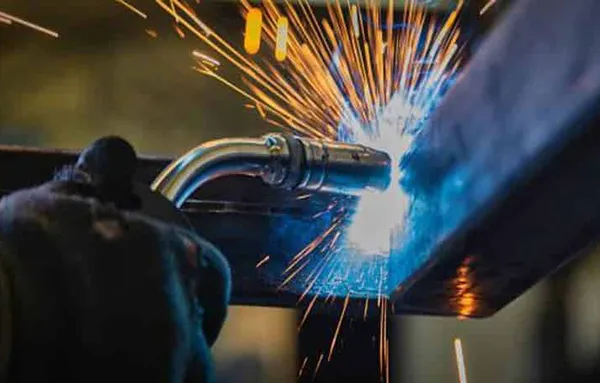

ENiCrMo‑13 is a low‑hydrogen, nickel‑chromium‑molybdenum covered electrode (Alloy 59 type) designed for shielded metal arc welding of high‑performance corrosion‑resistant alloys such as Alloy 59 (UNS N06059), HASTELLOY® C‑22®, Inconel® 625, Incoloy® 825, and superaustenitic stainless steels (e.g., S31254, S32654).
The weld metal provides outstanding resistance to pitting, crevice corrosion, and chloride‑induced stress corrosion cracking, with excellent performance in both oxidizing and reducing acid media including sulfuric, hydrochloric, and phosphoric acids.
Featuring a basic coating and stable arc (especially on DCEP), ENiCrMo‑13 delivers low spatter, easy slag removal, good porosity resistance, and consistent mechanical properties. It is widely used in chemical processing, petrochemical refining, offshore platforms, flue gas desulfurization systems, pulp and paper equipment, waste incineration, and power generation, as well as for dissimilar joints and cladding applications.
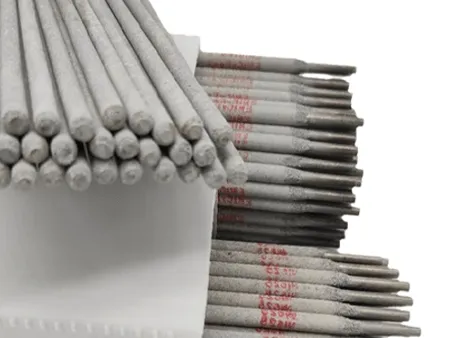
ENiCrMo-13
| Standard | Classification |
|---|---|
| AWS A5.11 | ENiCrMo-13 |
| ASME II, Part C, SFA-5.11 | ENiCrMo-13 |
| UNS | W86059 |
| EN ISO 14172 | E Ni 6059 (NiCr23Mo16) |
| DIN 1736 | EL-NiCr22Mo16 (2.4609) |
| GB/T 13814 | ENi6059 |
Custom specifications available upon request. For information regarding certifications and industry approvals, please contact our Technical Department.
| Element | C | Mn | Si | Cr | Ni | Mo | Fe | Cu | P | S |
|---|---|---|---|---|---|---|---|---|---|---|
| Content (%) | 0.02 max | 1.0 max | 0.2 max | 22.0–24.0 | Balance | 15.0–16.5 | 1.5 max | 0.5 max | 0.015 max | 0.01 max |
| Property | AWS A5.11 Requirement (min.) | Typical Result (As-welded) |
|---|---|---|
| Tensile Strength, MPa (ksi) | 690 (100) | 730–770 (106–112) |
| Yield Strength (0.2% offset), MPa (ksi) | Not specified | 430–510 (62–73.5) |
| Elongation (4d), % | 25 | 33–47 |
| Impact Strength (Charpy V-Notch) | Not specified | 70 J @ -60°C; 60 J @ -196°C |
Note: The above values are minimum requirements per AWS A5.11 and typical results for reference only. Actual mechanical properties may vary depending on welding parameters, joint design, and base material condition.
Ø Outstanding corrosion resistance in both oxidizing and reducing media, including sulfuric acid, hydrochloric acid, phosphoric acid, and other aggressive chemical environments
Ø Superior localized corrosion resistance against pitting, crevice corrosion, and chloride ion stress corrosion cracking (SCC)
Ø Excellent high-temperature performance with scaling resistance up to approximately 1100°C (2010°F)
Ø Extra low carbon and silicon content minimizes grain boundary precipitation, ensuring excellent intergranular corrosion resistance
Ø Low-hydrogen basic coating minimizes hydrogen-induced cracking, particularly critical for high-strength steels and thick sections
Ø Excellent all-position operability with stable arc (suitable for both AC and DC, especially DCEP), low spatter, easy slag removal, good porosity resistance, and consistent mechanical properties
Ø Versatile for dissimilar metal joints between nickel-chromium-molybdenum alloys and stainless, carbon, or low-alloy steels
Ø Excellent fabricability for overlay cladding on carbon, low-alloy, and stainless steels
| Category | Details |
|---|---|
| Nickel Alloys | Alloy 59 (UNS N06059), HASTELLOY® C-22® (UNS N06022), HASTELLOY® C-276® (UNS N10276), Inconel® 625 (UNS N06625), Incoloy® 825 (UNS N08825), HASTELLOY® C-2000®, Inconel® 686, and similar Ni-Cr-Mo alloys |
| Superaustenitic Stainless Steels | S31254 (254SMO®), S32654 (654SMO®), Uranus B66, and other high-molybdenum austenitic stainless steels |
| Corrosion-Resistant Alloys | ASTM B574, B575, B619, B622, B626 with UNS No. N06059 |
| Clad Steel | Clad side of joints in steel clad with low-carbon nickel-chromium-molybdenum alloys |
| Dissimilar Metal Joints | Ni-Cr-Mo alloys to stainless steels, Ni-Cr-Mo alloys to carbon steels, Ni-Cr-Mo alloys to low-alloy steels |
| Industrial Applications | Chemical processing reactors, heat exchangers, evaporators, and storage tanks; flue gas desulfurization scrubbers and absorbers; pulp and paper digesters and bleach plants; waste incinerators and pollution control systems; pharmaceutical and fine chemical manufacturing; marine engineering and offshore platforms; petroleum refinery and petrochemical plant components; power generation facilities; sulfuric acid coolers; seawater handling equipment |
Polarity: Suitable for both AC and DC; optimal performance on Direct Current, Electrode Positive (DCEP / DC reverse polarity)
Pre-weld Preparation:
Electrode Conditioning:
Recommended Current Range (Diameter vs. Current):
| Diameter (in/mm) | Current Range (Amperes) | Length (in/mm) |
|---|---|---|
| 3/32″ (2.4 mm) | 50–85 A | 9″ (229 mm) |
| 1/8″ (3.2 mm) | 60–110 A | 14″ (356 mm) |
| 5/32″ (4.0 mm) | 80–140 A | 14″ (356 mm) |
| 3/16″ (4.8 mm) | 120–180 A | 14″ (356 mm) |
Note: For vertical and overhead welding, reduce current by approximately 10–15%.
Deposition Data (Typical):
| Diameter (mm) | Current (A) | Voltage (V) | Deposition Efficiency (%) |
|---|---|---|---|
| 2.5 x 300 mm | 50–70 | 25 | 60 |
| 3.2 x 350 mm | 60–90 | 25 | 62 |
| 4.0 x 350 mm | 80–120 | 27 | 62 |
Welding Techniques:
Ø Use a short arc length to minimize atmospheric contamination and prevent porosity
Ø Control interpass temperature to prevent weld metal overheating and maintain corrosion resistance
Ø Remove slag thoroughly between passes
Ø Preheating is generally not required for most applications; for thick sections or high-constraint structures, appropriate preheating may be beneficial
Diameter options (in/mm):
Packaging:
Ø Reliable production quality meeting AWS A5.11 and ASME SFA-5.11 requirements
Ø Strict quality control for nickel-chromium-molybdenum alloy electrodes
Ø Low-hydrogen basic coating ensures smooth arc, low spatter, and easy slag removal
Ø Global export experience with on-time delivery
Ø Technical support for welding procedure qualification
1. What is ENiCrMo‑13 welding electrode used for?
ENiCrMo‑13 is primarily used for welding Alloy 59, HASTELLOY® C‑22®, Inconel® 625, and Incoloy® 825, as well as superaustenitic stainless steels (S31254, S32654) and similar high-performance corrosion-resistant alloys. It is also ideal for welding the clad side of joints in steel clad with low-carbon Ni-Cr-Mo alloys and for dissimilar metal joints.
2. What are the key corrosion resistance properties of ENiCrMo‑13?
It provides outstanding resistance to pitting, crevice corrosion, and chloride ion stress corrosion cracking. The alloy performs excellently in both oxidizing and reducing acid media, including sulfuric acid, hydrochloric acid, phosphoric acid, and other aggressive chemical environments. Higher chromium level (22.0–24.0%) gives better performance than Alloy C‑22 on more oxidizing media.
3. How does ENiCrMo‑13 compare to ENiCrMo‑10?
ENiCrMo‑13 (Alloy 59 type) has higher chromium (22.0–24.0% vs. 20.0–22.5%) and slightly higher molybdenum (15.0–16.5% vs. 12.5–14.5%) compared to ENiCrMo‑10 (C‑22 type). This gives ENiCrMo‑13 enhanced corrosion resistance in more aggressive oxidizing media, while both provide excellent localized corrosion resistance.
4. What polarity and current are required?
ENiCrMo‑13 operates on both AC and DC, with optimal performance on Direct Current, Electrode Positive (DCEP / DC reverse polarity). Refer to the recommended current range based on electrode diameter.
5. What is the maximum service temperature for ENiCrMo‑13?
ENiCrMo‑13 weld metal exhibits scaling resistance up to approximately 1100°C (2010°F) in air. For long-term service in aggressive environments, consult the applicable design codes and base material specifications.
6. How should ENiCrMo‑13 electrodes be stored and conditioned?
ENiCrMo‑13 electrodes have a low-hydrogen basic coating and must be stored in a dry environment. Electrodes that have become damp should be re-dried at 180°C (356°F) for 1 hour before use. Do not rebake more than twice.
7. Can ENiCrMo‑13 be used for welding superduplex stainless steels?
Yes, ENiCrMo‑13 is an excellent candidate for welding superaustenitic stainless steels such as S31254 (254SMO®) and S32654 (654SMO®). The higher alloy content provides an overmatching filler metal that maintains corrosion resistance in the weld deposit.


 English
 Español
 русский язык
 اللغة العربية