
 PDF Download
ENiCrMo‑10 is a low‑hydrogen, nickel‑chromium‑molybdenum covered electrode (C‑22 type) designed for shielded metal arc welding of highly corrosion‑resistant nickel alloys such as HASTELLOY® C‑22®, Inconel® 622, Inconel® 625, and Incoloy® 825. The weld metal offers outstanding resistance to stress corrosion cracking, pitting and crevice corrosion, and performs excellently in both oxidizing and reducing media, including hot contaminated sulfuric acid, phosphoric acid, acetic acid, and other aggressive mineral acids.
With a slag system that promotes great operability in all positions, ENiCrMo‑10 delivers a stable arc, low spatter, easy slag removal, and consistent mechanical properties. It is widely used in chemical processing, power generation, petroleum refineries, offshore platforms, flue gas desulfurization systems, and papermaking equipment, as well as for welding molybdenum‑bearing stainless steels and dissimilar joints.
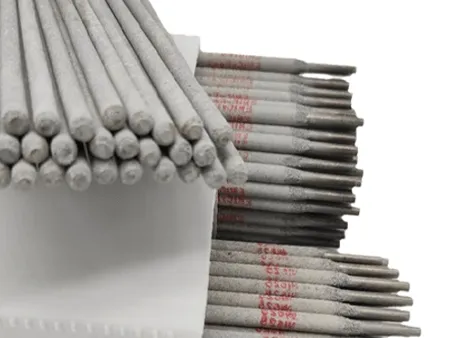
ENiCrMo‑10
| Standard | Classification |
|---|---|
| AWS A5.11 | ENiCrMo-10 |
| ASME II, Part C, SFA‑5.11 | ENiCrMo-10 |
| UNS | W86022 |
| EN ISO 14172 | E Ni 6022 (NiCr21Mo13Fe4W3) |
| ASME IX | F‑No. 43 |
| GB/T 13814 | ENi6022 |
Custom specifications available upon request. For information regarding certifications and industry approvals, please contact our Technical Department.
| Element | C | Co | Cr | Cu | Fe | Mn | Mo | Ni | P | S | Si | V | W |
|---|---|---|---|---|---|---|---|---|---|---|---|---|---|
| Content (%) | 0.02 max | 2.5 max | 20.0‑22.5 | 0.50 max | 2.0‑6.0 | 1.0 max | 12.5‑14.5 | Remainder | 0.03 max | 0.015 max | 0.2 max | 0.35 max | 2.5‑3.5 |
| Property | AWS A5.11 Requirement (min.) |
|---|---|
| Tensile Strength, MPa (ksi) | 690 (100) |
| Elongation (4d), % | 25 |
Ø Excellent corrosion resistance in both oxidizing and reducing media in a wide variety of chemical process environments, with better corrosion resistance than Alloy 276 and Alloy 625.
Ø Outstanding resistance to stress corrosion cracking, pitting and crevice corrosion in chloride‑containing and aggressive aqueous environments.
Ø Low‑hydrogen coating minimizes hydrogen‑induced cracking, particularly critical for high‑strength steels and thick sections.
Ø Excellent all‑position operability with a slag system that promotes great operability especially out‑of‑position.
Ø Smooth arc characteristics with low spatter, easy slag removal, good porosity resistance, and stable mechanical properties of deposited metal.
Ø Good resistance to hot contaminated sulphuric and phosphoric acids, acetic acid and acetic hydride, and other contaminated oxidizing mineral acids.
Ø Versatile for dissimilar metal joints between nickel‑chromium‑molybdenum alloys and stainless, carbon or low‑alloy steels.
Ø Excellent fabricability for overlay cladding on carbon, low‑alloy and stainless steels.
| Category | Details |
|---|---|
| Nickel Alloys | HASTELLOY® C‑22® (UNS N06022), HASTELLOY® C‑276®, Inconel® 622 (UNS N06622), Inconel® 625 (UNS N06625), Incoloy® 825 (UNS N08825) |
| Corrosion‑Resistant Alloys | Material No. 2.4602 (NiCr21Mo14W) and other Ni‑Cr‑Mo alloys |
| Molybdenum‑Bearing Stainless Steels | Stainless steels that contain molybdenum for corrosion resistance |
| Dissimilar Metal Joints | Ni‑Cr‑Mo alloys to stainless steels, Ni‑Cr‑Mo alloys to carbon steels, Ni‑Cr‑Mo alloys to low‑alloy steels, and the cladded side of joints in steel clad with a Ni‑Cr‑Mo alloy |
| Industrial Applications | Chemical processing reactors, heat exchangers, and storage tanks; flue gas desulphurization scrubbers and absorbers; digesters and papermaking equipment; petroleum refinery and petrochemical plant components; offshore platforms and marine engineering equipment; power generation facilities; corrosion resistant overlay coatings on carbon, low‑alloy and stainless steels |
Polarity: Direct Current, Electrode Positive (DCEP / DC reverse polarity)
Pre‑weld Preparation:
Electrode Conditioning:
Recommended Current Range:
| Electrode Diameter (in/mm) | Current Range (Amperes) |
|---|---|
| 3/32" (2.4 mm) | 40‑70 |
| 1/8" (3.2 mm) | 70‑110 |
| 5/32" (4.0 mm) | 80‑140 |
| 3/16" (4.8 mm) | 120‑150 |
Welding Positions: Flat, fillet, vertical up, horizontal, overhead — all positions
Welding Techniques:
Ø Use a short arc length to minimize atmospheric contamination and prevent porosity
Ø Use small current multi‑layer welding whenever possible
Ø Control interpass temperature to prevent weld metal overheating
Ø Remove slag thoroughly between passes
Diameter options (in/mm):
| Inches | mm |
|---|---|
| 3/32 | 2.4 |
| 1/8 | 3.2 |
| 5/32 | 4.0 |
| 3/16 | 4.8 |
Length options:
Packaging:
Ø Reliable production quality meeting AWS A5.11 and ASME SFA‑5.11 requirements
Ø Strict quality control for nickel‑chromium‑molybdenum alloy electrodes
Ø Low‑hydrogen coating ensures smooth arc, low spatter, and easy slag removal
Ø Global export experience with on‑time delivery
Ø Technical support for welding procedure qualification
1. What is ENiCrMo‑10 welding electrode used for?
ENiCrMo‑10 is primarily used for welding HASTELLOY® C‑22® (UNS N06022) and other nickel‑chromium‑molybdenum alloys, including Inconel® 622, Inconel® 625, and Incoloy® 825. It is also ideal for dissimilar metal joints between Ni‑Cr‑Mo alloys and stainless steel, carbon steel, or low-alloy steels, as well as for overlay cladding on steel substrates.
2. What are the key corrosion resistance properties of ENiCrMo‑10?
ENiCrMo‑10 offers excellent corrosion resistance in both oxidizing and reducing media. It is highly resistant to stress corrosion cracking, pitting, and crevice corrosion, especially in environments with acetic hydride, acetic acid, phosphoric acid, hot contaminated sulfuric acid, and other contaminated oxidizing mineral acids.
3. How does ENiCrMo‑10 compare to ENiCrMo‑3 (Inconel 625 electrode)?
ENiCrMo‑10 (C‑22 type) provides superior corrosion resistance compared to Alloy 625 and Alloy 276 in many aggressive environments. It is especially effective where pitting, crevice corrosion, and stress corrosion cracking are concerns. The addition of tungsten (2.5‑3.5%) enhances localized corrosion resistance in chloride‑containing environments.
4. What polarity and current are required?
ENiCrMo‑10 should be used with Direct Current, Electrode Positive (DCEP / DC reverse polarity). The recommended current range depends on the electrode diameter and the specific application.
5. What is the recommended interpass temperature?
To maintain corrosion resistance and avoid overheating, it is recommended to limit heat input to a maximum of 1.0 kJ/mm with an interpass temperature of no more than 100°C (212°F) for wire applications.
6. How should ENiCrMo‑10 electrodes be stored and conditioned?
Due to its low‑hydrogen coating, ENiCrMo‑10 electrodes must be stored in a dry environment. Before use, bake the electrodes at 300‑350°C (570‑660°F) for 1 hour to remove moisture and prevent hydrogen-induced cracking. Avoid rebaking more than twice.
7. Is preheating required for ENiCrMo‑10 welding?
For most applications, preheating is not necessary. However, for thick sections or high‑constraint structures, preheating may improve weld quality and reduce cracking risks.
8. What base materials can be welded with ENiCrMo‑10?
This electrode is compatible with a range of base materials, including ASTM B574, B575, B619, B622, and B626 with UNS No. N06022, as well as Inconel 622, Inconel 625, Incoloy 825, and other nickel‑chromium‑molybdenum alloys.


 English
 Español
 русский язык
 اللغة العربية