
 PDF Download
For Welding Inconel 600 / 601 / 82
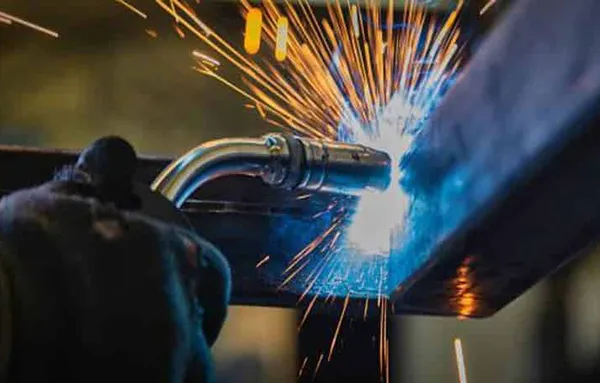
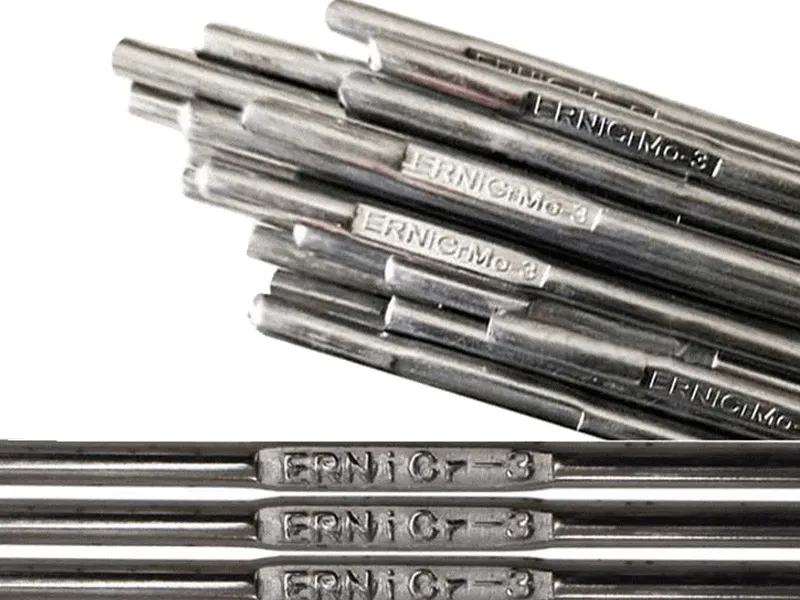
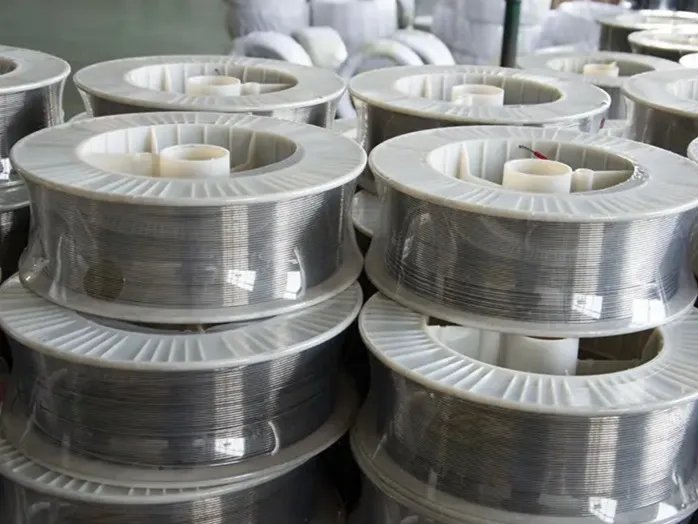
ERNiCr-3 is a high-performance nickel-chromium alloy welding wire, primarily used for welding Inconel 600 and 601 alloys, as well as for dissimilar metal welding between nickel alloys and stainless steels. Known for its exceptional high-temperature oxidation resistance and thermal fatigue resistance, ERNiCr-3 is ideal for industries requiring reliable performance in high-stress, high-temperature environments.
ERNiCr-3
ERNiCr-3
ERNiCr-3
|
Standard |
Classification |
|
AWS A5.14 |
ERNiCr-3 |
|
EN ISO 18274 |
S Ni 6082 |
|
UNS |
N06082 |
|
Property |
Typical Value |
|
Tensile Strength |
≥550 MPa |
|
Yield Strength |
≥240 MPa |
|
Elongation |
≥30% |
|
Impact Toughness |
Excellent at room temperature |
Actual mechanical values may vary depending on welding parameters and dilution.
Ø Solid Solution Strengthened Ni-Cr Alloy – Provides excellent high-temperature strength and oxidation resistance up to ~1000°C.
Ø Outstanding Crack Resistance – Resists hot cracking under thermal cycling and high stress, ideal for dissimilar welding (Ni alloys to stainless steel or carbon steel).
Ø Corrosion Protection – Highly resistant to pitting, stress-corrosion cracking, and general corrosion, especially in chloride-rich environments.
Ø Stable Microstructure – Maintains mechanical integrity and ductility during prolonged high-temperature service.
|
Category |
Details |
|
Base Materials |
Inconel 600, Inconel 601, Nickel-chromium alloys, Dissimilar joints (Ni alloys to stainless steel), High-temperature oxidation resistance overlays |
|
Industrial Applications |
Furnace components, Heat exchangers, Power plant piping, Petrochemical reformers |
|
Functional Use |
Dissimilar welding, Corrosion-resistant welding, High-temperature structural joining |
|
Available Forms |
TIG Filler Rod (GTAW), MIG Welding Wire (GMAW) |
| Wire Diameter | Packaging Form | Net Weight per Unit | Typical Application Process |
| 1.2 mm (0.045″) | Plastic Spool | 5 kg / 15 kg | MIG (GMAW) |
| 1.6 mm (1/16″) | Plastic Spool | 5 kg / 15 kg | MIG (GMAW) |
| 2.0 mm | Straight Length (TIG rod) | 5 kg / 10 kg per tube | TIG (GTAW) |
| 2.4 mm | Straight Length (TIG rod) | 5 kg / 10 kg per tube | TIG (GTAW) |
| 3.2 mm | Straight Length (TIG rod) | 5 kg / 10 kg per tube | TIG (GTAW) |
Packaging Options:
Customization:
Other diameters (e.g., 0.9 mm, 1.0 mm) and packaging weights (e.g., 1 kg, 20 kg) are available upon request.
Ø Strict Quality Control – Every batch of ERNiCr-3 wire is tested for chemical composition and mechanical properties to meet AWS A5.14 and ISO 18274 standards.
Ø Traceable Raw Materials – We source virgin nickel and chromium from reputable mills, with full mill test certificates (MTC) provided. Low impurity levels are guaranteed.
Ø Consistent Wire Surface & Feedability – Advanced drawing and cleaning processes guarantee smooth wire surface, no copper flaking, and stable arc performance for automated TIG/MIG welding.
Ø Fast Delivery & Flexible MOQ – Ready stock for standard diameters; MOQ is about 500 kgs.
Ø Technical Support – Our experts provide pre-sale and after-sale assistance, including parameter recommendations and troubleshooting for dissimilar metal welding.
1. What base metals can ERNiCr-3 weld?
ERNiCr-3 is designed for Inconel 600, Inconel 601, Incoloy 800, and also for dissimilar welding between nickel alloys and stainless steels (e.g., 304, 316) or carbon steel.
2. Can ERNiCr-3 be used for cladding or overlaying?
Yes. It is often used for corrosion-resistant or high-temperature oxidation resistant overlays on carbon steel or low-alloy steel substrates.
3. What shielding gas is recommended for MIG welding with ERNiCr-3?
For GMAW (MIG), use 100% Argon or Ar + 20–30% He to improve wetting and penetration. For GTAW (TIG), use pure Argon.
4. Is preheating or post-weld heat treatment required?
Generally not required for most applications. However, for heavy sections or highly restrained joints, preheating (150–200°C) may be used to reduce thermal stress. Post-weld heat treatment is not typical for ERNiCr-3 weld metal.
5. What is the difference between ERNiCr-3 and ERNiCrMo-3?
ERNiCr-3 contains no molybdenum (Mo) and has higher niobium (Nb) content (2–3%), making it better for high-temperature oxidation resistance. ERNiCrMo-3 contains ~9% Mo, offering superior pitting and crevice corrosion resistance in chloride environments.
6. How should ERNiCr-3 be stored?
Store in a dry, clean environment. Once opened, if exposed to humidity, re-dry at 250–300°C for 1–2 hours or use within 8 hours to avoid hydrogen-induced cracking.
7. What is the typical interpass temperature for welding?
Keep interpass temperature below 150°C (300°F) to prevent overheating and loss of corrosion resistance.
Contact us by email support@ronsteel.com or submit the form below for grade confirmation, detailed product datasheets and a specific quotation.


 English
 Español
 русский язык
 اللغة العربية