

Inconel 718 is a precipitation-hardenable nickel-based superalloy widely used in aerospace applications that require high strength, fatigue resistance, oxidation resistance, and reliable performance at elevated temperatures. Its combination of mechanical properties, fabricability, and established manufacturing history makes it an important material for aircraft engine components, aerospace fasteners, and selected rocket propulsion components.
However, Inconel 718 is not suitable for every aerospace application. Material selection depends on operating temperature, stress conditions, corrosion exposure, component geometry, manufacturing processes, and applicable aerospace specifications.
This guide explores the key Inconel 718 aerospace applications, its material properties, manufacturing considerations, and relevant standards to help engineers, buyers, and procurement teams evaluate the alloy for their projects.
Inconel 718, designated UNS N07718, is a nickel-chromium-iron alloy strengthened primarily through precipitation hardening. Niobium, together with other alloying elements, contributes to the formation of strengthening precipitates during heat treatment.
Its main advantages include:
High strength: Suitable for highly loaded components where mechanical integrity is critical.
Fatigue resistance: Useful for components exposed to repeated loading and vibration.
Elevated-temperature performance: Retains useful mechanical properties under demanding thermal and mechanical conditions.
Oxidation and corrosion resistance: Supports service in demanding engine and aerospace environments.
Good fabricability: Can be machined, forged, welded, and processed using qualified manufacturing procedures.
These properties make Inconel 718 valuable for components that require both mechanical strength and dependable performance under demanding service conditions.
Its suitability must still be evaluated against the actual service temperature, stress level, environment, and required material condition. For applications involving more extreme temperatures, other nickel-based superalloys may be more appropriate.
Aircraft engines are among the most recognized application areas for Inconel 718. The alloy is used in selected rotating and stationary components that require high mechanical strength and resistance to fatigue.
Typical applications include:
Turbine discs and related structural components
Engine casings and structural hardware
Selected shafts and rotating components
High-strength engine fasteners
The exact material choice depends on component design, temperature distribution, centrifugal loading, fatigue requirements, and qualification standards. Not every turbine or hot-section component is manufactured from Inconel 718.
Inconel 718 is used for aerospace bolts, studs, and other high-strength fasteners where mechanical loading and elevated-temperature performance are important.
Its precipitation-hardening capability allows the required mechanical properties to be developed through controlled heat treatment. This makes the alloy suitable for demanding fastening applications when the specified material condition and product requirements are met.
For procurement, buyers should confirm the required product form, dimensional tolerances, heat-treatment condition, mechanical properties, and applicable aerospace specification.
Inconel 718 is also used in selected rocket propulsion components, including certain turbopump and structural parts.
These components may experience high mechanical loads, vibration, thermal cycling, and demanding operating environments. Inconel 718 can provide a useful balance of strength, fatigue performance, and manufacturability.
Material selection for propulsion systems remains component-specific. The alloy should not automatically be assumed suitable for every combustion chamber, nozzle, or other component exposed to extreme temperatures.
Depending on design requirements and qualification, Inconel 718 may also be considered for:
Engine support and mounting hardware
High-strength brackets and structural parts
Components exposed to cyclic mechanical loading
Selected aerospace parts manufactured by additive manufacturing
The final choice should be based on engineering requirements rather than the alloy designation alone.
Inconel 718 is not the only material used in aerospace manufacturing. Nickel-based superalloys, iron-nickel-based alloys, precipitation-hardening stainless steels, and heat-resistant stainless steels serve different purposes.
The following comparison provides a practical overview of common aerospace alloy grades and their typical application areas.
| Alloy | Material Type | Key Characteristics | Typical Aerospace Applications |
|---|---|---|---|
| Inconel 718 | Nickel-based superalloy | High strength, fatigue resistance, precipitation hardening | Turbine discs, engine structures, high-strength fasteners |
| Inconel 625 | Nickel-based alloy | Excellent corrosion resistance, good weldability | Exhaust systems, ducting, selected aerospace structures |
| Inconel X-750 | Nickel-based precipitation-hardenable alloy | Strength and oxidation resistance | Springs, fasteners, selected engine components |
| Waspaloy | Nickel-based superalloy | High-temperature strength and creep resistance | Selected turbine discs and hot-section components |
| A-286 | Iron-nickel-based precipitation-hardenable alloy | High strength and useful elevated-temperature properties | Aerospace fasteners and structural components |
| 17-4PH | Precipitation-hardening stainless steel | High strength, hardness, and corrosion resistance | Selected aircraft structural components, mechanical parts, and high-strength hardware |
| AISI 321 | Austenitic stainless steel | Oxidation resistance and good weldability | Exhaust systems, ducts, and selected heat-resistant structures |
| AISI 347 | Stabilized austenitic stainless steel | Resistance to sensitization and intergranular corrosion | Tubing, ducts, and welded structures |
The table is intended as a general material-selection reference, not a substitute for engineering qualification.
Inconel 718 vs. Inconel 625: Compare mechanical strength, service temperature, corrosion environment, and welding requirements. Inconel 718 is often considered when high strength is a priority, while Inconel 625 is frequently selected for demanding corrosion-resistant applications.
Inconel 718 vs. Waspaloy: Compare actual service temperature, stress, creep requirements, manufacturing route, and component qualification. Waspaloy may be considered for certain higher-temperature, highly stressed applications.
17-4PH vs. austenitic stainless steels: Consider required strength, corrosion environment, operating temperature, and heat-treatment requirements. These materials serve different roles and are not direct replacements for nickel-based superalloys.
Tell us your required specifications, dimensions, and quantity to receive a quote and check availability.
Request a QuoteHeat treatment is essential to developing the required mechanical properties of Inconel 718. The alloy is commonly supplied in a solution-treated condition and may subsequently be age hardened according to the applicable material specification and component requirements.
The process generally involves two key stages.
Solution treatment establishes the required metallurgical condition before aging. The temperature, holding time, and cooling method depend on the governing specification and product form.
A controlled aging cycle promotes the formation of strengthening precipitates, improving the alloy's strength and hardness.
The required heat-treatment cycle must be taken from the applicable specification, approved manufacturing procedure, or engineering drawing. Buyers should not assume that one heat-treatment schedule applies to every Inconel 718 product.
When purchasing aerospace-grade material, confirm the required heat-treatment condition, mechanical properties, inspection requirements, and traceability documentation.
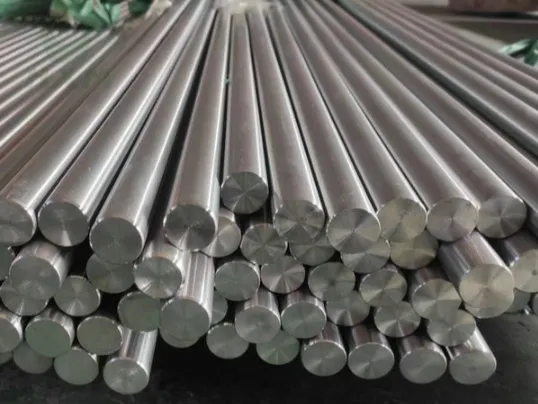
Inconel 718 can be manufactured into bars, forgings, rings, and other forms used for aerospace components. Forging parameters and subsequent heat treatment influence the resulting microstructure and mechanical properties.
Machining requires suitable tooling and process control because nickel-based superalloys can generate substantial cutting forces and heat. Machining allowances, surface finish, dimensional tolerances, and inspection requirements should be defined according to the final component specifications.
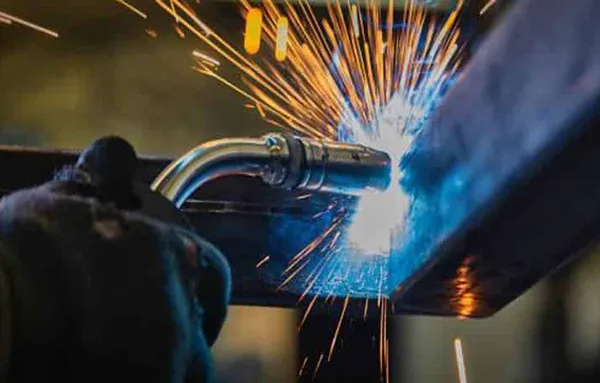
Inconel 718 can be welded using qualified procedures, but welding parameters, joint design, filler selection, and post-weld treatment must be carefully controlled.
Depending on the application, important considerations include:
Joint preparation and cleanliness
Heat input and interpass temperature
Filler-metal compatibility
Cracking susceptibility
Post-weld heat treatment, where required
Inspection and acceptance criteria
For aerospace components, welding procedures and acceptance requirements should be established by the responsible engineering and quality teams. General welding guidance cannot replace application-specific qualification.
Additive manufacturing can produce complex Inconel 718 geometries that may be difficult or costly to manufacture through conventional methods.
Laser powder bed fusion and other qualified additive manufacturing routes can be considered for selected aerospace components. However, the resulting properties depend on process parameters, powder quality, build orientation, heat treatment, post-processing, and inspection.
For safety-critical aerospace parts, the manufacturing process and final component must meet applicable qualification and acceptance requirements. A standard written for a different alloy or additive manufacturing process should not be treated as an Inconel 718 specification.
Fatigue performance is an important consideration for aerospace components subjected to repeated mechanical loads, vibration, and thermal cycling.
Inconel 718 can provide good fatigue resistance when the alloy is processed and used under appropriate conditions. However, fatigue life is not determined by the material grade alone.
Factors that influence component performance include:
Material cleanliness and microstructure
Heat-treatment condition
Surface finish and machining marks
Component geometry and stress concentrations
Manufacturing defects and inspection results
Operating temperature and loading history
For critical components, fatigue performance should be evaluated using design-specific analysis, relevant test data, and applicable aerospace acceptance requirements.
Aerospace procurement requires careful attention to material specifications, product form, condition, testing, and traceability. The correct specification depends on the component and the form in which the alloy is supplied.
| Specification | General Scope |
|---|---|
| AMS 5662 | Inconel 718 in the solution heat-treated condition for product forms defined by the applicable specification |
| AMS 5663 | Inconel 718 in the solution and precipitation heat-treated condition for product forms defined by the applicable specification |
AMS 5662 and AMS 5663 cover different material conditions and should not be treated as interchangeable. The exact scope, revision, product form, and testing requirements must be checked against the applicable specification and purchase order.
Buyers should also verify the currently required revision rather than assume that the latest published revision is automatically the one specified by the customer.
Inconel 718 is commonly associated with the Chinese nickel-based superalloy designation GH4169. However, a material designation alone does not establish full equivalence between two products or specifications.
When sourcing material for an aerospace project, confirm:
Required alloy designation and chemical composition
Applicable product standard and revision
Product form and dimensions
Heat-treatment condition
Mechanical and supplementary test requirements
Inspection documentation and heat-number traceability
Customer-specific or aerospace qualification requirements
Important: Material equivalence should be confirmed against the complete requirements of the purchase order and engineering specification. Similar alloy names do not automatically guarantee identical properties, processing conditions, or qualification status.
Before requesting a quotation, buyers should prepare the following information to help suppliers evaluate the requirement accurately.
Product form: Bar, pipe, wire, welding wire, plate, sheet, forging, ring, or another form
Dimensions: Required diameter, thickness, width, length, or drawing dimensions
Material specification: The applicable AMS specification, product standard, and revision
Material condition: Solution treated, precipitation heat treated, or another specified condition
Quantity: Required quantity and delivery schedule
Quality requirements: Chemical analysis, mechanical testing, inspection, and traceability documentation
Application requirements: Any project-specific or customer-specific qualification criteria
Providing these details at the inquiry stage can help reduce specification discrepancies and unnecessary delays.
1. What is Inconel 718 used for in aerospace applications?
Inconel 718 is used in selected aircraft engine components, turbine discs, engine structures, high-strength fasteners, and certain rocket propulsion components. Its suitability depends on operating conditions and component requirements.
2. Is Inconel 718 suitable for aircraft engine components?
Yes. It is used in selected aircraft engine components that require high strength, fatigue resistance, and elevated-temperature performance. The specific alloy and material condition must meet the component's design and qualification requirements.
3. What is the difference between AMS 5662 and AMS 5663?
Both specifications cover Inconel 718 in specified product forms, but they address different supplied material conditions. AMS 5662 is associated with solution heat-treated material, whereas AMS 5663 is associated with solution and precipitation heat-treated material. Buyers should verify the applicable revision and specification scope before ordering.
4. Is GH4169 equivalent to Inconel 718?
GH4169 is a Chinese nickel-based superalloy designation commonly associated with Inconel 718. However, equivalence should be checked against the required chemical composition, mechanical properties, product standard, heat treatment, and inspection criteria.
5. Can Inconel 718 be welded?
Yes. Inconel 718 can be welded using appropriate procedures. Filler selection, process parameters, cracking control, post-weld treatment, and inspection requirements must be evaluated for the specific application.
6. What information is needed to purchase aerospace-grade Inconel 718?
Buyers should specify the product form, dimensions, applicable material standard, heat-treatment condition, quantity, testing requirements, and required documentation. Aerospace projects may also require customer-specific approvals and additional qualification records.
Looking for Inconel 718 for an aerospace, engineering, or industrial project?
Contact our team with your required product form, dimensions, material specification, quantity, and delivery requirements. We can review your inquiry and help identify the appropriate material supply options for your project.
Request an Inconel 718 Quote to discuss your material requirements with our sales team.
Email: support@ronsteel.com
Ronsco is a trusted global supplier of nickel alloy and stainless steel welding wires, including Inconel, Hastelloy, and Monel series. Our products are manufactured to meet industry standards and are widely used in demanding applications such as aerospace, oil & gas, chemical processing, and power generation. Explore our resource center for the latest industry insights, product knowledge, and technical references.
Contact us for a quote or technical assistance.


 English
 Español
 русский язык
 اللغة العربية