Product Blogs

inconel 625 vs inconel 718,inconel 625 vs 718,inconel 718 vs 625,inconel 625 vs 718 price,inconel 625 vs 718 properties

Inconel 625 vs Inconel 718: What's the Real Difference?

Date: 2026-07-24
Overview
When engineers and procurement specialists compare inconel 625 vs inconel 718, they are often faced with two of the most popular nickel‑based super alloys. Both excel in extreme environments, yet their internal metallurgy, mechanical behaviour, and cost structures are markedly different. This article explains everything from composition and properties to machinability, price, and real‑world applications, so you can choose the right alloy with confidence.
The Fundamental Difference Between Inconel 625 and Inconel 718

The biggest difference between Inconel 625 and Inconel 718 lies in how they achieve their strength.

  • Inconel 625 is strengthened through solid-solution hardening, meaning its mechanical properties come primarily from alloying elements such as molybdenum and niobium. It does not require age-hardening heat treatment.
  • Inconel 718, by contrast, relies on precipitation hardening after aging heat treatment, which gives it significantly higher strength and fatigue resistance.

In simple terms, Inconel 625 is designed for corrosion resistance and high-temperature stability, while Inconel 718 is engineered for maximum strength.

Inconel 625 vs 718 Properties and Hardness
Property Inconel 625 Inconel 718
Tensile strength (MPa) ~690‑930 ~1,250‑1,275
Yield strength (MPa) ~276‑480 ~1,034‑1,035
Fatigue strength (MPa) ~400 ~620
Hardness(HRC) 20‑30 30‑40
Density (g/cm³) 8.44 8.19‑8.24
Max. service temp. (°C) ~980 ~700

The difference in yield strength is staggering. Inconel 718 offers roughly three times the yield strength of Inconel 625. This is why inconel 718 vs 625 discussions almost always end with Inconel 718 being the choice for highly stressed rotating parts, such as turbine discs and shafts. Conversely, Inconel 625 is more ductile and easier to form, which is a major advantage for shaped components.

Inconel 625 vs 718 Composition

A detailed inconel 625 vs Inconel 718 composition comparison reveals why they behave so differently:

  • Inconel 625: high Ni (≥58 %), high Cr (20‑23 %), high Mo (8‑10 %), low Fe (≤5 %). The elevated Mo content significantly boosts resistance to pitting and crevice corrosion.
  • Inconel 718: moderate Ni (50‑55 %), moderate Cr (17‑21 %), lower Mo (2.8‑3.3 %), but higher Fe (≈18 %). Niobium (4.75‑5.5 %) is the key element for precipitation strengthening.

Because 718 contains more iron and less nickel, its corrosion resistance is inherently lower – a trade‑off for its superior mechanical strength.

Corrosion Resistance – Where 625 Excels

In aggressive environments such as seawater, acidic solutions, and chloride‑rich media, inconel 625 vs 718 usually favours 625. Its higher Ni, Cr, and Mo contents provide outstanding resistance to stress‑corrosion cracking and pitting. For marine applications, chemical processing, and flue‑gas desulphurisation, Inconel 625 is often the default.

Inconel 718 is still good. It resists oxidation and general corrosion up to ~700 °C. But it is not as robust in reducing acids or high‑chloride conditions. If your primary concern is corrosion, Inconel 625 is the clear winner; if strength is the priority, Inconel 718 takes the lead.

Temperature Capability

The inconel 625 vs inconel 718 temperature limits are often misunderstood:

  • 625 can be used continuously at up to ~980 °C in oxidising atmospheres. Its high chromium content forms a stable oxide scale.
  • 718 is limited to ~700 °C for continuous service, but within that range, it retains its strength better than any other commercial alloy. Above 700 °C, its precipitates coarsen and strength drops rapidly.

So, for high‑temperature strength, Inconel 718 is unbeatable up to 700 °C; for high‑temperature oxidation resistance above 700 °C, Inconel 625 is the safer bet.

Inconel 625 vs 718 Machinability

Both alloys are notoriously difficult to machine, but inconel 625 vs 718 machinability has subtle differences.

  • Inconel 625 exhibits rapid work‑hardening, which can lead to excessive tool wear and built‑up edge. It requires rigid setups, positive rake tools, and low cutting speeds. Despite that, its lower hardness makes it slightly more forgiving in rough turning.
  • Inconel 718 is even tougher. Its high strength and low thermal conductivity concentrate heat at the cutting edge, accelerating flank wear and notch wear. Machining inconel 718 vs inconel 625 often demands specialised carbide or ceramic inserts, higher coolant pressures, and conservative parameters. However, Inconel 718 has an advantage in weldability: it is less prone to post‑weld age cracking, which is critical when welded components must undergo subsequent heat treatment.

In practice, machining inconel 625 vs 718 requires a thorough understanding of tool geometry and cutting fluids. Many shops have dedicated protocols for each alloy – they are not interchangeable.

Inconel 625 vs Inconel 718 Price

One of the most common questions is: Is Inconel 718 more expensive than Inconel 625?

In general, Inconel 718 is typically 20–50% more expensive than Inconel 625 due to its additional heat treatment requirements, more demanding machining processes, and aerospace-grade quality standards.

Actual pricing varies depending on the product form (bar, plate, tube, forging or welding wire), certification requirements, order quantity, and fluctuations in nickel and other raw material costs.

What Are the Disadvantages of Inconel 625 and Inconel 718?

Disadvantages of Inconel 625

  • Lower strength – cannot compete with 718 for heavily stressed rotating parts.
  • Exposure above 700 °C for long periods can precipitate δ‑phase, reducing ductility and toughness.
  • Additively manufactured (3D‑printed) 625 tends to show reduced plasticity at high temperatures.
  • Its excellent corrosion resistance comes with a high nickel content, which can be cost‑prohibitive for large structures.

Disadvantages of Inconel 718

  • Inferior corrosion resistance compared to 625 – not ideal for seawater or strong acids.
  • Maximum service temperature limited to ~700 °C – cannot be used in hotter zones.
  • Relatively low hot‑hardness – it can gall or wear under friction at elevated temperatures.
  • Requires strict age‑hardening cycles; any deviation compromises mechanical properties.
  • Machiningis extremely challenging – high cutting forces and rapid tool wear are standard.
Application Scenarios: When to Use Inconel 625 or Inconel 718?

After evaluating inconel 625 and 718's properties, machinability, price, and hardness, the choice becomes clear.

Choose Inconel 718 when:

  • You need maximum strength, fatigue resistance, and creep resistance (e.g., turbine disks, compressor blades, rocket engine turbopumps).
  • Service temperature is between room temperature and 700 °C.
  • Welding is required, and subsequent aging is part of your process.

Choose Inconel 625 when:

  • Corrosion resistance is the top priority – marine, chemical, and oil‑and‑gas environments.
  • Service temperature exceeds 700 °C (up to 980 °C) and stresses are moderate.
  • Forming, bending, or welding into complex shapes is needed (its ductility helps).
  • You have a tight budget and can accept lower strength.
Inconel 625 Welding Wire vs Inconel 718 Welding Wire
Item ERNiCrMo-3 ERNiFeCr-2
AWS A5.14 ERNiCrMo-3 A5.14 ERNiFeCr-2
Base Metal 625/825/C276 718/X750
Tensile Strength Medium High
Corrosion Resistance Excellent Good
Typical Industries Chemical Aerospace
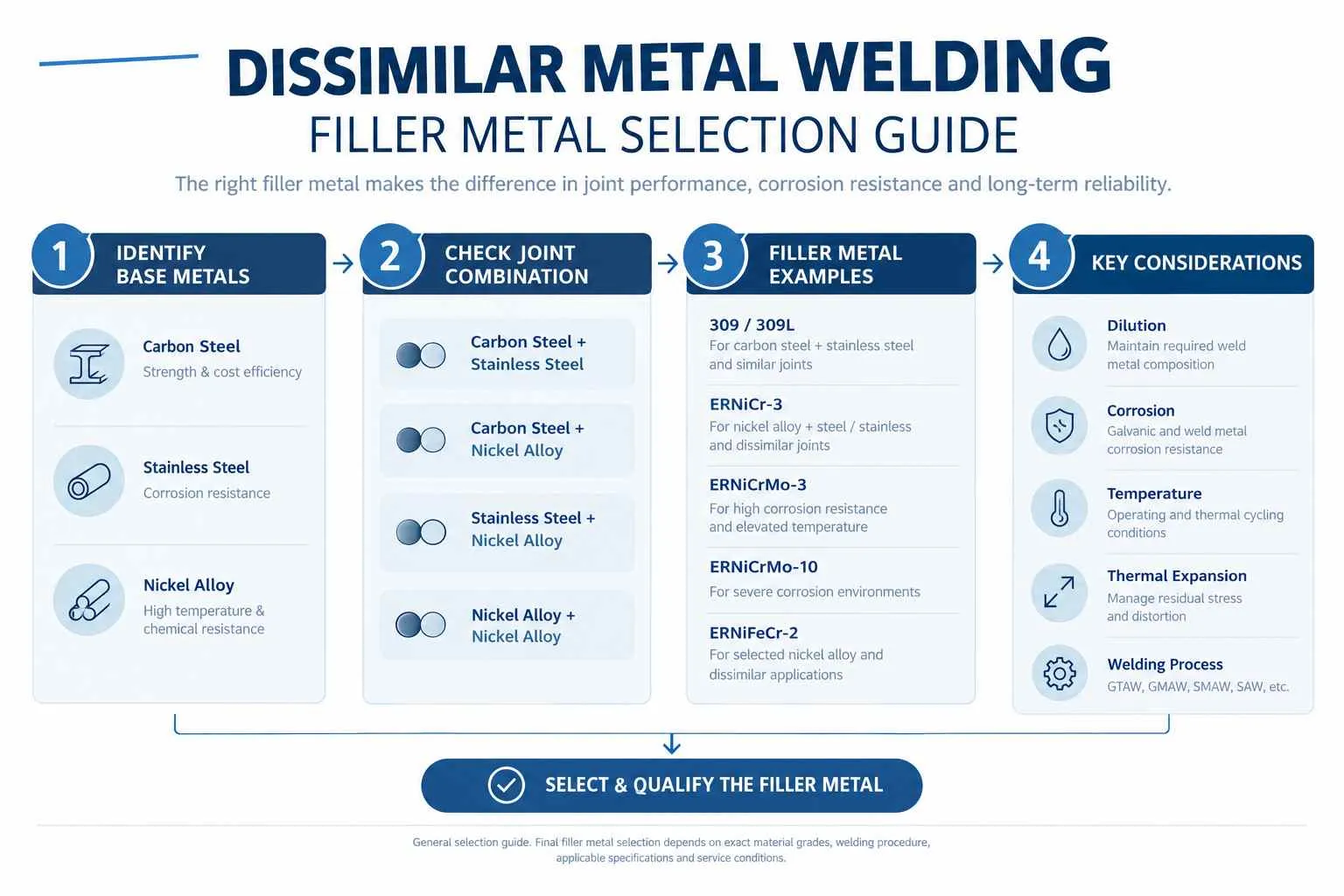
If your project involves welding rather than machining, the decision becomes simpler. ERNiCrMo-3 is generally selected for corrosion-resistant nickel alloys, while ERNiFeCr-2 is preferred for precipitation-hardened alloys such as Inconel 718 and X-750.
Need Inconel 625 or Inconel 718 Materials?

For welding projects and industrial applications, we supply high-quality nickel alloy materials including:

Welding consumables

  • Inconel 625 welding wire (AWS A5.14 ERNiCrMo-3)
  • Inconel 718 welding wire (AWS A5.14 ERNiFeCr-2)
  • TIG filler rods and MIG wires

Other nickel alloy products

  • Plates
  • Pipes and tubes
  • Bars and rods
  • Forgings
  • Custom sizes according to project requirements

We provide material selection support, technical documentation, and quality certificates to meet different industrial requirements.

Contact us for Inconel 625 and Inconel 718 availability, specifications, and quotations.

Email: support@ronsteel.com

About Ronsco

Ronsco is a trusted global supplier of nickel alloy and stainless steel welding wires, including Inconel, Hastelloy, and Monel series. Our products are manufactured to meet industry standards and are widely used in demanding applications such as aerospace, oil & gas, chemical processing, and power generation. Explore our resource center for the latest industry insights, product knowledge, and technical references.

Contact us for a quote or technical assistance.
Latest News

Get a Free Quote

Please feel free to send us your requirements or questions, we’ll reply within 24 hours.
We respect your privacy, all information is for business communication only.