

Nickel MIG welding wire is widely used in industrial fabrication where corrosion resistance, high-temperature performance, or compatibility with nickel-based alloys is required. From chemical processing equipment to offshore components, the right filler metal helps produce reliable welds under demanding service conditions.
However, nickel welding wires differ significantly in chemical composition and intended applications. Some are designed for commercially pure nickel, while others are formulated for nickel-chromium, nickel-copper, or nickel-chromium-molybdenum alloys.
This guide covers common nickel MIG welding wire grades, their applications, key welding considerations, and practical purchasing requirements for industrial buyers and welding distributors.
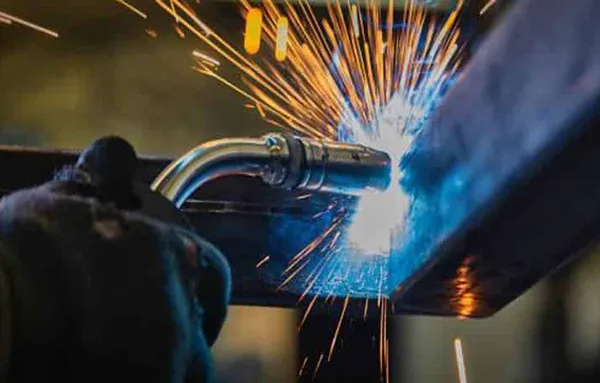
Nickel MIG welding wire is a consumable filler metal used in Gas Metal Arc Welding (GMAW), commonly called Metal Inert Gas (MIG) welding. During the process, a continuously fed wire melts under an electric arc while shielding gas protects the weld pool from atmospheric contamination.
Compared with manual welding processes that use individual electrodes, MIG welding provides continuous wire feeding and can support high production efficiency. It is particularly useful for fabrication shops handling repeated joints, longer welds, and industrial components.
Nickel-based filler metals contain nickel as their principal element, with varying amounts of chromium, molybdenum, iron, copper, niobium, and other elements. These additions influence properties such as corrosion resistance, strength, and suitability for particular alloy systems.
Welding nickel-based alloys and commercially pure nickel.
Joining selected nickel alloys to stainless steel or carbon steel.
Fabricating chemical processing equipment and industrial piping.
Manufacturing components exposed to corrosive media or elevated temperatures.
Performing selected overlay and cladding operations.
The term nickel MIG welding wire covers several different filler metal classifications. Identifying the specific grade is therefore more useful than comparing products by nickel content alone.
Different nickel alloy welding wires are designed for different base materials and service environments. The following grades are widely recognized in industrial welding applications.
ERNiCr-3 is a nickel-chromium-iron-niobium filler metal commonly associated with Alloy 82. It is used for welding certain nickel-chromium alloys, including specified applications involving Inconel 600, 601, and 690, as well as compatible Incoloy 800-series materials.
It is also used in selected dissimilar-metal joints, including some combinations of nickel alloys and stainless or carbon steel. The appropriate filler metal depends on the exact base metals, service conditions, and qualified welding procedure.
Typical applications:
Chemical processing equipment
Heat exchangers and industrial piping
High-temperature alloy fabrication
Selected dissimilar-metal joints
ERNiCr-3 is particularly relevant when the application calls for a nickel-chromium filler metal with suitable compatibility for the specified alloy system.
ERNiCrMo-3 is the filler metal commonly associated with Alloy 625. Its nickel-chromium-molybdenum-niobium composition provides a combination of corrosion resistance and strength that makes it useful in demanding industrial environments.
Chromium and molybdenum contribute to resistance to localized corrosion, including pitting and crevice corrosion in suitable environments. The alloy is widely used for welding Alloy 625 and other compatible nickel-based materials.
Typical applications:
Offshore and marine equipment
Chemical processing vessels and piping
Corrosion-resistant components
Power generation equipment
Selected dissimilar-metal welding and cladding applications
ERNiCrMo-3 is often considered for components exposed to chloride-containing environments or aggressive process media. Actual performance depends on the complete service conditions, including temperature, stress, and chemical exposure.
ERNiCu-7 is a nickel-copper filler metal commonly used for welding Monel 400 and other compatible nickel-copper alloys.
Nickel-copper alloys are used in selected applications involving seawater, marine equipment, and chemical processing. ERNiCu-7 is suitable where the specified base materials and welding procedure call for this filler metal family.
Typical applications:
Marine equipment and piping
Pumps and valves
Chemical processing components
Nickel-copper alloy fabrication
It is important to distinguish ERNiCu-7 from nickel-chromium-molybdenum filler metals. Their alloy compositions and application requirements differ.
ERNi-1 is a nickel-based filler metal used for welding commercially pure nickel and certain compatible nickel materials.
Unlike ERNiCr-3 and ERNiCrMo-3, ERNi-1 is not primarily designed around a nickel-chromium or nickel-chromium-molybdenum alloy system. Its composition makes it relevant to applications requiring compatibility with commercially pure nickel.
Typical applications:
Commercially pure nickel fabrication
Selected chemical processing equipment
Nickel components requiring compatible filler metal chemistry
For procurement purposes, ERNi-1 and nickel alloy filler metals should be treated as distinct product categories rather than interchangeable high-nickel wires.
Tell us your required alloy grade, wire diameter, and order quantity. Our team can help you find suitable nickel alloy welding wire for your application.
Request a QuoteThe following table summarizes the main differences between these filler metal grades.
| Filler metal | Alloy system | Typical use |
|---|---|---|
| ERNi-1 | Commercially pure nickel | Welding compatible pure nickel materials |
| ERNiCr-3 | Nickel-chromium-iron-niobium | Selected nickel-chromium alloys and dissimilar-metal joints |
| ERNiCrMo-3 | Nickel-chromium-molybdenum-niobium | Alloy 625 welding and corrosion-resistant applications |
| ERNiCu-7 | Nickel-copper | Welding compatible nickel-copper alloys |
When comparing products, buyers should consider the specified filler metal classification, chemical composition, and intended application. The trade name alone does not establish suitability for a particular welding project.
Yes. MIG welding can be used for commercially pure nickel and many nickel-based alloys when the filler metal, shielding gas, equipment settings, and welding procedure are appropriate.
The continuous wire feed makes MIG welding useful for industrial production, especially where consistent deposition and productivity are important. Nevertheless, nickel alloys require careful preparation and process control.
Shielding gas selection depends on the filler metal, welding position, transfer mode, and applicable procedure. Argon-based shielding gas is commonly used for nickel alloy GMAW, while other gas mixtures may be specified for particular applications.
Gas selection should follow the filler metal manufacturer's recommendations and the qualified welding procedure. An unsuitable gas mixture can affect arc stability, metal transfer, and weld quality.
Nickel alloys should be cleaned before welding to remove oil, grease, moisture, paint, and other contaminants. Dedicated stainless steel or nickel alloy cleaning tools can help prevent contamination from carbon steel particles.
Clean preparation is particularly important when welding corrosion-resistant alloys, as surface contamination may contribute to weld defects or compromise corrosion performance.
Welding parameters should be controlled to suit the alloy, joint design, and material thickness. Excessive heat input or inappropriate welding conditions can affect distortion, dilution, and weld microstructure.
For critical equipment, follow the applicable welding code and qualified welding procedure. Inspection requirements may include visual examination, nondestructive testing, or other project-specific checks.
Both MIG and TIG welding can be used for suitable nickel alloy applications, but they serve different production needs.
| Factor | MIG welding | TIG welding |
|---|---|---|
| Wire feeding | Continuous, automatic wire feed | Filler metal added separately when required |
| Productivity | Generally higher deposition potential | Often slower for comparable deposition tasks |
| Process control | Suitable for efficient production welding | Precise control of the arc and weld pool |
| Typical use | Production fabrication and longer welds | Precision work, thinner sections, and specialized joints |
The choice depends on component design, thickness, welding position, production volume, and quality requirements. Filler metal compatibility remains important for both processes.
Nickel 99 and Nickel 55 are commonly encountered in the broader market for nickel-based welding consumables, particularly for cast iron repair. However, these names are frequently associated with covered electrodes rather than conventional nickel alloy MIG wire classifications.
Nickel 99 generally refers to a high-nickel cast iron repair electrode, while Nickel 55 generally refers to a nickel-iron electrode. Their suitability depends on the cast iron type, repair requirements, and intended service conditions.
For buyers searching for nickel MIG wire for cast iron, it is important to distinguish between a consumable specifically supplied for GMAW and a product intended for manual electrode welding. Product form and classification should be verified before ordering.
Cast iron repair also differs from welding nickel-based alloys for corrosion resistance or high-temperature service. These applications should not be treated as the same product category.
Nickel alloy filler metals support a range of industrial applications where material performance is more demanding than that of ordinary structural fabrication.
Chemical plants use nickel alloys in selected vessels, piping systems, heat exchangers, and process equipment exposed to corrosive chemicals. Filler metal selection depends on the process medium, temperature, and base material.
Nickel alloy welding consumables are used in selected oil and gas equipment, including components requiring corrosion resistance or dissimilar-metal joints. Offshore and other demanding environments may require additional attention to material specifications and project standards.
Suitable nickel alloy filler metals are used for selected pumps, piping, and equipment exposed to seawater or chloride-containing environments. Nickel-copper and nickel-chromium-molybdenum alloy systems may be relevant depending on the component and service conditions.
Certain nickel alloy filler metals are used for high-temperature components, heat-resistant alloy fabrication, and specialized power generation equipment. The selected grade must meet the design requirements for operating temperature, mechanical properties, and service life.
Across these industries, traceability and compliance with the specified filler metal classification are important considerations for project procurement.
For industrial buyers, choosing a supplier involves more than comparing the price per kilogram. Product consistency, documentation, packaging, and delivery arrangements can affect the total cost of procurement.
Before requesting a quotation, prepare the following information:
For distributors and repeat-order customers, consistent product specifications and dependable supply are also important. Providing complete requirements at the quotation stage helps reduce unnecessary clarification and supports more efficient purchasing.
Looking for nickel alloy MIG welding wire for industrial fabrication, maintenance, or distribution?
Ronscowire can help you review your requirements and identify suitable products from the available supply range. Share your required grade, wire diameter, quantity, and application to discuss product availability and quotation details.
Email: support@ronsteel.com
1. What is the best nickel MIG welding wire?
There is no single best grade for every application. ERNiCr-3, ERNiCrMo-3, ERNiCu-7, and ERNi-1 serve different material systems and welding requirements. The appropriate product depends on the base material and project specification.
2. Can nickel MIG wire be used on stainless steel?
Certain nickel-based filler metals are suitable for joining stainless steel to nickel alloys or other specified materials. The exact stainless steel grade, mating material, and service conditions determine which filler metal should be evaluated.
3. What is the difference between ERNiCr-3 and ERNiCrMo-3?
ERNiCr-3 is a nickel-chromium-iron-niobium filler metal, while ERNiCrMo-3 contains substantial chromium and molybdenum and is associated with Alloy 625. They have different compositions and application ranges.
4. Is nickel MIG welding wire suitable for cast iron?
Some nickel-based consumables are used for cast iron repair, but Nickel 99 and Nickel 55 are commonly associated with covered electrodes. Buyers should confirm that the selected product is actually available in a suitable MIG wire form and is appropriate for the specific cast iron repair.
5. What information should I provide when requesting a quotation?
Provide the filler metal grade, wire diameter, required quantity, and intended application. The base material, applicable standard, packaging requirements, and delivery destination are also useful for preparing an accurate quotation.
Ronsco is a trusted global supplier of nickel alloy and stainless steel welding wires, including Inconel, Hastelloy, and Monel series. Our products are manufactured to meet industry standards and are widely used in demanding applications such as aerospace, oil & gas, chemical processing, and power generation. Explore our resource center for the latest industry insights, product knowledge, and technical references.
Contact us for a quote or technical assistance.


 English
 Español
 русский язык
 اللغة العربية