

Scope: Nickel Alloys, Stainless Steel, and Related Raw Materials
Sources: Publicly available industry data and market information from LME, Mysteel, SMM, the General Administration of Customs of China, DGTR, Malaysia's Ministry of Investment, MITI, ITAC, Egypt's Ministry of Finance, and other relevant sources.
According to data from China's General Administration of Customs cited by Mysteel, China's stainless steel exports reached approximately 445,700 tonnes in August 2026, an increase of 54,300 tonnes, or 13.9%, month-on-month. However, exports decreased by 2,200 tonnes, or 0.5%, year-on-year.
From January to August 2026, cumulative exports totaled approximately 2.8962 million tonnes, down 13.9% year-on-year. Net exports in August reached approximately 304,700 tonnes, representing a month-on-month increase of 10.8%.
The significant month-on-month recovery was mainly driven by a low comparison base in July and the concentrated shipment of previously accumulated orders. Nevertheless, the slight year-on-year decline indicates that the overall export market continues to face pressure.
From January to August 2026, China's top ten export destinations accounted for approximately 1.854 million tonnes, or around 64.02% of total stainless steel exports. Major destinations included Vietnam, India, Russia, South Korea, and Türkiye.
Exports to several destinations increased in August. India recorded the largest month-on-month increase, rising by 27,200 tonnes, or 61.1%. Exports to Türkiye increased by 10,000 tonnes, or 54.8%, while shipments to Russia rose by 8,600 tonnes, or 28.7%.
These figures indicate a recovery in shipments to several major markets during August, although the broader export environment remains affected by weaker year-on-year demand and evolving trade policies.
Authority: Malaysia's Ministry of Investment, Trade and Industry (MITI)
Key Details: Malaysia has initiated an anti-dumping investigation into cold-rolled stainless steel coils and sheets originating in or exported from Indonesia. The products under investigation fall under tariff codes 7219.31–7219.35, 7219.90, and 7220.20. The applicant is Bahru Stainless.
Market Implications: Chinese-origin products are not directly covered by this investigation. However, if Indonesian cold-rolled stainless steel faces restrictions in Malaysia, some affected material could be redirected to other Asian markets, potentially intensifying regional price competition.
The investigation should not be interpreted as a direct trade barrier against Chinese exports. Nevertheless, changes in Indonesian export flows and their potential impact on regional supply and pricing warrant attention.
Authority: South Africa's International Trade Administration Commission (ITAC)
Key Details: Proposed tariff increases include:
Market Implications: If implemented, these proposed changes would significantly increase import costs for the affected products.
The actual impact will depend on the final tariff arrangements and the classification of individual products. Importers and exporters should therefore verify the relevant HS codes and applicable tariff rates before assessing landed costs.
Authority: India's Directorate General of Trade Remedies (DGTR)
Key Details: India has extended the investigation period for cold-rolled stainless steel flat products in the 300 and 400 series originating in China, Indonesia, and Vietnam by six months, moving the deadline to March 28, 2027.
The stated exclusions include hot-rolled products, duplex stainless steel, 200-series stainless steel, and certain products defined by specific nickel-content criteria.
Market Implications: The extension does not eliminate the risk of trade measures; it prolongs the period of uncertainty for affected products.
With no preliminary determination or proposed duty rates disclosed in the information available for this report, exporters should continue to monitor the investigation and consider the potential implications for contract pricing and delivery arrangements.
Authority: Customs, Excise and Service Tax Appellate Tribunal (CESTAT), India
Key Details: According to the reported ruling, anti-dumping duties form part of the customs duty structure and must be included in the tax base used to calculate India's Integrated Goods and Services Tax (IGST) on imported goods.
Market Implications: For products subject to anti-dumping duties, Indian importers may face additional IGST costs arising from the inclusion of those duties in the taxable value.
Consequently, the total import tax burden may be higher than a calculation based on the anti-dumping duty alone. The ruling highlights the importance of evaluating the full landed cost of affected imports rather than considering individual duties in isolation.
Authority: Egypt's Ministry of Finance
Key Details: Egypt has reduced safeguard duties on steel billets from 13% to 12%, subject to a minimum duty of USD 64 per tonne. The rate is scheduled to decrease further to 11% from September 14, 2027.
Market Implications: Egypt's domestic billet production capacity has been reported as insufficient to fully meet demand. The gradual reduction in safeguard duties may provide a more predictable import cost trajectory for steel billet suppliers.
The actual commercial impact will depend on the scope of the measure, product classification, and the final applicable duty arrangements.
The stainless steel market remained weak in late September. As of September 29, mainstream quotations for 304 cold-rolled stainless steel coils in Foshan and Wuxi ranged from RMB 13,750 to RMB 14,400 per tonne.
Indicative price ranges included:
September production schedules remained relatively high, while the reduction in social inventories continued at a slow pace.
On the cost side, stainless steel prices have moved close to estimated production cost levels, limiting the room for further significant declines. Although short-term market conditions may remain weak, cost support has become more evident.
Export prices continue to face pressure from subdued demand and regional competition. At the same time, the proximity of domestic prices to production costs may limit the scope for further substantial price reductions.
Nickel prices followed a generally weak and fluctuating trend in late September.
LME nickel closed at USD 16,165 per tonne on September 28 and declined further to USD 15,985 per tonne on September 29. The most-traded Shanghai nickel futures contract closed at RMB 123,040 per tonne on September 29. LME nickel inventories remained relatively high.
On the supply side, drought conditions reportedly caused temporary production cuts at some Indonesian nickel-iron smelters, providing some support for nickel-iron prices. Meanwhile, adjustments to Indonesia's nickel ore pricing rules reduced certain raw material costs.
Overall, the nickel raw material market continues to face competing supply, cost, and demand factors.
The market has yet to establish a clear directional signal for nickel prices in the short term. Price quotations for stainless steel and nickel alloy products may therefore need to account for raw material price fluctuations, particularly for orders with longer delivery periods.
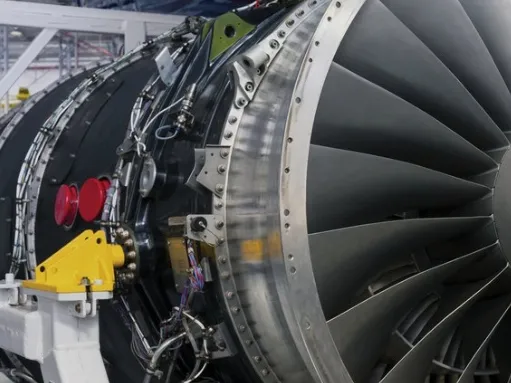
Aircraft engines remain an important application area for nickel-based superalloys. Inconel 718 is widely used in critical high-temperature components of aircraft engines because of its performance under demanding operating conditions.
Global commercial aviation continues to carry a substantial backlog of aircraft orders, supporting longer-term demand prospects for aircraft engines and associated high-temperature alloys. As of the end of June 2026, Airbus reported a commercial aircraft backlog of 9,222 aircraft.
Compared with standard stainless steel, nickel alloys generally offer higher technical complexity and greater value-added potential. Their applications include aerospace, nuclear power, chemical processing, and other industries requiring high-temperature strength or corrosion resistance.
Certain Middle Eastern and Southeast Asian markets continue to present import opportunities for specialized corrosion-resistant alloys. Inconel 625, Inconel 718, and Hastelloy C-276 remain relevant product categories for export market development, particularly where customers require specific material performance, grades, and dimensions.
Indonesian stainless steel capacity continues to expand, while trade barriers in some Asian markets are influencing regional supply flows.
For Chinese exporters, domestic production costs will remain important, but the prices, export volumes, and market positioning of major regional suppliers will also increasingly affect competitiveness.
Changes in trade measures may redirect supply between markets, creating both additional competition and potential opportunities for exporters able to meet specific product and compliance requirements.
Policy developments in major markets, including India and the European Union, are creating increasingly differentiated export conditions across product categories.
Market assessment is therefore becoming more detailed. Export risks and market access requirements may vary significantly according to the destination country, product form, material grade, and HS code.
A country-level assessment alone may not be sufficient to determine whether a particular product can enter a market under the expected commercial conditions.
Stainless steel prices have approached estimated production cost levels, while nickel-iron prices have received some temporary support.
However, inventory levels and production schedules remain relatively high. The short-term market is therefore more likely to be characterized by cost support alongside weak demand, rather than a clear trend of sustained price increases or substantial further declines.
Export pricing will continue to require a balance between raw material costs and market competitiveness.
Over the next three months, regulatory changes and compliance requirements are expected to remain major factors shaping export market conditions.
October will be an important period for regulatory implementation and order adjustments, while November and December will provide a clearer indication of how these measures affect actual orders and customer purchasing patterns.
EU melting and pouring traceability requirements and relevant Indian BIS requirements are approaching important implementation or compliance milestones. Some buyers may bring forward purchases or reconsider suppliers in response to changing requirements.
Product compliance, import documentation, and customer-specific regulatory obligations will remain important factors in order execution.
As new regulations and trade measures begin to influence purchasing decisions, some traditional stainless steel products may face greater export challenges and increased order uncertainty.
Purchasing patterns are also likely to diverge between markets according to local demand, tariff exposure, and import compliance requirements.
For exporters, the ability to understand individual market conditions and respond to customer-specific procurement requirements will become increasingly important.
China's stainless steel exports recovered month-on-month in August 2026, but cumulative exports remained below the previous year's level. Meanwhile, trade investigations, proposed tariff changes, and evolving import compliance requirements are creating a more differentiated export environment across major markets.
Stainless steel prices remain under pressure from high supply and weak demand, although production costs are providing some downside support. Nickel prices continue to fluctuate amid elevated inventories and changing raw material conditions.
For nickel alloys, aerospace, energy, and specialized industrial applications remain important sources of demand. Inconel 625, Inconel 718, and Hastelloy C-276 continue to be relevant materials for applications requiring high-temperature performance or corrosion resistance.
Looking ahead to the final quarter of 2026, market access requirements, product traceability, raw material price movements, and regional supply competition will remain key factors influencing export opportunities for stainless steel and nickel alloy suppliers.
Ronsco is a trusted global supplier of nickel alloy and stainless steel welding wires, including Inconel, Hastelloy, and Monel series. Our products are manufactured to meet industry standards and are widely used in demanding applications such as aerospace, oil & gas, chemical processing, and power generation. Explore our resource center for the latest industry insights, product knowledge, and technical references.
Contact us for a quote or technical assistance.




 English
 Español
 русский язык
 اللغة العربية