

Inconel 600 is widely used in applications where resistance to heat, oxidation, and corrosion is essential. However, selecting the right filler metal is just as important as choosing the base material. An unsuitable filler can affect weld integrity, mechanical performance, and long-term service reliability.
For many welding applications involving Inconel 600, ERNiCr-3 (Alloy 82) is a commonly specified filler metal. Available in TIG rods and MIG welding wire, it is also used for joining other nickel alloys and dissimilar metals.
This guide explores the characteristics of Inconel 600 filler wire, why ERNiCr-3 is widely used, its chemical composition, welding applications, and the factors to consider when selecting the right product.
ERNiCr-3, also known as Alloy 82, is one of the most widely used filler metals for welding Inconel 600. It is a nickel-chromium-based welding alloy designed to provide good strength, oxidation resistance, and corrosion resistance in demanding environments.
ERNiCr-3 is classified under AWS A5.14 and is commonly used for Gas Tungsten Arc Welding (GTAW/TIG), Gas Metal Arc Welding (GMAW/MIG), and Submerged Arc Welding (SAW).
Unlike Inconel 600 base metal, which is designated UNS N06600, ERNiCr-3 is a separate filler metal classification with its own composition requirements (UNS N06082).
Its composition is designed to provide compatibility with nickel-chromium-iron alloys, making it suitable for welding Inconel 600 and several related materials.
Looking for Inconel 600 filler wire for your welding applications? Tell us your required specifications, wire diameter, and quantity. Ronsco supplies ERNiCr-3 nickel alloy welding wires for industrial applications.
Contact Us for a Quote| Designation | Description |
|---|---|
| ERNiCr-3 | AWS A5.14 classification |
| Alloy 82 | Common alloy designation |
| UNS N06082 | Filler metal UNS designation |
| S Ni 6082 | EN ISO 18274 classification |
The performance of ERNiCr-3 comes from its nickel-chromium composition, combined with controlled additions of manganese and niobium.
The following table shows the AWS A5.14 classification composition limits for ERNiCr-3.
| Element | Composition (%) |
|---|---|
| Nickel (Ni) | 67.0 min |
| Chromium (Cr) | 18.0–22.0 |
| Manganese (Mn) | 2.5–3.5 |
| Niobium + Tantalum (Nb + Ta) | 2.0–3.0 |
| Iron (Fe) | 3.0 max |
| Carbon (C) | 0.10 max |
| Silicon (Si) | 0.50 max |
| Titanium (Ti) | 0.75 max |
| Copper (Cu) | 0.50 max |
| Phosphorus (P) | 0.03 max |
| Sulfur (S) | 0.015 max |
Note: These are classification limits, not the guaranteed composition of every production batch. Actual values should be verified against the manufacturer's mill test certificate (MTC).
Several characteristics make ERNiCr-3 suitable for this application:
High nickel content: Provides a nickel-rich weld deposit compatible with nickel-chromium-iron alloy systems.
Chromium addition: Contributes to oxidation and corrosion resistance.
Niobium addition: Helps improve weld metal strength and resistance to certain forms of weld cracking.
High-temperature performance: Supports applications involving elevated operating temperatures.
Dissimilar metal compatibility: Can be used for joining various nickel alloys to stainless steels and carbon steels, subject to application requirements.
These characteristics make ERNiCr-3 a versatile choice for both similar-metal and dissimilar-metal welding.
Inconel 600 filler metal is available in different product forms depending on the welding process. The two common options are TIG filler rods and MIG welding wire.
Although both can use the ERNiCr-3 classification, their physical forms and feeding methods are different.
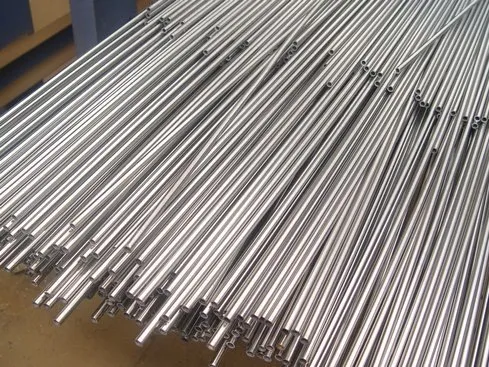
TIG filler rods are supplied in straight lengths and manually fed into the weld pool during Gas Tungsten Arc Welding (GTAW).
They are commonly selected for:
Thin-walled components and precision welding.
Pipe and tube fabrication.
Root passes requiring careful weld pool control.
Applications where weld appearance and dimensional accuracy are important.
TIG welding offers precise control over heat input and filler addition, making it suitable for many critical nickel alloy welding applications.
MIG welding wire is supplied in coils or spools and continuously fed through a welding torch during Gas Metal Arc Welding (GMAW).
Typical applications include:
Industrial fabrication and manufacturing.
Welding thicker components.
Production welding requiring higher deposition rates.
Fabrication of tanks, vessels, and industrial equipment.
MIG welding can offer higher productivity than TIG welding, particularly for larger fabrication projects.
| Comparison | TIG Filler Rod | MIG Welding Wire |
|---|---|---|
| Welding process | GTAW | GMAW |
| Product form | Straight rods | Spools or coils |
| Filler feeding | Manual | Continuous feeding |
| Typical application | Precision welding | Production welding |
| Main advantage | Precise weld pool control | Higher productivity |
The choice depends on component thickness, joint design, production requirements, and the qualified welding procedure.
ERNiCr-3 is not limited to Inconel 600. Its composition makes it suitable for several nickel-chromium-iron alloy systems and dissimilar metal combinations.
ERNiCr-3 is commonly used for welding:
Inconel 600
Inconel 601
Inconel 690
Incoloy 800
Incoloy 800HT
It is also used in certain dissimilar metal welding applications, including joining nickel alloys with stainless steels and carbon steels.
However, filler metal selection should always consider the specific base metal combination, operating conditions, and applicable welding procedure.
Choosing a suitable filler metal involves more than matching the alloy designation. Several technical and purchasing factors should be considered.
First, identify the exact material being welded. Although ERNiCr-3 is commonly used for Inconel 600, other nickel alloys may require different filler metals.
For example:
Inconel 600: ERNiCr-3 is a common choice.
Inconel 625: ERNiCrMo-3 is commonly specified.
Inconel 718: ERNiFeCr-2 is commonly used.
These filler metals are not interchangeable simply because they belong to the nickel alloy family.
Determine whether the application requires TIG, MIG, or another welding process.
For TIG welding, select straight filler rods in the appropriate diameter and length.
For MIG welding, select spooled wire compatible with the welding equipment and feeding system.
Evaluate the service temperature, corrosion environment, mechanical requirements, and potential thermal cycling.
For high-temperature or corrosive applications, the final filler metal selection should be based on the required weld properties and engineering specifications rather than alloy name alone.
Verify that the filler metal meets the required classification, such as AWS A5.14 or ASME SFA-5.14.
For critical applications, review the manufacturer's MTC and confirm compliance with the project specifications and qualified Welding Procedure Specification (WPS).
Proper welding preparation and process control are essential for achieving reliable weld quality.
Remove oil, grease, moisture, oxides, and other contaminants from the joint area before welding. Use clean tools dedicated to nickel alloy fabrication where practical to avoid introducing iron contamination.
Avoid excessive heat input and unnecessary weld passes. Appropriate welding parameters help control weld pool behavior, distortion, and the overall heat-affected region.
For TIG welding, high-purity argon is commonly used as the shielding gas. MIG shielding gas selection should follow the filler metal manufacturer's recommendations and the qualified welding procedure.
Clean the weld area between passes to remove surface contamination and ensure consistent weld quality.
For critical service applications, welding parameters, preheat requirements, interpass temperature limits, and any post-weld heat treatment should follow the applicable code and qualified WPS.
Selecting a reliable Inconel 600 filler wire supplier is important for maintaining consistent material quality and meeting project requirements.
Ronsco supplies nickel alloy welding consumables, including ERNiCr-3 welding wire and rods for industrial welding applications.
Whether you require TIG filler rods or MIG welding wire, Ronsco can assist with product selection according to your material specifications and project requirements.
When requesting a quotation, providing the following information can help ensure an accurate product match:
Required grade: ERNiCr-3 (Alloy 82).
Welding process: TIG or MIG.
Required diameter and product form.
Quantity and packaging requirements.
Applicable standards and inspection documentation.
Contact Ronsco to discuss your Inconel 600 filler wire requirements and obtain a quotation for your project.
ERNiCr-3 (Alloy 82) is one of the most commonly used filler metals for welding Inconel 600. It offers good strength, oxidation resistance, and compatibility with several nickel-chromium-iron alloys.
The final selection should depend on the joint configuration, service conditions, and qualified welding procedure.
No. Inconel 600 is a nickel-chromium-iron base alloy designated UNS N06600, whereas ERNiCr-3 is a nickel-based welding filler metal classified under AWS A5.14 and designated UNS N06082.
ERNiCr-3 is commonly used to weld Inconel 600, but the two materials have different chemical compositions and purposes.
ERNiCr-3 and Alloy 82 generally refer to the same nickel alloy filler metal. ERNiCr-3 is its AWS classification, while Alloy 82 is its common alloy designation.
Yes. ERNiCr-3 is available as straight filler rods for TIG/GTAW welding. It is also supplied in spooled wire form for MIG/GMAW applications.
Yes. ERNiCr-3 is used in certain dissimilar metal welding applications involving nickel alloys and stainless steels. However, the suitability of the filler metal must be evaluated based on the specific stainless steel grade, joint design, operating conditions, and applicable welding procedure.
Inconel 600 is commonly welded using ERNiCr-3 (Alloy 82), while Inconel 625 is commonly welded using ERNiCrMo-3 (Alloy 625 filler metal).
The main difference lies in their chemical compositions and intended applications. ERNiCrMo-3 contains significant molybdenum and niobium additions, providing different corrosion and mechanical performance characteristics.
Yes. ERNiCr-3 is commonly available in various diameters for TIG and MIG welding. Available dimensions, straight lengths, and spool configurations depend on the manufacturer and supply requirements. Contact Ronsco: support@ronsteel.com for current availability and customized requirements.
Ronsco is a trusted global supplier of nickel alloy and stainless steel welding wires, including Inconel, Hastelloy, and Monel series. Our products are manufactured to meet industry standards and are widely used in demanding applications such as aerospace, oil & gas, chemical processing, and power generation. Explore our resource center for the latest industry insights, product knowledge, and technical references.
Contact us for a quote or technical assistance.



 English
 Español
 русский язык
 اللغة العربية