

Selecting the correct TIG filler rod types is critical for achieving strong, crack-free and aesthetically pleasing welds. Whether you are working on carbon steel, stainless steel, aluminum, or exotic alloys, using the wrong filler metal can lead to contamination, weak joints or costly rework.
In this guide, we break down the most common TIG filler rod types, their AWS classifications, compatible base metals, and real-world applications. By the end, you will know exactly which rod to pick for your project.
Tungsten Inert Gas welding produces high-quality and precise welds. However, the filler rod acts as the "glue" that joins two base metals. The wrong choice can cause:
Matching the filler rod composition to your base material is non-negotiable.
All TIG filler rods follow AWS specifications. Below are the most widely used TIG filler rod types grouped by material family.
|
AWS Classification |
Key Features |
Typical Applications |
|
ER70S-2 |
Contains deoxidizers (Ti, Zr, Al); good for dirty or rusty steel |
Automotive repair, structural steel, pipe welding |
|
ER70S-6 |
Higher silicon content; improves wetting and bead appearance |
Clean steel fabrication, sheet metal, general manufacturing |
|
ER70S-3 |
Basic deoxidation; low cost |
Mild steel, non-critical welds |
Best for: General fabrication, repair work, carbon steel pipes and tanks.
|
AWS Classification |
Base Metal Matched |
Key Properties |
|
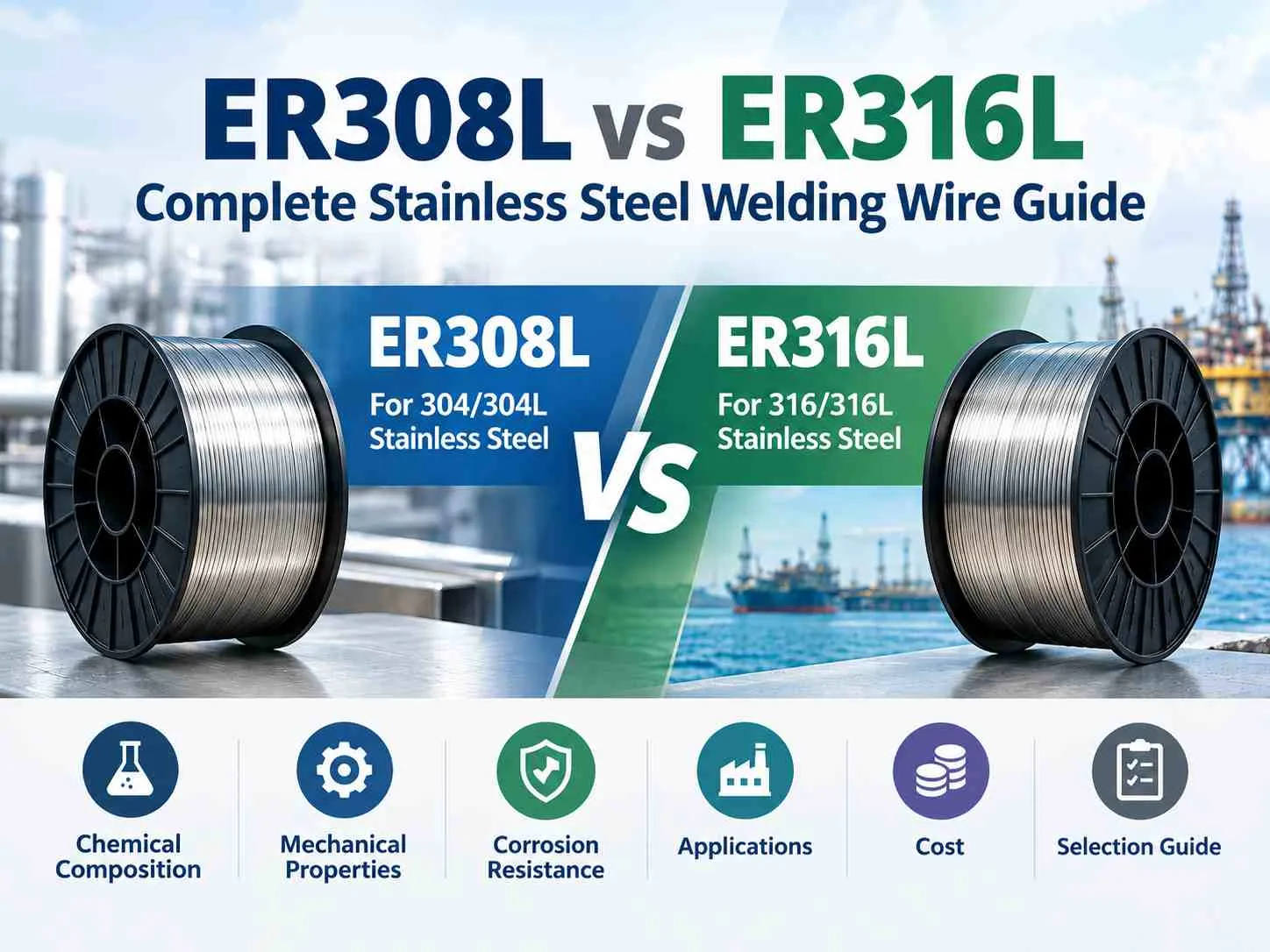
ER308 / ER308L |
304, 304L stainless |
Most common; L-grade resists intergranular corrosion |
|
ER309 / ER309L |
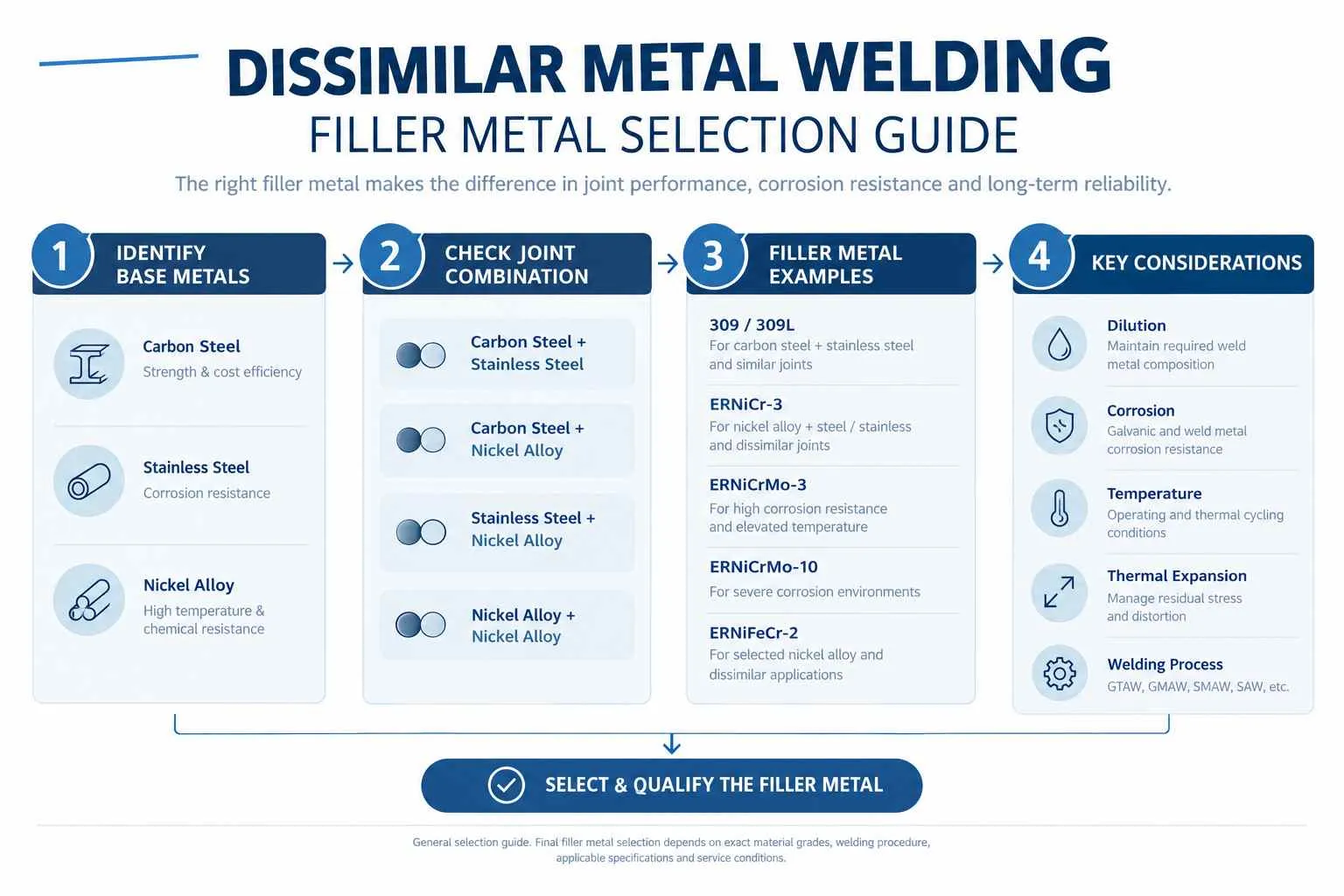
Dissimilar steels (carbon to stainless) |
High crack resistance, excellent for joining different metals |
|
ER316 / ER316L |
316, 316L stainless |
Added molybdenum for pitting resistance in chloride environments |
|
ER347 |
Stabilized grades 321, 347 |
Niobium addition prevents carbide precipitation |
Best for: Food processing equipment, chemical tanks, marine hardware, exhaust systems.
Aluminum requires special care due to its oxide layer and high thermal conductivity.
|
AWS Classification |
Base Metal |
Characteristics |
|
ER4043 |
6061, 6063, 3003, cast aluminum |
Good fluidity, less crack-sensitive, darkens after anodizing |
|
ER5356 |
5052, 5083, 5086, 6061 |
High strength, excellent corrosion resistance, retains color after anodizing |
|
ER1100 |
pure aluminum 1100, 1350 |
High conductivity, soft, for electrical bus bars |
Best for: Boat building, auto parts, bicycle frames, heat exchangers.
|
AWS Classification |
Material |
Applications |
|
ERNiCr-3 |
Inconel 600/601, dissimilar joints |
High-temperature furnace parts, chemical processing |
|
ERCuSi-A (Silicon Bronze) |
Copper, brass, steel to copper |
HVAC, decorative work, brazing |
|
ERTi-2 |
Commercially pure titanium |
Aerospace, medical implants, chemical equipment |
Best for: High-performance industries where corrosion resistance and heat tolerance are critical.
Pro Tip: When in doubt between two TIG filler rod types, choose the one with higher alloy content or better crack resistance, such as ER309L over ER308 for dissimilar metals.
Mistake 1: Using aluminum filler rod on dirty or oxidized base metal.
Correct practice: Always clean the aluminum base metal with a stainless steel brush before welding. This removes the oxide layer and prevents contamination or porosity.
Mistake 2: Mixing stainless steel rod with carbon steel without proper gas shielding.
Correct practice: When joining carbon steel to stainless steel, use ER309L filler rod as a transition layer and ensure adequate argon gas shielding. This prevents cracking and poor fusion.
Mistake 3: Ignoring storage requirements and leaving rods in a humid environment.
Correct practice: Store all TIG filler rods in a dry, clean, sealed container. Moisture can cause hydrogen cracking in steel welds and porosity in aluminum welds.
Mistake 4: Using an oversized rod diameter for thin-gauge material.
Correct practice: For material thinner than 1/8 inch (about 3.2 mm), choose 1/16″or 3/32″diameter rods. This gives you better control over the weld puddle and reduces heat input.
Stop guessing which rod works best. Whether you are welding a food-grade stainless tank, an aluminum boat hull, or a critical pressure vessel, having the correct TIG filler rod types on hand saves time, money and rework.
Contact us today. Tell us your required material, size, and standards (AWS/ASME). We’ll provide:
Click here to request a quote or email us at support@ronsteel.com. Partner with us for a stable and efficient welding consumables supply.
Mastering TIG filler rod types is a skill that separates average welders from experts. By matching the rod to the base metal, considering the service environment, and buying from reputable sources, you ensure strong, durable and beautiful welds every time. Remember that the right filler rod is an investment in quality. Don’t cut corners.
Ronsco is a trusted global supplier of nickel alloy and stainless steel welding wires, including Inconel, Hastelloy, and Monel series. Our products are manufactured to meet industry standards and are widely used in demanding applications such as aerospace, oil & gas, chemical processing, and power generation. Explore our resource center for the latest industry insights, product knowledge, and technical references.
Contact us for a quote or technical assistance.


 English
 Español
 русский язык
 اللغة العربية