

Choosing between Inconel 617 filler wire (AWS A5.14 ERNiCrCoMo-1) and Inconel 625 filler wire (AWS A5.14 ERNiCrMo-3) depends mainly on two factors: service temperature and corrosion environment.
Both are high-performance nickel-based welding consumables, but they are designed for different challenges. Inconel 617 filler wire is developed for extreme high-temperature strength, creep resistance, and oxidation protection, while Inconel 625 filler wire is widely selected for superior corrosion resistance, especially in chloride, marine, and chemical environments.
For welding engineers, EPC contractors, and procurement teams, the question is not which alloy is universally better, but which filler wire matches the actual service conditions of the welded component.
Inconel 617 and Inconel 625 belong to the nickel-chromium-based alloy family, but their alloy design philosophy is different.
| Parameter | Inconel 617 Filler Wire | Inconel 625 Filler Wire |
|---|---|---|
| AWS Classification | A5.14 ERNiCrCoMo-1 | A5.14 ERNiCrMo-3 |
| UNS Number | N06617 | N06625 |
| W.Nr. | 2.4663 | 2.4856 |
| Matching Base Metals | Inconel 617, Incoloy 800H/HT, HP45 alloys | Inconel 625, Incoloy 825, 9% Ni steel, and other nickel alloys |
| Primary Purpose | Extreme-temperature creep resistance | Corrosion-resistant welding from cryogenic to high-temperature service |
| Your Requirement | Recommended Filler Wire | Why |
|---|---|---|
| Continuous service above 1000°C | Inconel 617 (ERNiCrCoMo-1) | Superior creep strength and high-temperature stability |
| Gas turbine combustors and furnace components | Inconel 617 | Excellent oxidation and carburisation resistance |
| Seawater, chloride, and marine environments | Inconel 625 (ERNiCrMo-3) | Outstanding pitting and crevice corrosion resistance |
| Chemical processing equipment | Inconel 625 | Excellent resistance to acids and aggressive media |
| Long-term creep resistance is the priority | Inconel 617 | Designed for extreme-temperature applications |
| General-purpose nickel alloy welding | Inconel 625 | Wider corrosion resistance range and easier material selection |
Simple rule:
The different alloying elements in Inconel 617 filler wire and Inconel 625 filler wire determine their mechanical properties, temperature capability, and corrosion resistance.
Although both alloys contain similar levels of nickel, chromium, and molybdenum, their strengthening mechanisms are different:
| Element (wt%) | Inconel 617 Filler Wire (ERNiCrCoMo-1) | Inconel 625 Filler Wire (ERNiCrMo-3) |
|---|---|---|
| Nickel (Ni) | Balance (≥44.5%) | Balance (≥58.0%) |
| Chromium (Cr) | 20.0 – 24.0% | 20.0 – 23.0% |
| Molybdenum (Mo) | 8.0 – 10.0% | 8.0 – 10.0% |
| Cobalt (Co) | 10.0 – 15.0% | ≤1.0% |
| Niobium + Tantalum (Nb+Ta) | — | 3.15 – 4.15% |
| Aluminium (Al) | 0.8 – 1.5% | ≤0.40% |
| Titanium (Ti) | ≤0.6% | ≤0.40% |
| Iron (Fe) | ≤3.0% | ≤5.0% |
| Carbon (C) | 0.05 – 0.15% | ≤0.10% |
The key characteristics of Inconel 617 come from its Ni-Cr-Co-Mo-Al alloy system:
As a result, ERNiCrCoMo-1 is particularly suitable for welded components exposed to continuous high temperatures, where creep resistance is more important than room-temperature strength.
The performance of Inconel 625 comes from its Ni-Cr-Mo-Nb alloy system:
Because of this combination, ERNiCrMo-3 has become one of the most widely used nickel alloy filler wires for chemical processing, marine engineering, offshore equipment, and corrosion-resistant applications.
When comparing Inconel 617 and Inconel 625 filler wires, room-temperature mechanical properties do not tell the whole story.
Inconel 625 generally provides higher tensile strength and excellent ductility at ambient temperatures, while Inconel 617 demonstrates its advantage under prolonged high-temperature exposure, especially where creep resistance is critical.
| Property | Inconel 617 | Inconel 625 |
|---|---|---|
| Density | 8.36 g/cm³ | 8.44 g/cm³ |
| Melting Range | 1330 – 1380°C | Approx. 1290 – 1350°C |
| Elastic Modulus | Approx. 212 GPa | Approx. 205.8 GPa |
| Coefficient of Thermal Expansion (20–100°C) | 11.6 µm/m·°C | 12.8 µm/m·°C |
The physical properties of both alloys are relatively close, which means both can be processed using common nickel alloy welding techniques. The main difference appears in their performance under service conditions rather than basic physical characteristics.
| Property | Inconel 617 Filler Wire | Inconel 625 Filler Wire |
|---|---|---|
| Tensile Strength | ≥620 MPa (typically 690–890 MPa) | ≥758 MPa (typically 760–930 MPa) |
| Yield Strength | Approx. 280–440 MPa | Approx. 345–450 MPa |
| Elongation | ≥25% (typically 25–35%) | ≥30% |
| Work Hardening Behaviour | Moderate | More pronounced |
At room temperature, Inconel 625 filler wire usually shows higher tensile strength and better work-hardening capability.
However, this does not mean 625 is a replacement for 617 in all applications.
The key difference appears at elevated temperatures:
Therefore, material selection should always consider the actual service temperature and operating environment rather than room-temperature mechanical data alone.
| Parameter | Inconel 617 Filler Wire (ERNiCrCoMo-1) | Inconel 625 Filler Wire (ERNiCrMo-3) |
|---|---|---|
| Long-term Service Temperature | Up to approximately 1100°C | Generally selected up to approximately 980°C for long-term service |
| Optimum Performance Range | 815 – 1150°C | Ambient to approximately 980°C |
| Oxidation Resistance | Excellent due to Cr-Al protective oxide formation | Good, especially in oxidising environments |
| Creep Rupture Strength | Outstanding at high temperatures | Good, but lower than 617 at extreme temperatures |
| Thermal Fatigue Resistance | Good | Very good |
| Main Strength | High-temperature stability | Corrosion resistance across a wide temperature range |
Although Inconel 625 does not match 617’s creep performance at ultra-high temperatures, it offers a better balance of:
This makes ERNiCrMo-3 one of the most widely used nickel alloy filler wires for industrial applications where corrosion resistance is more important than extreme-temperature creep performance.
| Environment | Inconel 617 Filler Wire | Inconel 625 Filler Wire |
|---|---|---|
| Seawater / chloride environments | Limited | Excellent |
| Pitting and crevice corrosion | Moderate | Excellent |
| Acid environments (HCl, sulfuric, phosphoric acids) | Limited to moderate | Excellent |
| High-temperature sulphidation | Excellent | Good |
| Carburisation resistance | Excellent | Moderate to good |
| Nitridation resistance | Excellent | Moderate |
| Oxidising combustion gases | Excellent | Good |
| Low-cobalt nuclear applications | Not preferred due to cobalt content | Preferred in many applications |
| Industry | Inconel 617 Filler Wire | Inconel 625 Filler Wire |
|---|---|---|
| Aerospace & Gas Turbines | Combustion liners, transition ducts, high-temperature turbine components | Exhaust systems, afterburner parts, fuel system components |
| Petrochemical | Ethylene cracking furnaces, high-temperature processing equipment | Chemical reactors, heat exchangers, pollution-control equipment |
| Power Generation | High-temperature heat exchangers, advanced energy systems | FGD systems, heat recovery equipment |
| Marine & Offshore | Limited applications | Seawater piping, offshore platforms, marine components |
| Nuclear Industry | High-temperature applications where cobalt content is acceptable | Applications requiring low-cobalt alloy solutions |
| Industrial Furnace | Furnace fixtures, heating equipment, high-temperature supports | Corrosion-resistant furnace components |
Inconel 617 filler wire is mainly used in applications requiring long-term performance at temperatures above 900°C, including:
Its main advantages are creep resistance, oxidation resistance, and stability under extreme heat exposure.
Inconel 625 filler wire is widely used where corrosion resistance and weld reliability are required, including:
Its excellent resistance to pitting, crevice corrosion, and chloride environments makes it one of the most commonly used nickel alloy filler wires.
The price difference between Inconel 617 filler wire and Inconel 625 filler wire is mainly related to alloy composition and market demand.
| Aspect | Inconel 617 Filler Wire | Inconel 625 Filler Wire |
|---|---|---|
| Raw Material Cost | Higher | Generally lower |
| Main Cost Factor | 10–15% cobalt addition | Higher market availability |
| Availability | More specialised | Widely available |
| Typical Application | Extreme-temperature service | General corrosion-resistant applications |
| Cost Advantage | Performance-focused | Better cost-performance balance |
1. What is the main difference between Inconel 617 and Inconel 625 filler wire?
The main difference is their application focus.
2. Can Inconel 625 filler wire replace Inconel 617?
Generally, no.
Inconel 625 provides excellent corrosion resistance, but it does not provide the same creep resistance as Inconel 617 at temperatures above 1000°C. For extreme heat applications, Inconel 617 remains the preferred choice.
3. What is the AWS equivalent of Inconel 617 filler wire?
The AWS classification of Inconel 617 filler wire is AWS A5.14 ERNiCrCoMo-1.
4. What is the AWS equivalent of Inconel 625 filler wire?
The AWS classification of Inconel 625 filler wire is AWS A5.14 ERNiCrMo-3.
5. Can Inconel 617 and 625 filler wires be used for TIG and MIG welding?
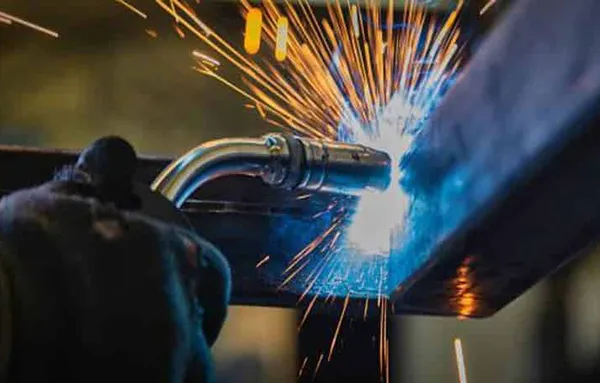
Yes. Both filler wires are commonly available for GTAW (TIG welding) and GMAW (MIG welding). Inconel 625 filler wire is also commonly used for SAW applications.
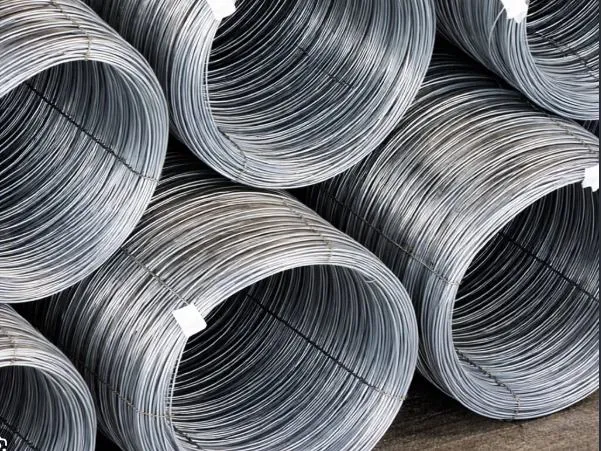
We supply nickel alloy filler wires including Inconel 617 and Inconel 625 according to AWS A5.14 requirements. Available in TIG rods and MIG welding wire forms, our products are suitable for aerospace, chemical processing, petrochemical, marine, and high-temperature industrial applications.
Contact us for technical specifications, product availability, and quotation based on your welding requirements.
Email: support@ronsteel.com
Whatsapp: +8617773160488
Ronsco is a trusted global supplier of nickel alloy and stainless steel welding wires, including Inconel, Hastelloy, and Monel series. Our products are manufactured to meet industry standards and are widely used in demanding applications such as aerospace, oil & gas, chemical processing, and power generation. Explore our resource center for the latest industry insights, product knowledge, and technical references.
Contact us for a quote or technical assistance.


 English
 Español
 русский язык
 اللغة العربية