

Among nickel‑based alloy welding consumables, ERNiCrMo‑3 and ERNiFeCr‑2 are two of the most frequently ordered AWS A5.14 grades. Despite similar appearances and overlapping nominal nickel content, their alloy design, strengthening mechanisms, and application windows are fundamentally different.
Incorrect selection between them may lead to premature weld failure, reduced service life, or even catastrophic fracture. This article provides a systematic technical comparison to support correct material selection and procurement decisions.
ERNiCrMo‑3 is a nickel‑chromium‑molybdenum solid‑solution strengthened filler metal. It contains a minimum of 58% nickel, 20–23% chromium, 8–10% molybdenum, and 3.15–4.15% niobium (plus tantalum). It is designed primarily for outstanding resistance to pitting, crevice corrosion, and stress‑corrosion cracking in aggressive chloride‑containing and acidic environments.
The weld deposit achieves its mechanical properties through solid‑solution strengthening without requiring post‑weld heat treatment (PWHT). Typical applications include welding Inconel 625, Incoloy 825, 25‑6Mo super‑austenitic stainless steels, and various dissimilar joints between nickel alloys and stainless or carbon steels.
ERNiFeCr‑2 is a nickel‑iron‑chromium precipitation‑hardenable filler metal. It contains 50–55% nickel, 17–21% chromium, about 20% iron (balance), 4.75–5.5% niobium, 2.8–3.3% molybdenum, and minor additions of titanium and aluminium. Its high strength derives from a controlled precipitation of γ″ and γ′ phases during a mandatory post‑weld solution anneal and double‑aging heat treatment.
Without this heat treatment, the as‑welded strength is only about 600 MPa, far below its potential of 1200–1300 MPa. Typical applications include welding Inconel 718, 706, and X‑750 alloys, used in aircraft engine components, gas turbine rotors, and nuclear reactor internals where high mechanical strength and creep resistance up to 700°C are required.
| Parameter | ERNiCrMo‑3 | ERNiFeCr‑2 | Engineering Significance |
|---|---|---|---|
| Nickel (Ni), % | ≥58.0 | 50.0–55.0 | Higher Ni in ERNiCrMo‑3 improves resistance to chloride SCC; lower Ni reduces cost in ERNiFeCr‑2. |
| Iron (Fe), % | ≤5.0 | Balance (~20) | High Fe dilutes corrosion resistance but enhances creep strength at elevated temperatures. |
| Chromium (Cr), % | 20.0–23.0 | 17.0–21.0 | Both provide oxidation resistance; slightly higher Cr in ERNiCrMo‑3 aids passivity. |
| Molybdenum (Mo), % | 8.0–10.0 | 2.8–3.3 | Mo is the key element for pitting resistance. The large difference results in significantly higher PREN for ERNiCrMo‑3. |
| Niobium (Nb+Ta), % | 3.15–4.15 | 4.75–5.5 | Higher Nb in ERNiFeCr‑2 promotes precipitation hardening but increases hot‑cracking susceptibility. |
| Strengthening mechanism | Solid‑solution | Precipitation hardening (γ″, γ′) | This is the fundamental difference: ERNiCrMo‑3 is ready‑to‑use as‑welded; ERNiFeCr‑2 requires PWHT. |
| As‑welded tensile strength | 760–900 MPa | ~600 MPa (un‑aged) | Without aging, ERNiFeCr‑2 is weaker than ERNiCrMo‑3. |
| Tensile strength after PWHT | Not applicable | 1200–1300 MPa | After full aging, ERNiFeCr‑2 far exceeds ERNiCrMo‑3 in strength. |
| Pitting Resistance Equivalent Number (PREN) | ~45–50 | ~28–32 | ERNiCrMo‑3 has 2–3 times better resistance to chloride pitting. |
| Maximum service temperature | ~980°C (oxidation) | ~700°C (strength retention) | Above 700°C, ERNiFeCr‑2 loses strength rapidly, while ERNiCrMo‑3 retains oxidation resistance. |
| Suitability for dissimilar welds | Excellent (high tolerance for dilution) | Fair (sensitive to dilution and cracking) | ERNiCrMo‑3 is preferred for joining nickel alloys to stainless steels or carbon steels. |
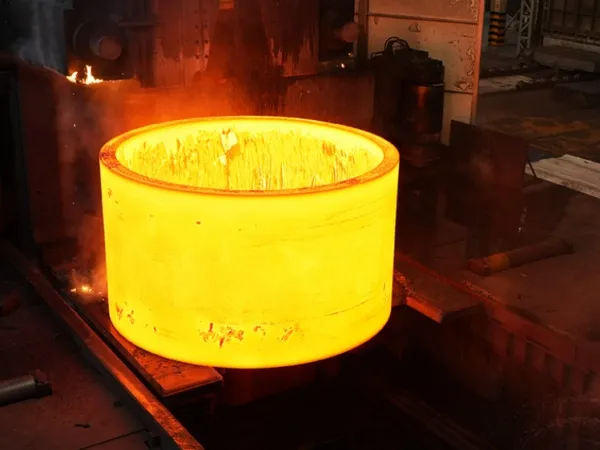
| Post‑weld heat treatment | Not required; optional stress relief at 900°C | Mandatory: 980°C solution + 720/620°C double aging | This is the single most important practical constraint for users. |
Note: Because the two filler metals look almost identical, incoming material inspection should include positive material identification (PMI) using portable XRF or OES to verify molybdenum content (≥8% for ERNiCrMo‑3, ≤4% for ERNiFeCr‑2).
| Scenario | Incorrect Selection | Possible Consequence |
|---|---|---|
| Offshore Inconel 625 piping exposed to chloride-containing seawater | ERNiFeCr-2 selected instead of ERNiCrMo-3 | Reduced resistance to pitting and crevice corrosion due to lower Mo content, increasing the risk of localized corrosion in severe chloride environments. |
| Repair welding of precipitation-hardened Inconel 718 components | ERNiCrMo-3 used instead of ERNiFeCr-2 | Weld metal may not achieve the required age-hardening response and mechanical strength of the base alloy, limiting high-temperature fatigue and creep performance. |
| Dissimilar welding between Inconel 625 and stainless steel | Improper filler selection or unsuitable welding procedure | Poor weld chemistry control or excessive dilution may reduce corrosion resistance or increase the risk of cracking under service conditions. |
1. What is the main difference between ERNiCrMo-3 and ERNiFeCr-2?
ERNiCrMo-3 is a Ni-Cr-Mo filler wire strengthened by solid solution strengthening, providing excellent resistance to pitting, crevice corrosion, and stress corrosion cracking. ERNiFeCr-2 is a precipitation-hardenable filler wire that achieves high strength through solution treatment and aging.
The key difference is that ERNiCrMo-3 is optimized for corrosion resistance, while ERNiFeCr-2 is designed for high mechanical strength and creep resistance.
2. What is ERNiCrMo-3 filler wire used for?
ERNiCrMo-3 filler wire is mainly used for welding Inconel 625 and other nickel-based alloys requiring excellent corrosion resistance. Common applications include chemical processing, offshore equipment, marine systems, sour gas service, and dissimilar welding between nickel alloys and stainless steels.
3. Can ERNiCrMo‑3 be used to weld Inconel 718 base material?
No. ERNiCrMo‑3 lacks the titanium and aluminium needed to form strengthening precipitates in the 718 base metal. The joint strength will be only 50–60% of the base metal, and creep life is severely reduced.
4. Can ERNiFeCr‑2 be used to weld Inconel 625 base material?
Not recommended. Besides the corrosion resistance loss, the higher niobium in ERNiFeCr‑2 reacts unfavourably with molybdenum in the 625 base, increasing hot cracking susceptibility by an estimated 40% or more.
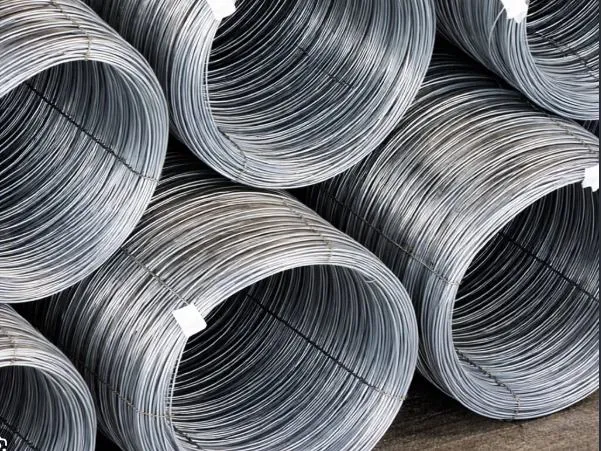
5. How can ERNiCrMo-3 and ERNiFeCr-2 filler wires be identified?
Visual inspection is not reliable because both filler wires have a similar appearance. Identification should be based on material certificates or PMI testing such as XRF or OES, with molybdenum content being one of the key differences.
6. Are ERNiCrMo-3 and ERNiFeCr-2 suitable for the same welding processes?
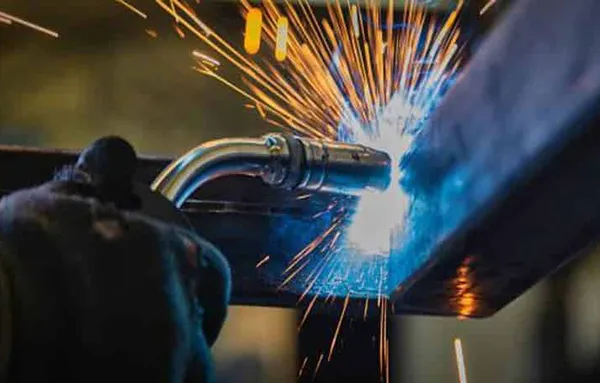
Both filler wires can be used for GTAW and GMAW processes. However, ERNiFeCr-2 requires stricter heat input control and post-weld heat treatment, while ERNiCrMo-3 can usually be used in the as-welded condition.
Choosing the correct nickel alloy filler wire depends on the base material, service environment, operating temperature, mechanical requirements, and welding procedure.
If you are unsure whether ERNiCrMo-3 or ERNiFeCr-2 is suitable for your application, send us your material grade, welding process, required diameter, and application details. Our technical team can help recommend the appropriate filler wire and provide a quotation based on your requirements.
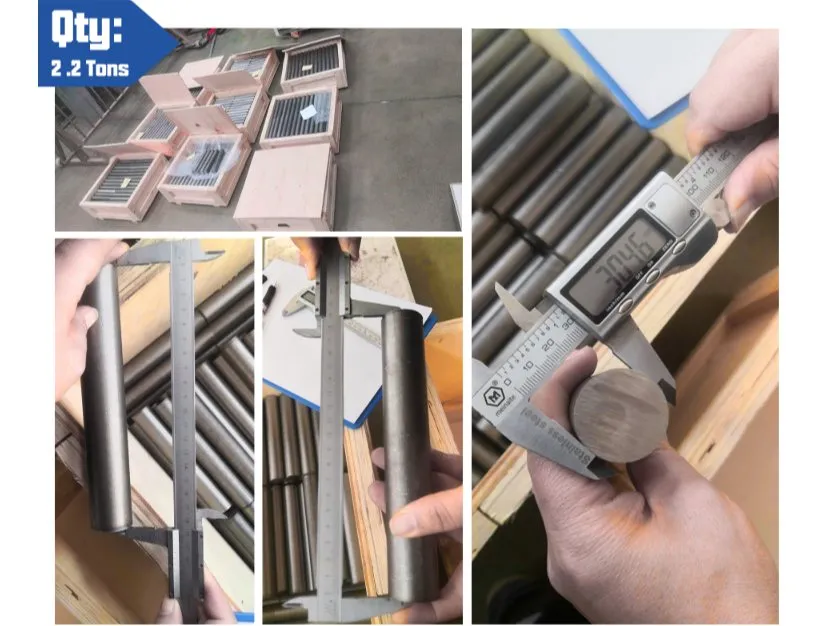
We supply AWS 5.14 ERNiCrMo-3 and ERNiFeCr-2 filler wires with complete material documentation, including chemical composition certificates and inspection reports. Contact us for technical consultation or a customized quotation.
📧 Email: support@ronsteel.com
Ronsco is a trusted global supplier of nickel alloy and stainless steel welding wires, including Inconel, Hastelloy, and Monel series. Our products are manufactured to meet industry standards and are widely used in demanding applications such as aerospace, oil & gas, chemical processing, and power generation. Explore our resource center for the latest industry insights, product knowledge, and technical references.
Contact us for a quote or technical assistance.


 English
 Español
 русский язык
 اللغة العربية