

Storage tanks used in chemical processing, oil and gas, marine, and industrial applications may be exposed to corrosive liquids, chloride-containing environments, and elevated operating temperatures. Selecting the right material is essential for maintaining tank integrity, minimizing maintenance requirements, and extending service life.
Inconel material for storage tanks is considered when conventional materials cannot provide sufficient corrosion resistance or when demanding operating conditions require specialized nickel-based alloys. Among the available grades, Inconel 625 is particularly relevant for certain corrosive chemical storage applications due to its resistance to a wide range of aggressive environments.
This guide explains the benefits of Inconel alloys, compares suitable grades, and discusses material selection and welding considerations for storage tank fabrication.
Inconel is a family of nickel-based alloys designed for demanding service conditions. Depending on the grade, these materials offer combinations of corrosion resistance, high-temperature strength, oxidation resistance, and mechanical reliability.
For storage tanks handling aggressive chemicals or operating under specialized conditions, these properties can provide important advantages.
Corrosion is one of the main challenges in chemical storage tank design. The stored medium, its concentration, temperature, and impurities can significantly affect material performance.
Inconel 625 contains nickel, chromium, molybdenum, and niobium, providing resistance to many oxidizing and reducing environments. Its resistance to pitting and crevice corrosion also makes it a candidate for certain chloride-containing environments.
These characteristics can make Inconel 625 suitable for selected chemical storage tanks and other applications involving demanding corrosive media.
However, corrosion resistance must always be evaluated against the actual chemical composition and operating conditions. No single alloy is suitable for every storage application.
Some industrial storage systems operate at elevated temperatures or experience significant mechanical stresses. Certain Inconel grades retain useful mechanical properties under conditions where conventional materials may become less suitable.
The required strength depends on the alloy grade, temperature, tank design, and applicable construction code. Material selection should therefore consider both mechanical requirements and corrosion performance.
Pitting and crevice corrosion can cause localized damage that is difficult to detect during routine inspections. In chloride-containing environments, these corrosion mechanisms may be particularly concerning.
Inconel 625 offers resistance to pitting and crevice corrosion because of its chromium and molybdenum content. This can be advantageous in selected storage applications where localized corrosion presents a significant risk.
Nevertheless, actual performance depends on the service environment, including temperature, chloride concentration, deposits, and stagnant conditions.
Different Inconel grades have different chemical compositions and performance characteristics. The appropriate grade should be selected according to the intended service rather than treating all Inconel alloys as interchangeable.
Inconel 625 is a nickel-chromium-molybdenum-niobium alloy known for its corrosion resistance and strength.
It may be considered for:
Its combination of corrosion resistance and mechanical properties makes it an important candidate for demanding industrial applications. Its suitability depends on the stored chemical, concentration, temperature, and fabrication requirements.
Inconel 600 is a nickel-chromium-iron alloy with good resistance to oxidation and corrosion in various environments. It is commonly associated with applications involving elevated temperatures.
For storage equipment, its suitability depends on the specific chemical environment and operating conditions. It should not automatically be considered a substitute for Inconel 625 in highly corrosive chemical storage applications.
Inconel 601 provides excellent oxidation resistance at elevated temperatures and is used in high-temperature industrial equipment.
It may be considered for specialized storage or processing equipment exposed to high temperatures and oxidizing conditions. Its corrosion performance must be evaluated against the specific stored medium before selection.
Inconel 690 is a high-chromium nickel alloy known for its resistance to oxidation and certain forms of aqueous corrosion, including stress corrosion cracking in specific environments.
It is primarily associated with specialized applications such as nuclear power equipment and heat-transfer systems. For storage tanks, it should be considered only when its specific corrosion resistance addresses a clearly identified service requirement.
Inconel 617 is a nickel-chromium-cobalt-molybdenum alloy designed for high-temperature strength and oxidation resistance.
It is mainly used in demanding high-temperature equipment and specialized industrial processing systems. Although it may be relevant to certain heated process vessels, it is generally not a first-choice material for conventional ambient-temperature storage tanks.
The final grade selection should be based on the operating environment, engineering requirements, and applicable material specifications.
Whether you need nickel alloy materials or welding filler metals for storage tank fabrication, our team can help you discuss your requirements.
To receive a faster and more accurate quotation, include the following in your inquiry: drawing or specification; alloy grade; quantity; certification requirements; required delivery date; and destination port.
Request a Quote →The following table summarizes the main characteristics of these Inconel grades and commonly used welding filler metals for reference.
| Inconel Grade | Main Characteristics | Commonly Used Matching Filler Metal* |
|---|---|---|
| Inconel 625 | Corrosion resistance, pitting and crevice corrosion resistance | ERNiCrMo-3 |
| Inconel 600 | Oxidation resistance and performance in various corrosive environments | ERNiCr-3 |
| Inconel 601 | High-temperature oxidation resistance | ERNiCr-3 |
| Inconel 690 | High chromium content and resistance to certain corrosive environments | ERNiCr-3, depending on application |
| Inconel 617 | High-temperature strength and oxidation resistance | ERNiCrCoMo-1 |
Filler metal selection should be verified against the base material, joint configuration, and applicable welding procedure. The next section discusses key welding considerations for Inconel storage tank fabrication.
Stainless steel and nickel-based alloys can both be used in storage equipment, but their suitability varies with the application.
| Selection factor | Stainless steel | Inconel alloys |
|---|---|---|
| Corrosion resistance | Suitable for many general and moderately corrosive services | Selected grades offer enhanced resistance in demanding environments |
| High-temperature performance | Depends on grade and operating conditions | Certain grades are designed for demanding high-temperature service |
| Material cost | Generally lower | Generally higher |
| Typical applications | Water, food processing, and many industrial liquids | Selected aggressive chemical and specialized industrial services |
| Material selection | Based on the stored medium and design requirements | Requires grade-specific evaluation of corrosion, strength, and temperature |
For many conventional storage tanks, stainless steel may provide sufficient performance at a lower material cost. In more aggressive environments, an appropriate Inconel grade may offer advantages that justify the additional investment.
The decision should be based on total lifecycle cost, including fabrication, inspection, maintenance, and potential downtime, rather than material price alone.
Using solid nickel-based alloy throughout a storage tank can be expensive, particularly for large tanks requiring substantial material thickness.
Depending on the tank design and service conditions, alternative construction approaches may be evaluated.
The choice depends on structural requirements, corrosion exposure, fabrication methods, and applicable engineering codes. Cladding and lining also require careful control of bonding, weld quality, and corrosion protection at joints and transitions.
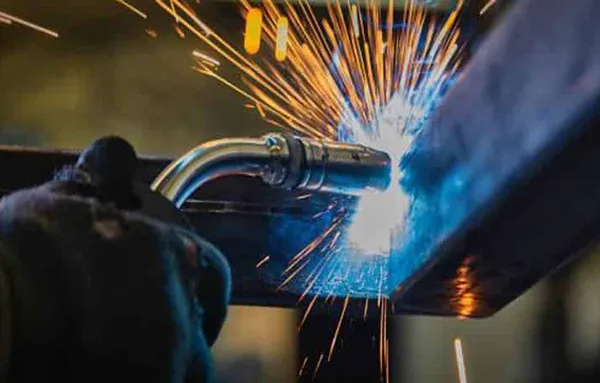
Welding is a critical part of storage tank fabrication because weld integrity directly affects structural reliability and resistance to leakage.
The filler metal should be selected according to the base alloy, joint design, service environment, and applicable welding procedure specification.
For Inconel 625, ERNiCrMo-3 is a commonly used filler metal for gas tungsten arc welding (GTAW/TIG) and gas metal arc welding (GMAW/MIG). ENiCrMo-3 is also used as a covered electrode classification for shielded metal arc welding (SMAW).
For Inconel 600 and other nickel-based alloys, filler metal selection depends on the base material and required weld properties. Dissimilar-metal joints and alloy cladding require additional evaluation of dilution, weld metal properties, and corrosion requirements.
Important fabrication considerations include:
For tanks operating under demanding conditions, welding procedures and inspection requirements should be established before fabrication begins.
Before specifying an Inconel grade, engineers and procurement teams should evaluate several key factors.
A qualified materials engineer should review these factors before the final material specification is approved.
Inconel is not universally better than stainless steel. Certain Inconel grades offer superior resistance to specific corrosive environments or higher-temperature performance, but stainless steel is often more economical for conventional storage tanks. The best choice depends on the stored medium, operating conditions, and lifecycle cost.
Inconel does not rust in the same way as ordinary carbon steel under typical conditions, but it is not completely immune to corrosion. Its resistance depends on the alloy grade and service environment. Certain chemicals, temperatures, or localized conditions can still cause corrosion or surface degradation.
Inconel alloys combine a nickel-rich composition with other alloying elements to achieve specific properties, such as corrosion resistance, oxidation resistance, and high-temperature strength. Different grades are engineered for different service conditions, so selecting the right grade is more important than choosing Inconel based on its name alone.
Inconel is generally more expensive than stainless steel because of its nickel content, alloying elements, and specialized manufacturing requirements. The final cost varies by grade, product form, dimensions, and market conditions. For storage tanks, the total project cost should also account for fabrication, welding, maintenance, and expected service life.
Inconel material for storage tanks can be a suitable choice when corrosion resistance, mechanical performance, or temperature requirements exceed the capabilities of more conventional materials. Inconel 625 is particularly worth evaluating for selected aggressive chemical storage applications, while grades such as 600, 601, 690, and 617 serve different specialized requirements.
The most effective material selection process considers the stored medium, operating environment, fabrication method, welding requirements, and total lifecycle cost. For large storage systems, nickel alloy cladding or lining may also be worth evaluating as an alternative to full-alloy construction.
Ronsco supplies nickel alloy welding consumables and metal products for industrial applications. Contact our team to discuss your material requirements and identify suitable products for your project.
📞 Whatsapp: +8617773160488
📧 Email: support@ronsteel.com
🌐 Website: https://www.ronscowire.com/
Ronsco is a trusted global supplier of nickel alloy and stainless steel welding wires, including Inconel, Hastelloy, and Monel series. Our products are manufactured to meet industry standards and are widely used in demanding applications such as aerospace, oil & gas, chemical processing, and power generation. Explore our resource center for the latest industry insights, product knowledge, and technical references.
Contact us for a quote or technical assistance.


 English
 Español
 русский язык
 اللغة العربية