

Choosing the right welding electrode involves more than identifying a model number. The electrode must be suitable for the welding process, base metal, welding position, current requirements, and service environment.
So, what are the different welding electrodes types?
The most fundamental distinction is between consumable and non-consumable electrodes. From there, electrodes can be further classified by welding process, coating, material, and application. This guide explains the main welding electrode types, with particular attention to stainless steel and nickel alloy electrodes.
A welding electrode is a conductive component used to establish an electric arc or conduct current in a welding circuit.
Depending on the welding process, an electrode may melt and become part of the weld metal, or it may remain essentially intact while a separate filler metal is supplied.
This creates the basic classification:
The term electrode is therefore broader than stick electrode. Stick electrodes, solid welding wires, flux-cored wires, and tungsten electrodes can all be considered welding electrodes within their respective processes.
The easiest way to understand the different types of electrodes in welding is to classify them by whether they are consumed during the process.
Consumable electrodes melt during welding and become part of the deposited weld metal.
Common consumable electrode types include:
| Electrode type | Welding process | Typical examples |
|---|---|---|
| Stick electrodes | SMAW | E6013, E7018, E308L, ENiCrFe-3 |
| Solid welding wires | GMAW / MIG / MAG | ER70S-6, ER308L, ERNiCrMo-3 |
| Flux-cored electrodes | FCAW | E71T-1, E308LT-1 |
| SAW electrodes | Submerged Arc Welding | Carbon steel, stainless steel, and nickel alloy wires |
Stick electrodes are individually handled, while solid and flux-cored electrodes are normally continuously fed during welding.
Non-consumable electrodes are designed to maintain the arc without intentionally providing the filler metal.
The most common example is thetungsten electrode used in GTAW/TIG welding.
Common tungsten electrode types include:
When filler metal is required during TIG welding, it is normally supplied separately.
| Feature | Consumable | Non-consumable |
|---|---|---|
| Electrode is intentionally melted | Yes | No |
| Provides filler metal | Yes | Normally no |
| Typical processes | SMAW, GMAW, FCAW, SAW | GTAW/TIG, PAW |
| Typical form | Stick, wire, tubular wire | Tungsten |
| Main advantage | High productivity and deposition rate | Precise arc control |
The welding process determines the physical form and operating method of the electrode.
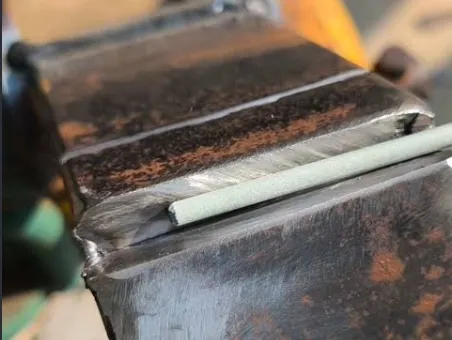
Stick electrodes are metal cores covered by a flux coating. They are used in Shielded Metal Arc Welding (SMAW).
Common examples include:
SMAW electrodes are widely used in construction, maintenance, pipelines, structural fabrication, pressure equipment, and field welding.
One major advantage is portability: the process does not require a continuous wire-feeding system.
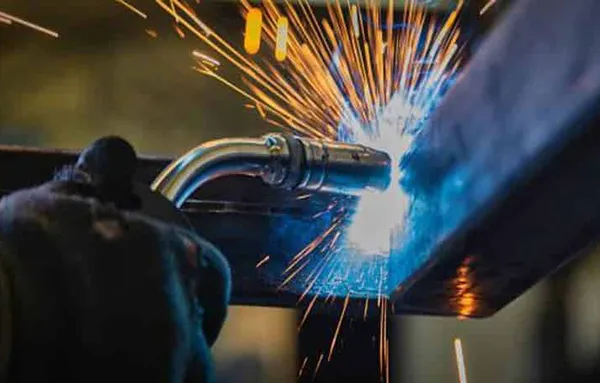
Solid welding wires are continuously fed through the welding gun in Gas Metal Arc Welding (GMAW/MIG/MAG).
Typical examples include:
Because the wire is continuously fed, GMAW can provide high productivity and relatively high deposition efficiency.
Flux-cored electrodes are tubular wires containing a flux or other core material.
They are used in Flux-Cored Arc Welding (FCAW) and can be either gas-shielded or self-shielded, depending on the electrode classification.
Common applications include structural fabrication, heavy equipment, shipbuilding, pipelines, and stainless steel fabrication.
Submerged Arc Welding uses a continuously fed consumable wire or strip electrode together with granular flux.
SAW is particularly suitable for long welds and high-deposition applications such as:
For covered stick electrodes, the coating strongly influences arc characteristics, slag formation, deposition behavior, hydrogen level, and operating requirements.
Common coating categories include:
| Coating type | Main characteristics | Typical examples |
|---|---|---|
| Cellulosic | Strong penetration and relatively thin slag; useful for field and root-pass welding | E6010, E6011 |
| Rutile | Smooth arc, easy operation, good bead appearance and slag removal | E6013 and some stainless electrodes |
| Low-hydrogen | Low diffusible hydrogen and improved resistance to hydrogen-assisted cracking | E7018 and selected alloy electrodes |
| Iron-powder | High deposition efficiency for suitable applications and positions | E7024, E7028 |
Coating terminology should not be transferred mechanically between different AWS electrode specifications. The complete electrode classification and manufacturer's datasheet should be used to determine polarity, welding position, and operating parameters.
Another important welding electrode classification is based on the alloy system of the deposited weld metal.
Common categories include:
The selection becomes increasingly specialized as alloy content and service requirements increase.
For example, E7018 may be suitable for many structural carbon steel applications, while a nickel alloy electrode may be required for a highly corrosive or high-temperature application.
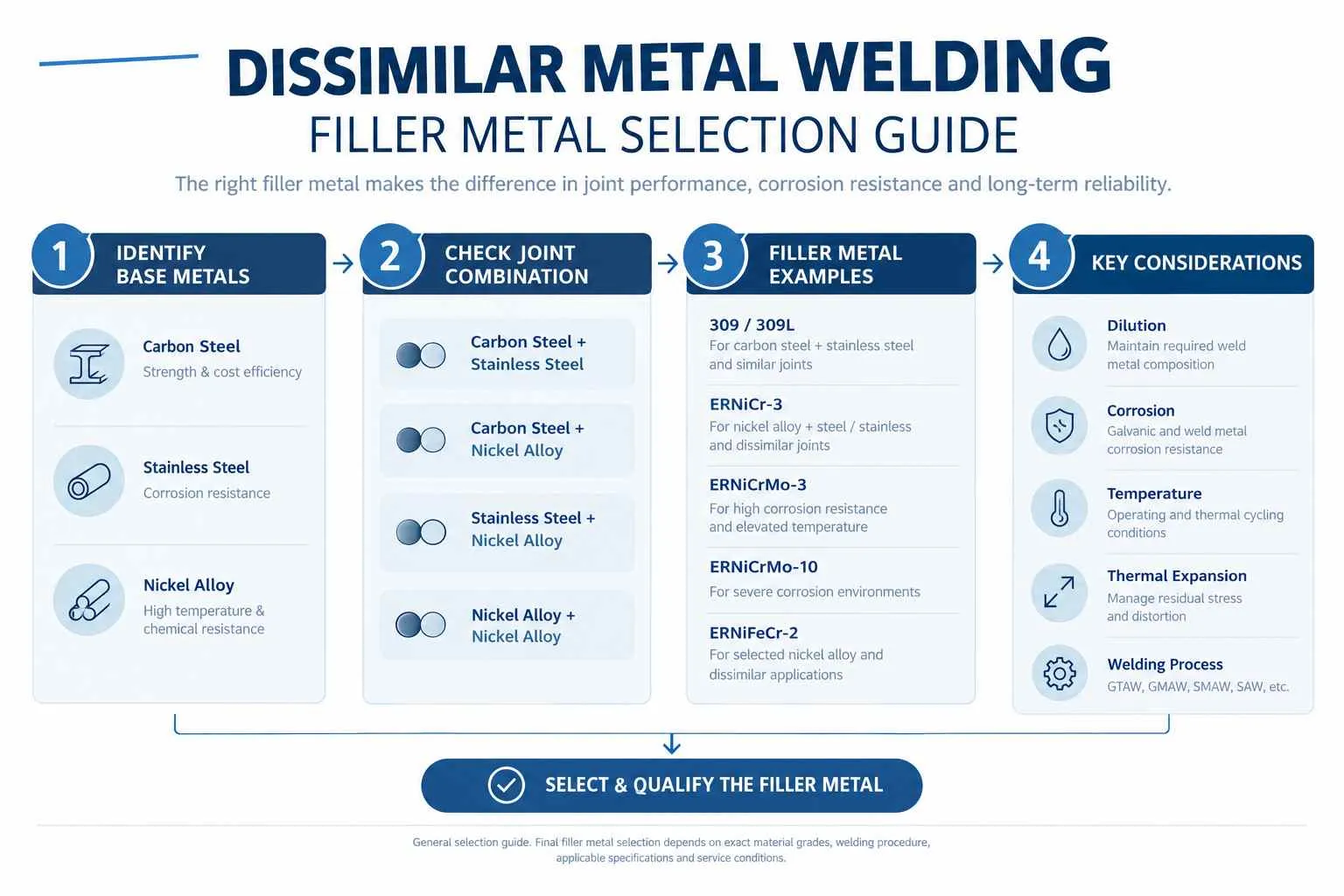
Nickel alloy electrodes are used for applications where carbon steel or conventional stainless steel electrodes cannot provide the required combination of corrosion resistance, high-temperature performance, mechanical properties, or metallurgical compatibility.
Under AWS A5.11, important nickel electrode families include:
ENi-1 is a representative pure-nickel electrode.
It is commonly used with commercially pure nickel such as Ni 200 and Ni 201 where high nickel content, ductility, and corrosion resistance are required.
ENiCu-7 is widely associated with nickel-copper alloys such as Monel 400.
Typical applications include:
The ENiCrFe family is important for welding nickel-chromium-iron alloys and selected dissimilar-metal joints.
| AWS electrode | Typical alloy/application |
|---|---|
| ENiCrFe-2 | Nickel alloys and selected high-temperature applications |
| ENiCrFe-3 | Inconel 600/601 and various dissimilar-metal joints |
| ENiCrFe-7 | Inconel 690 and demanding corrosion-resistant applications |
ENiCrFe-3, commonly associated with Alloy 182-type electrodes, is one of the best-known nickel alloy stick electrodes for joining nickel alloys and dissimilar metals.
ENiCrMo electrodes are designed for demanding corrosion-resistant applications.
| AWS electrode | Typical alloy/application |
|---|---|
| ENiCrMo-3 | Inconel 625 and related nickel-chromium-molybdenum alloys |
| ENiCrMo-4 | Hastelloy C-276 |
| ENiCrMo-10 | Hastelloy C-22 |
These electrodes are used in chemical processing, marine equipment, pollution-control systems, corrosion-resistant piping, and other aggressive service environments.
ENiMo electrodes are associated with nickel-molybdenum alloy systems designed for severe reducing-acid environments.
Representative classifications include ENiMo-7 and ENiMo-10.
The exact electrode should be selected according to the base-metal grade, corrosion environment, joint configuration, and applicable welding procedure.
Stainless steel electrodes are commonly classified under AWS A5.4 and include several metallurgical families. The most common types are austenitic, duplex, martensitic, and ferritic stainless steel electrodes.
Austenitic electrodes are widely used for general stainless steel fabrication.
| AWS electrode | Typical base metal | Common applications |
|---|---|---|
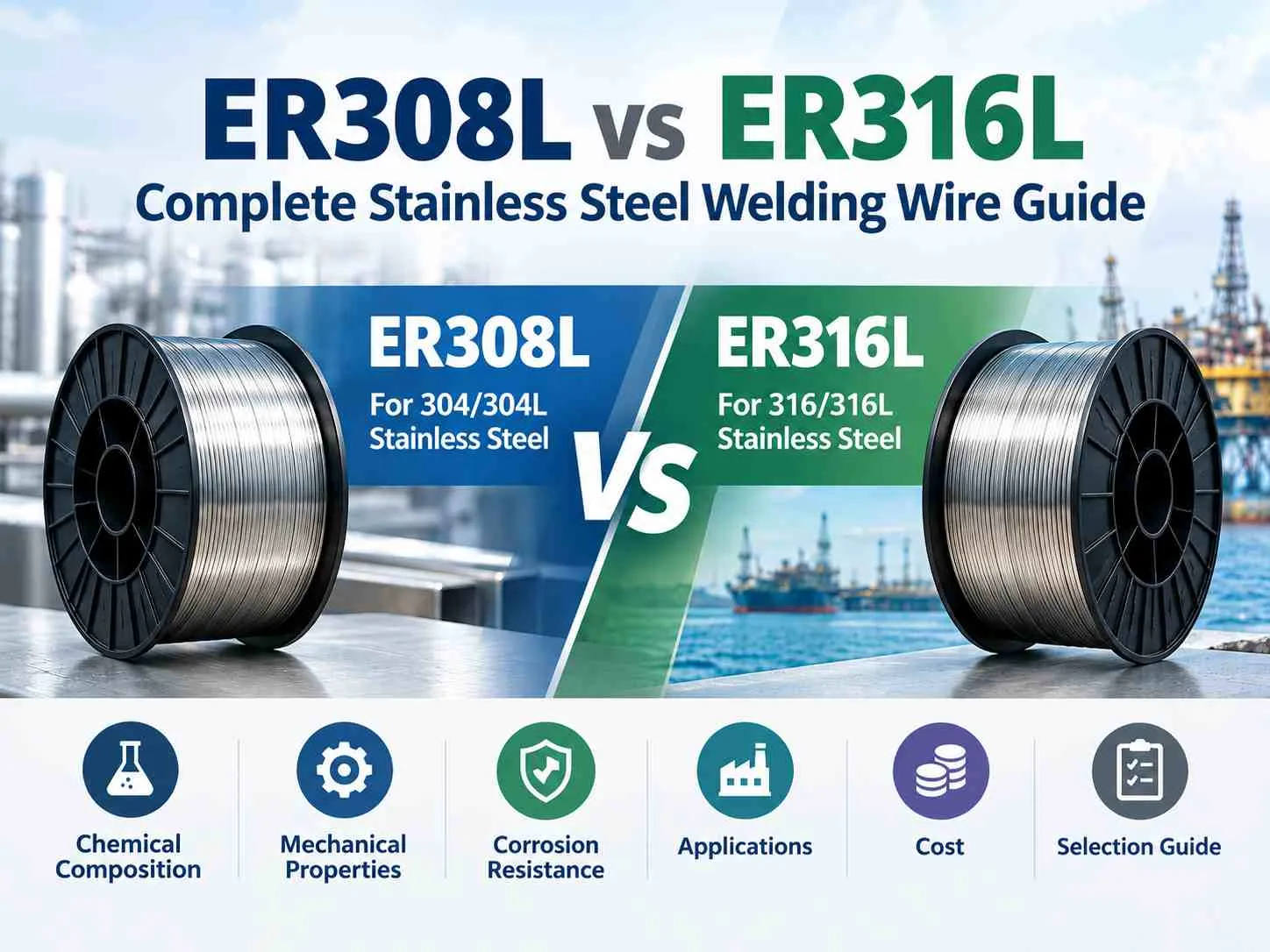
| E308L | 304 / 304L | General stainless steel fabrication |
| E316L | 316 / 316L | Chemical, marine, and corrosion-resistant applications |
| E309L | Stainless-to-carbon steel | Dissimilar-metal welding |
| E310 | Heat-resistant stainless steels | Furnaces and high-temperature equipment |
| E347 | 321 / 347 stainless steels | High-temperature applications |
The correct electrode should be selected according to the base-metal grade, joint requirements, and service environment.
For stainless steel welding, electrode selection should be based on the specific base metal and applicable welding requirements rather than alloy name alone.
Carbon steel electrodes represent some of the most widely used welding electrode types.
| AWS electrode | General type | Typical application |
|---|---|---|
| E6010 | Cellulosic | Pipeline root passes and field welding |
| E6011 | Cellulosic | Field welding and maintenance |
| E6013 | Rutile | Thin sheet and general fabrication |
| E7018 | Low-hydrogen | Structural steel and critical fabrication |
| E7024 | Iron-powder | High-deposition welding in suitable positions |
For these electrodes, strength is only one part of the selection process. Welding position, hydrogen control, joint design, base-metal grade, and operating conditions must also be considered.
| Application | Common electrode choice |
|---|---|
| General carbon steel fabrication | E6013 / E7018 |
| Pipeline root welding | E6010 / E6011 |
| 304 stainless steel | E308L |
| 316 stainless steel | E316L |
| Stainless-to-carbon steel | E309L |
| 2205 duplex stainless steel | E2209 |
| Inconel 600 | ENiCrFe-3 |
| Inconel 625 | ENiCrMo-3 |
| Hastelloy C-276 | ENiCrMo-4 |
| Monel 400 | ENiCu-7 |
| Pure nickel | ENi-1 |
| TIG welding | Tungsten electrode |
1. What are the main types of welding electrodes?
The main categories are consumable and non-consumable electrodes. Consumable electrodes include stick electrodes, solid welding wires, flux-cored electrodes, and SAW electrodes. Tungsten electrodes used for TIG welding are the most common non-consumable type.
2. What is the difference between a welding electrode and a welding rod?
The terms are sometimes used interchangeably in everyday welding language, but technically they are not always equivalent. An electrode is a broader term that refers to the conductive component used in the welding circuit, while rod is often used to describe a separate filler rod or a stick-type electrode depending on the context.
3. What type of electrode is used for stainless steel?
The electrode depends on the stainless steel grade. Common examples include E308L for 304 stainless steel, E316L for 316 stainless steel, E309L for many dissimilar stainless-to-carbon steel joints, and E2209 for duplex 2205.
4. What type of electrode is used for nickel alloys?
Nickel alloy electrodes are selected according to the alloy system and application. Common examples include ENi-1, ENiCu-7, ENiCrFe-3, ENiCrMo-3, ENiCrMo-4, and ENiCrMo-10.
5. Are all welding electrodes consumable?
No. Most stick electrodes, solid welding wires, flux-cored electrodes, and SAW electrodes are consumable. Tungsten electrodes used in TIG welding are non-consumable.
Choosing the right welding electrode starts with the base metal, welding process, and service requirements. For stainless steel and nickel alloy applications, proper alloy matching is especially important.
If you are sourcing welding electrodes, send us the required electrode classification, material grade, diameter, and quantity for a suitable product recommendation and quotation.
Email: support@ronsteel.com
Ronsco is a trusted global supplier of nickel alloy and stainless steel welding wires, including Inconel, Hastelloy, and Monel series. Our products are manufactured to meet industry standards and are widely used in demanding applications such as aerospace, oil & gas, chemical processing, and power generation. Explore our resource center for the latest industry insights, product knowledge, and technical references.
Contact us for a quote or technical assistance.


 English
 Español
 русский язык
 اللغة العربية