

The numbers on a welding rod aren’t random. They’re your clue to whether a weld will hold up in a chemical plant or a kitchen sink. For carbon steel, E7018 means 70,000 PSI and all‑position use. For stainless, E308L‑16 means 18‑8 chromium‑nickel with low carbon. But for nickel alloys including Inconel, Monel, and Hastelloy, the ENi code is a chemical formula, not a strength rating.
This guide walks you through each family, with the most detailed breakdown on the nickel‑alloy electrodes that demand the most careful selection.
For critical applications such as chemical reactors, offshore platforms, aerospace engines, nuclear components, and high‑temperature exhaust systems, nickel‑based alloys are the materials of choice. Their welding electrodes are classified under AWS A5.11 and AWS A5.14. The numbering system here is chemistry‑driven, and understanding it can save you from catastrophic weld failure.
All nickel‑alloy stick electrodes start with ENi:
After “Ni”, you'll see additional letters and numbers that describe the alloy system and specific composition variant.
The AWS A5.11/A5.14 system uses a combination of chemical symbols and a trailing dash number to pinpoint the exact grade. Here's a breakdown of the most common families:
| Code Example | Alloy System | Key Elements | Typical Base Metal |
|---|---|---|---|
| ENi‑1 | Commercially pure nickel | ≥ 99% Ni | Nickel 200/201 |
| ENiCu‑7 | Nickel‑copper (Monel‑type) | Ni + Cu | Monel 400, K‑500 |
| ENiCrFe‑3 | Ni‑Cr‑Fe alloy | Ni + Cr + Fe | Inconel 600, 601 |
| ENiCrFe‑7 | Ni‑Cr‑Fe (higher Cr, lower Fe) | Ni + Cr + Fe | Alloy 690 |
| ENiCrMo‑3 | Ni‑Cr‑Mo-Nb alloy | Ni + Cr + Mo + Nb | Inconel 625 |
| ENiCrMo‑4 | Ni‑Cr‑Mo alloy | Ni + Cr + Mo | Hastelloy C-276 |
| ENiCrMo‑10 | Ni‑Cr‑Mo (higher Mo) | Ni + Cr + Mo | Hastelloy C‑22 |
| ENiFeCr‑1 | Ni‑Fe‑Cr alloy | Ni + Fe + Cr | Incoloy 800 series |
| ENiCrFe‑1 | Ni-Cr-Fe alloy | Ni + Cr + Fe | Incoloy 825 |
The order of element symbols in AWS classifications identifies the alloy family, with symbols such as "Ni", "Cr", "Mo", "Cu", and Fe indicating the major alloying elements used in that classification.
The dash number (e.g., “-3” or “-7”) distinguishes different compositions within the same alloy system.
For instance, ENiCrFe‑3 and ENiCrFe‑7 are both Ni‑Cr‑Fe rods, but the former matches Inconel 600, while the latter matches Alloy 690 with higher chromium for stress‑corrosion resistance.
Unlike carbon steel, there is no tensile‑strength digit in a nickel‑alloy electrode code. You won't find “70” or “80” in the middle. The AWS classification assumes the mechanical properties are governed by the base alloy itself. Welders must match the electrode to the parent metal chemistry, because in nickel alloys, corrosion resistance, oxidation resistance, and thermal stability are far more important than raw strength.
For gas‑shielded processes, the prefix becomes ERNi(the “R” stands for rod/filler). Examples:
The numbering logic is identical to the covered electrodes—the letters after “Ni” dictate the chemical family.
Stainless steel electrodes (AWS A5.4) also use a chemistry‑based system, but it's simpler than nickel alloys. They follow the format EXXX‑XX, where:
First three digits indicate the alloy type, e.g., 308 for 18‑8 austenitic stainless, 309 for high‑chromium dissimilar joints, 316 for molybdenum‑bearing grades.
A dash and one or two digits after indicate the coating and current, e.g., ‑15 for DC+ low‑hydrogen, ‑16 for AC/DC+ titania, ‑17 for high‑deposition.
Example: E308L‑16
308= matches 304 stainless base metal
L= low carbon (extra corrosion resistance)
16= titania‑potassium coating, usable with AC or DC+
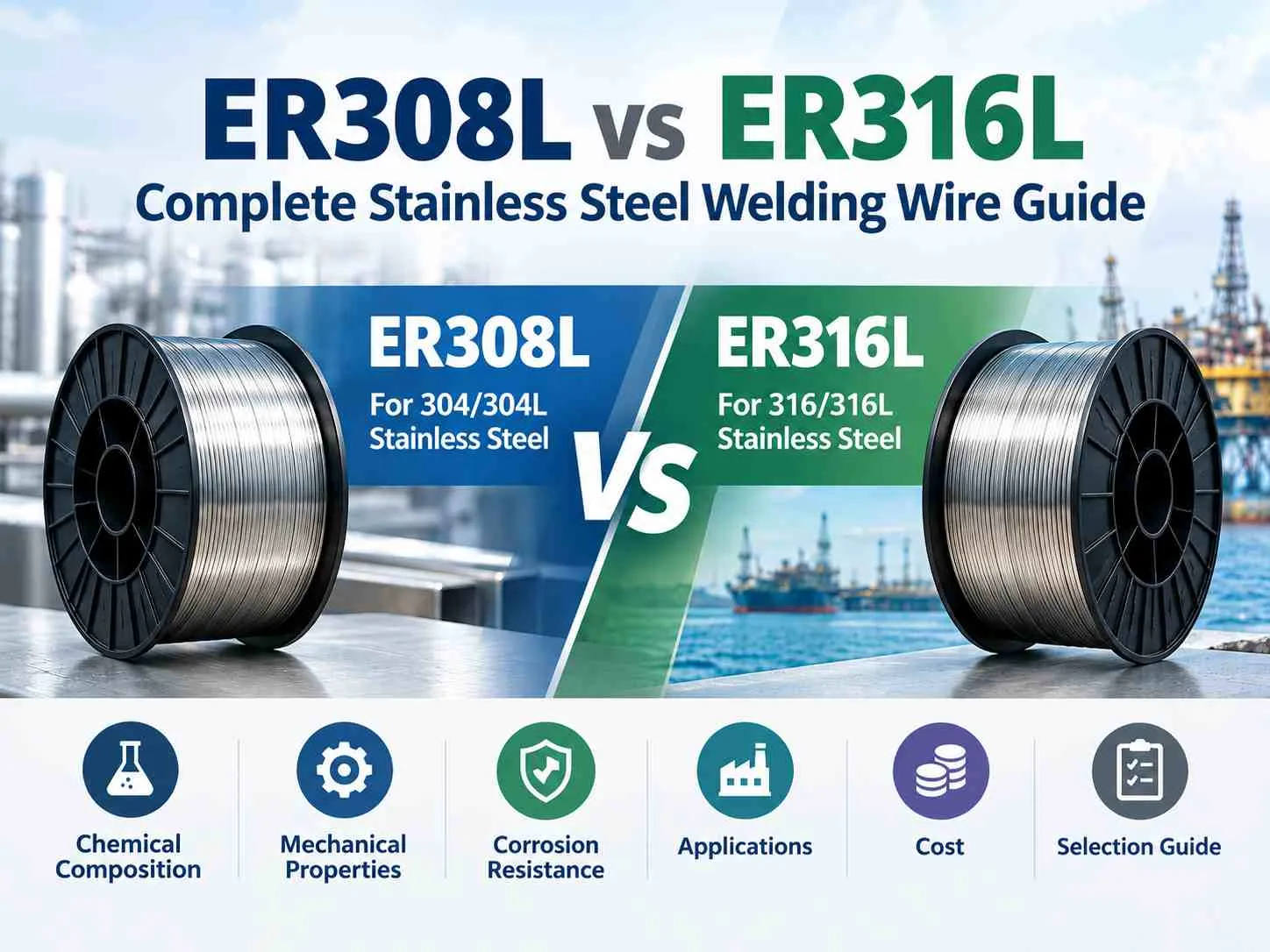
Stainless electrodes are often used for food processing, pharmaceutical, and architectural applications. The three-digit designation identifies the stainless steel alloy family rather than directly representing the chromium or nickel percentage. The primary selection criterion is matching the corrosion‑resistant alloy to the base material.
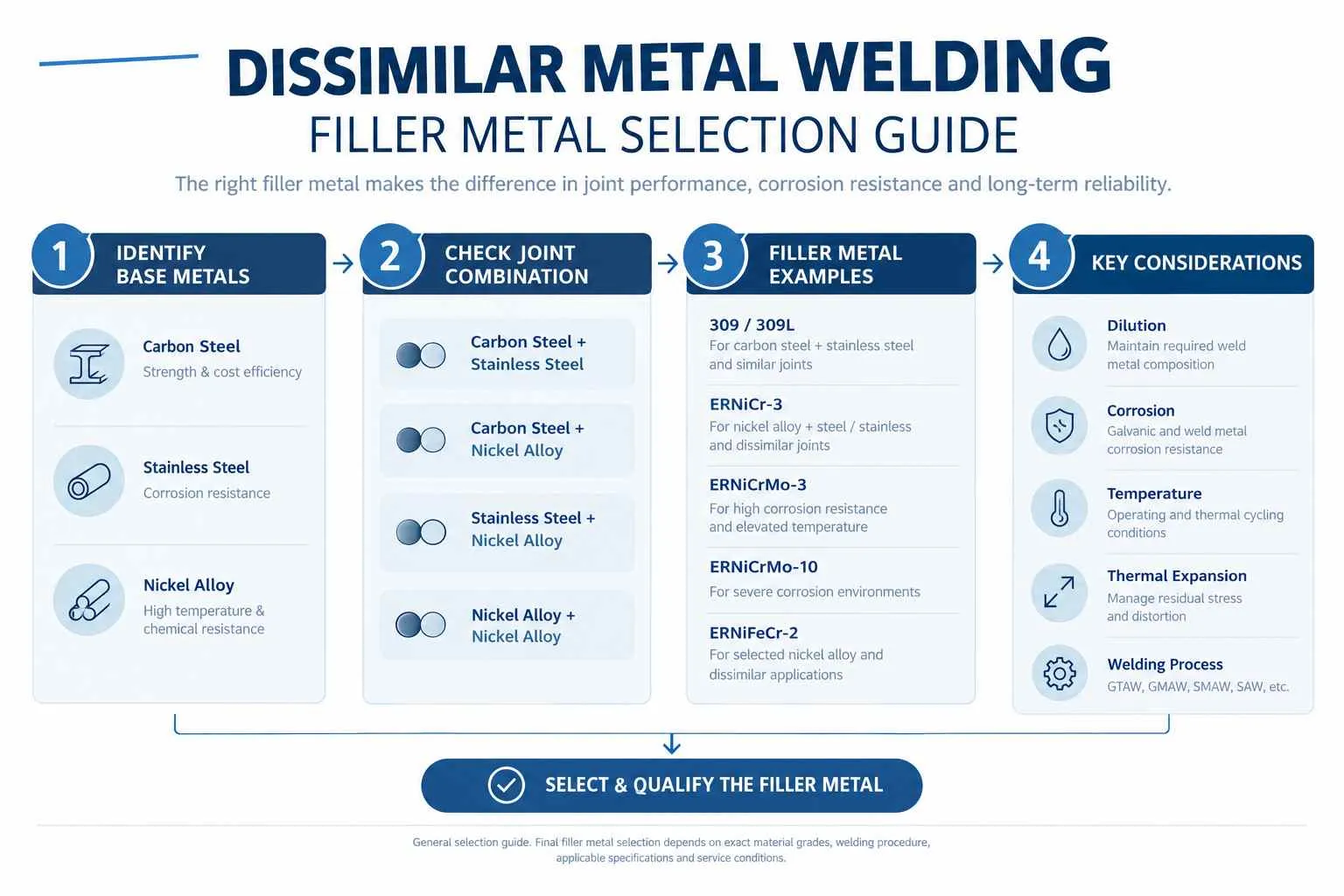
For high-performance applications, nickel-base electrodes (e.g., ENiCrMo-3) are often selected instead of stainless steel electrodes when joining dissimilar metals or when superior high-temperature and corrosion resistance is required.
For completeness, carbon steel rods follow the familiar EXXXX format where the numbers are all about mechanical strength and usability.
Take E7018:
E6010 gives you 60,000 PSI with deep penetration for root passes. That's the entire system: strength → position → coating. Compared to nickel and stainless, carbon steel numbers are much simpler because they don't address alloy chemistry—just mechanical properties.
| Material Family | Prefix | What the Numbers Emphasize | Example | Meaning |
|---|---|---|---|---|
| Carbon Steel | E | Tensile strength, position, coating | E7018 | 70 ksi, all‑position, low‑hydrogen |
| Stainless Steel | E | Alloy type (Cr/Ni %), L/H carbon, coating | E308L‑16 | 308 alloy, low carbon, titania coating |
| Nickel Alloy | ENi | Chemical element system + variant dash | ENiCrMo‑3 | Ni‑Cr‑Mo system, variant 3 (matches Inconel 625) |
Welding rod numbers do not always mean the same thing. For carbon steel electrodes like E7018, the numbers mainly describe tensile strength, welding position, and coating type, while stainless steel and nickel alloy electrodes focus more on alloy composition and weld metal chemistry.
Understanding the difference between these classification systems helps you select the right electrode for the base material, service environment, and required performance. Whether you are welding stainless equipment or high-performance nickel alloys, correctly reading the electrode designation is the first step toward achieving a reliable and durable weld.
1. What do the numbers on an E7018 welding rod mean?
The numbers on an E7018 electrode indicate its welding characteristics. “70” represents the minimum tensile strength of 70,000 psi, “1” indicates all-position welding capability, and “8” identifies the coating type and current characteristics.
2. What does ENiCrMo-3 mean in welding?
ENiCrMo-3 is a nickel alloy electrode classification under AWS A5.11. The “E” indicates electrode, “Ni” identifies a nickel-based alloy, and “CrMo” shows the primary alloying elements chromium and molybdenum.
3. Are welding rod numbers the same for carbon steel, stainless steel, and nickel alloys?
No. The meaning of welding rod numbers depends on the material family. Carbon steel electrodes use numbers to indicate tensile strength, welding position, and coating type. Stainless steel electrodes mainly identify alloy composition and coating characteristics, while nickel alloy electrodes are primarily classified by chemical composition and alloy family.
4. What does the “L” mean in stainless steel welding rods?
The “L” in stainless steel electrodes such as E308L or E316L means low carbon content. Low-carbon grades reduce the risk of chromium carbide precipitation during welding, helping maintain corrosion resistance in stainless steel weldments.
5. How do I choose the right welding rod for nickel alloys?
The correct nickel alloy welding rod should be selected based on the base metal chemistry, service environment, and required corrosion resistance rather than tensile strength alone. For example, ENiCrMo-3 is typically selected for Alloy 625, while ENiCrFe-7 is commonly matched with Alloy 690 applications.
Ronsco is a trusted global supplier of nickel alloy and stainless steel welding wires, including Inconel, Hastelloy, and Monel series. Our products are manufactured to meet industry standards and are widely used in demanding applications such as aerospace, oil & gas, chemical processing, and power generation. Explore our resource center for the latest industry insights, product knowledge, and technical references.
Contact us for a quote or technical assistance.


 English
 Español
 русский язык
 اللغة العربية